Five Sheep in a Slow Garden
Twenty Centimeters
In Hungary, grass that can be seen from the street is not supposed to grow taller than twenty centimeters.
Above that, it is considered neglect. Above knee height, it becomes a problem that usually comes with a fine.
We have a little over a hectare of land. Most of it is poor soil with a mix of tall grasses and native flowers that manage to survive without help from us. It looks like a meadow, especially in early summer when everything leans and sways at different heights.
It is not meant to look like a lawn.
The lower part of the garden, the house, the vineyard, the vegetable beds... is manageable. But the upper part slopes and there are old cut tree trunks half-hidden in the grass, small ditches and uneven ground. A lawnmower won’t survive that terrain, so the only option is pulling out the brush-cutter, which is loud, vibrating and smelling of fuel. It turns the meadow into something abruptly shortened and leaves behind a ringing in my ears.
I don’t enjoy it. The land doesn’t seem to enjoy it either.
So I looked for a different solution. I found a small loophole.
The rule says grass in a garden must be kept short, but grass in a paddock may grow. In a paddock, it is not 'neglect'. It becomes food.
That small distinction made all the difference.
So we got sheep.
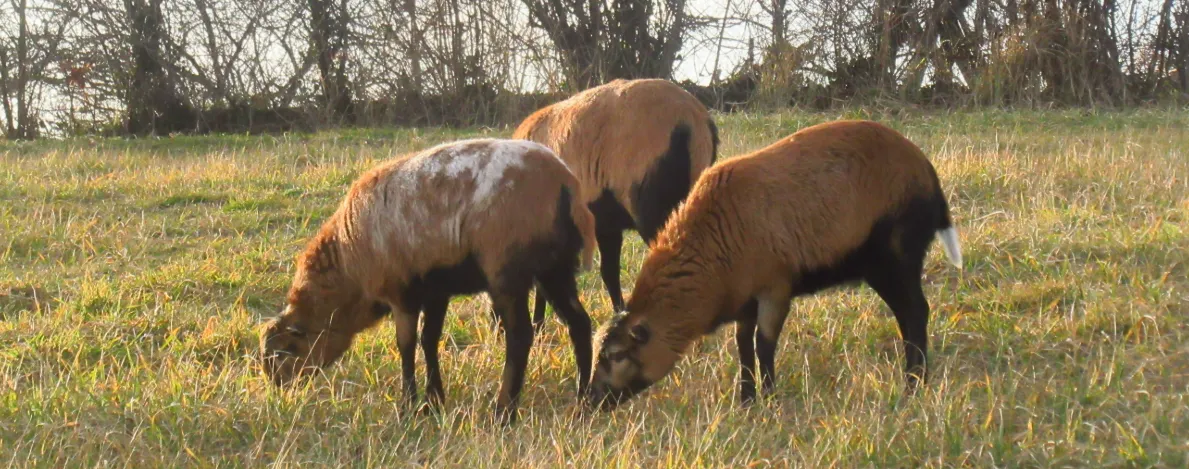
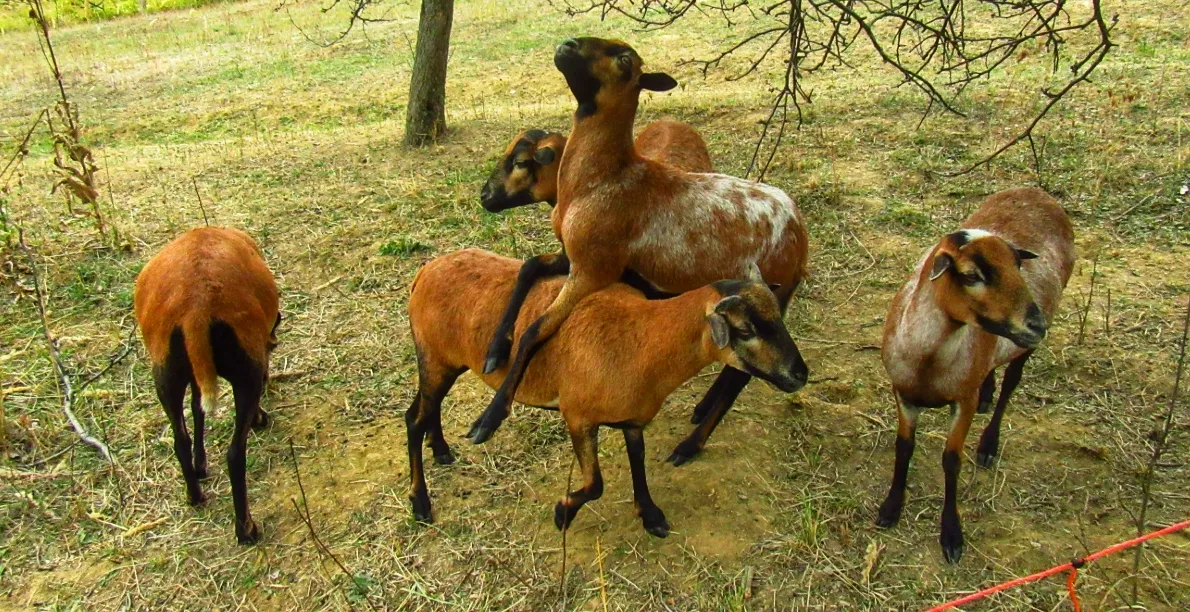
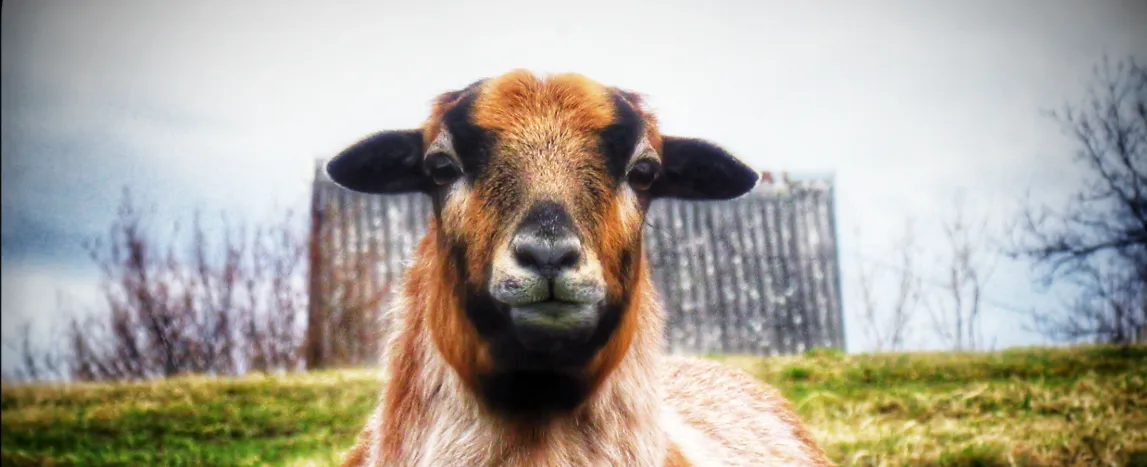
Five Cameroon wethers. No rams, no ewes, no lambs. Just five calm, steady yearlings. We chose wethers because they are uncomplicated. They don’t become restless during breeding season. They don’t call out across the valley. They eat less. They are, in many ways, the most modest version of a sheep that you can keep. And because these have hair instead of wool, they don’t even need shearing.
They now live in the upper half of the garden, among the fruit trees and the rougher meadow. The dogs have the lower half. A fence runs between them so the sheep don’t wander into our vegetable beds and the dogs don’t decide that herding practice is a daily necessity.
Each day, they meet at the fence.
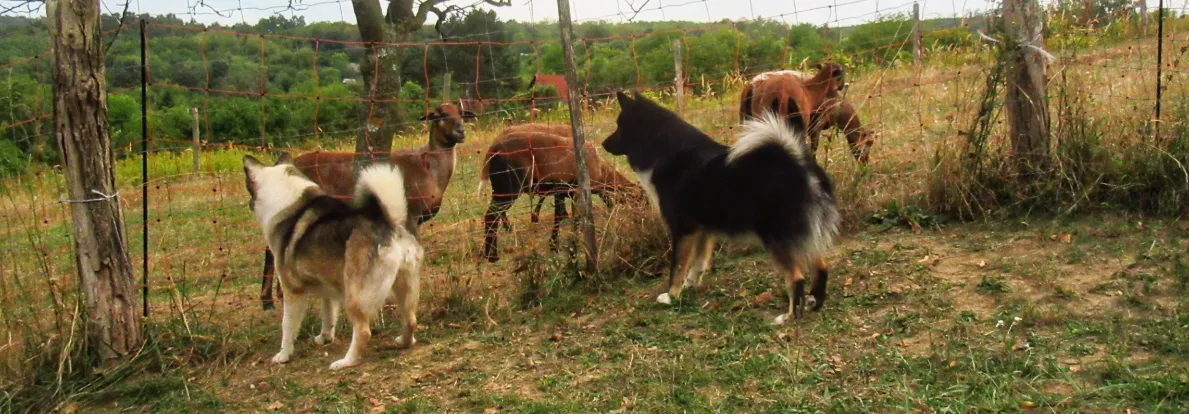
When the dogs are outside, the sheep walk toward the fence. There is curiosity there, sometimes even a kind of play. The dogs bounce. The sheep step forward and back again. It is not fear. It is not aggression. It is more like a negotiation.
The sheep keep the grass short enough to satisfy the rules. Not clipped, not shaved, but selectively grazed. They prefer some plants and leave others, so patches open up, allowing light to reach the soil in new places. Their hooves press seeds into the ground. Their droppings return the nutrients that would otherwise leave in a mower’s collection bag.
The meadow is changing, but slowly.
Keeping sheep is not less work. Fences need daily checking. Water needs to be refilled. Hooves need watching. But it is a different kind of work. Quieter. More observant. A lot more fun if you ask me.
Being prey animals, they require a different way of moving through the garden.
If I walk quickly toward the dogs, they assume I want to play and they come running to me, all excited.
If I move quickly toward the sheep, they bolt.
So I don’t.
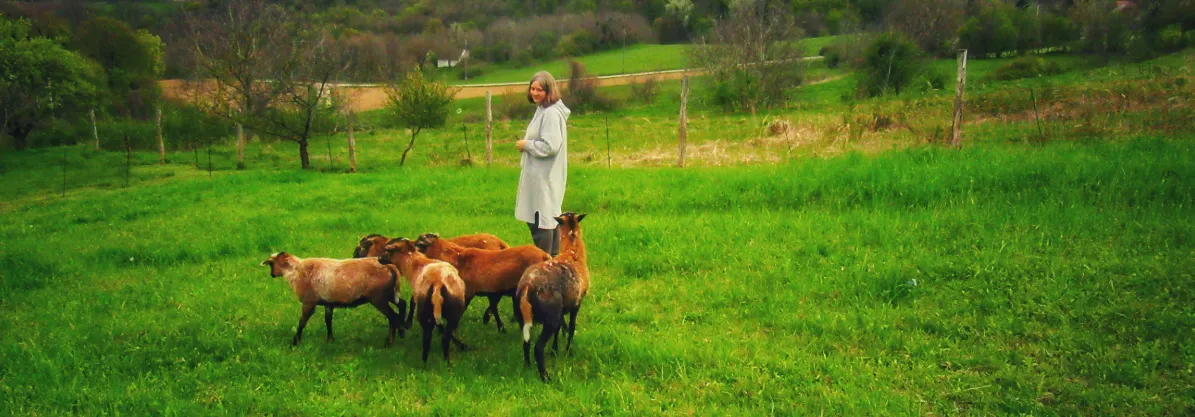
I slow down. I approach them at an angle. I try to avoid sudden gestures. I let them decide whether to come closer or not. I want them curious, but calm around me, not fearful. But I also don’t want them pushing me aside in expectation of some apples or a handful of grain. I want trust without dependency. Familiarity without entitlement.
It is a different conversation than the one I have with the dogs.
The sheep are always aware of the sky, the edges of the field, the possibility of movement in the hedgerow. Their caution reshapes my own movements. In their presence, I need to become more deliberate.
Slow gardening is often described as letting plants grow at their own pace. But sometimes it is about adjusting your own pace to match the animals that share the land.
The sheep are here because of a rule about twenty centimeters.
But they are doing more than keeping us within the law.
They are turning poor soil into something gradually richer. They are creating variation where there would otherwise be uniform cutting. They are transforming obligation into a natural process.
I could fight the regulation with noise and fuel every few weeks, just like all the neighbors do.
Instead, five quiet grazers move across the slope each day, eating, fertilizing, resting in the shade of the fruit trees. Meanwhile, I'm sitting beside them, watching them, reading a book or practicing some drawing. Time well spent.
The grass stays short enough.
The meadow stays alive.
And I learn, again, that a garden is not shaped only by what we plant, but by what we allow to eat.