The Sedge Stage
Last week I wrote about finding Puccinia urticata on nettles, the swollen stems, the orange aecia and the invisible link to a completely different plant that I hoped to document later in the season.
Well, it turns out that I didn't have to wait long for that to happen.
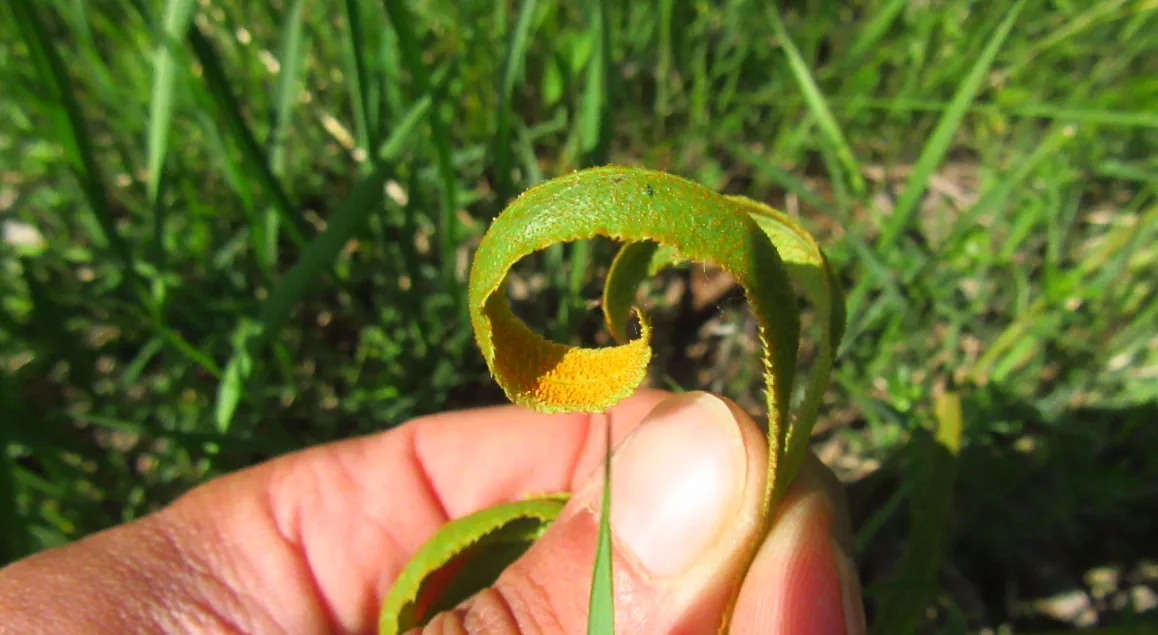
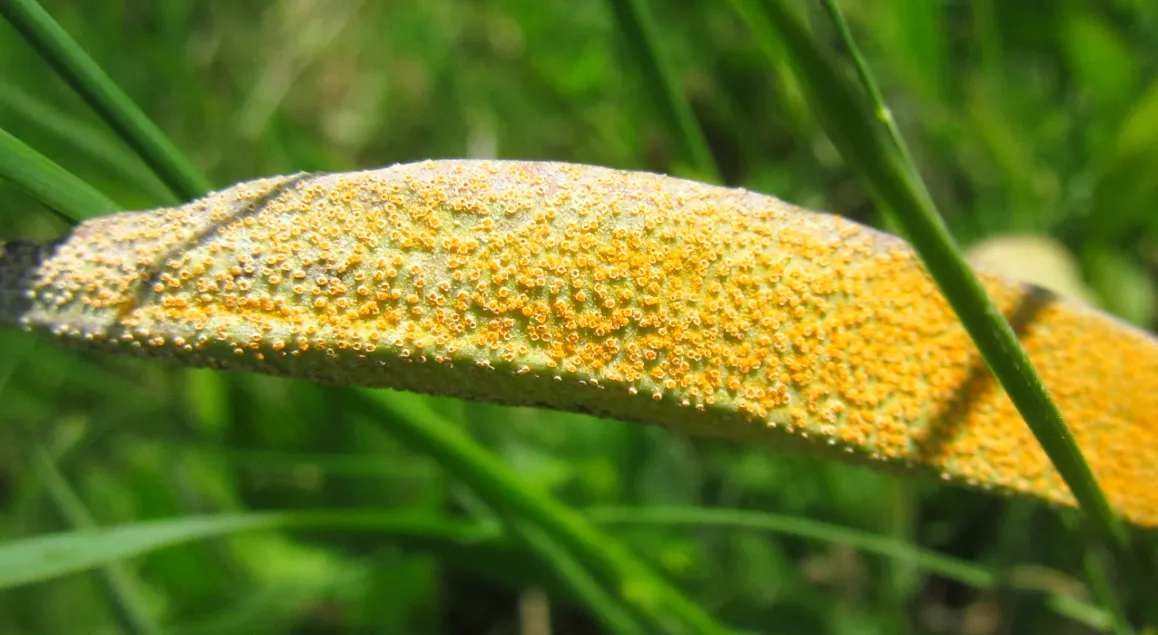
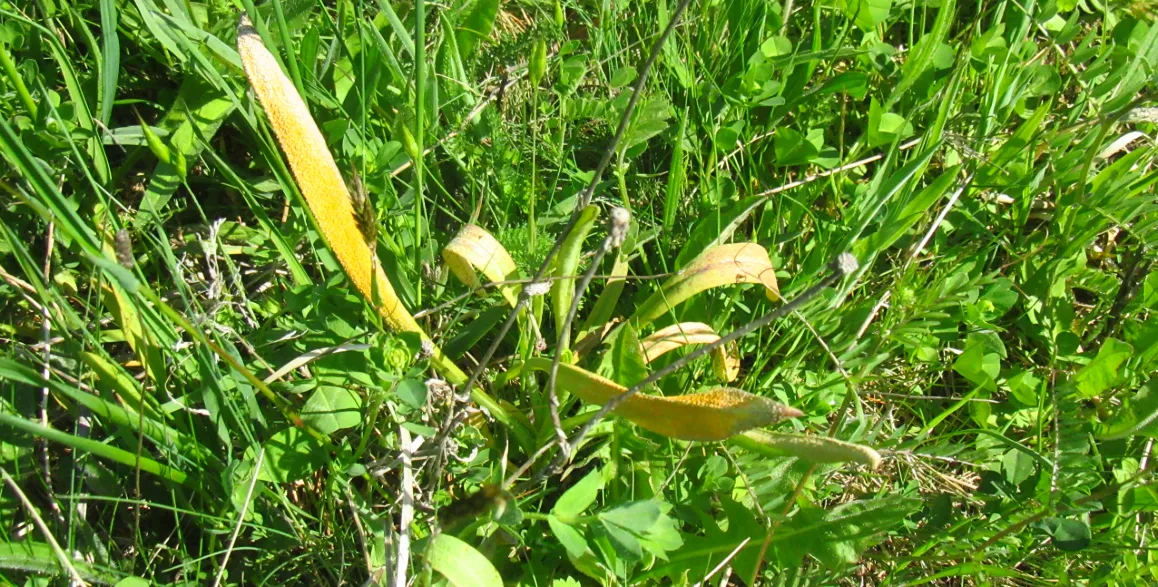
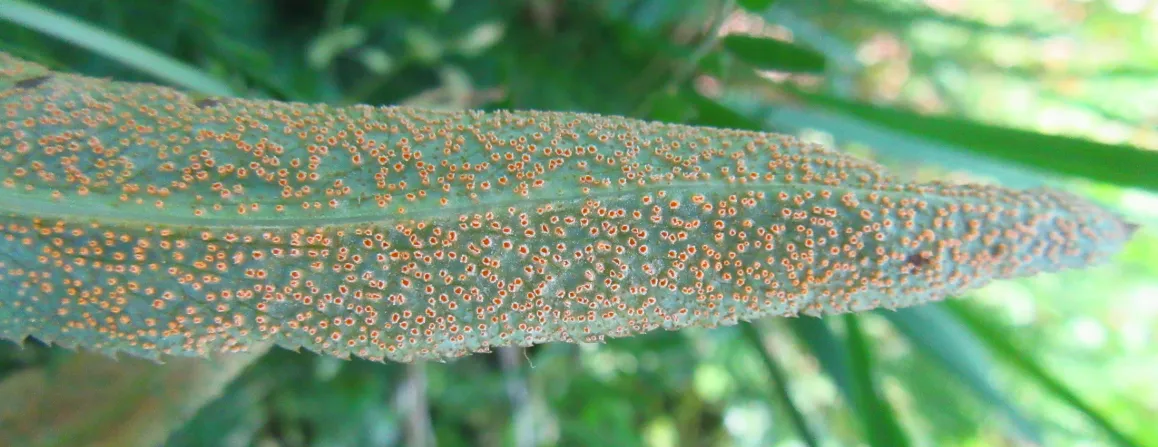
Walking the meadow edge yesterday, I found sedges (Carex species) growing in the damp margin where the ground stays wet the longest. Several of them were covered in orange. Not the cup-shaped aecia of the nettle stage, but a bit different. Smaller, more scattered and more densely covering the leaf surface. One leaf was curling dramatically inward on itself, its inner surface completely coated in bright yellow-orange spore masses.
The fungus had moved.
What You're Looking At
The structures on these sedge leaves are uredinia. This is the uredinial stage of the rust fungus where it is producing a different type of spore called urediniospores. Where the aecia on the nettles were structured cups with fringed rims, these are smaller, more scattered pustules erupting through the leaf surface. The colour is similar, that vivid yellow-orange, but the architecture is different, and the function is different too.
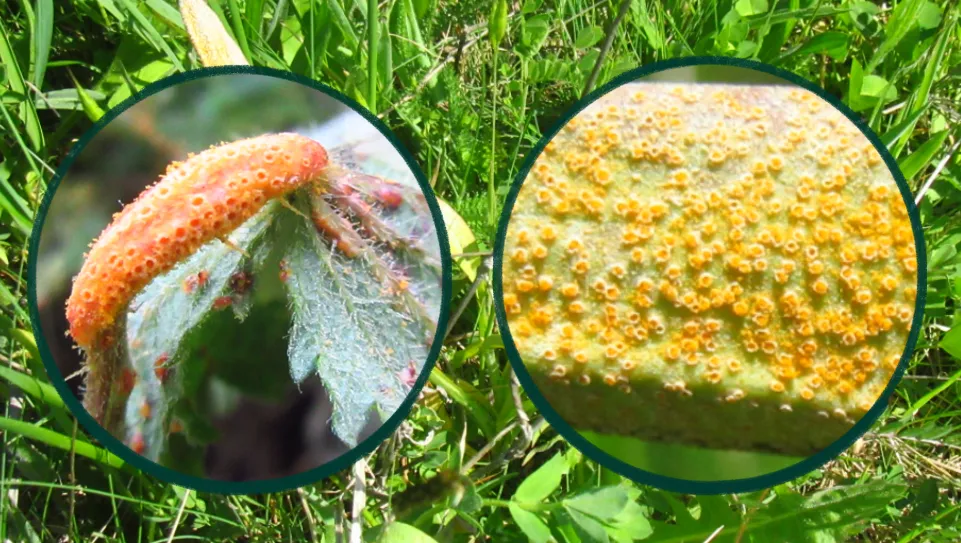
Urediniospores do something the aeciospores from the nettles cannot: they reinfect the same host. They spread from sedge to sedge, repeating the cycle on the alternate host throughout late spring and summer, building up populations, spreading through the sedge community. This is the rust fungus's amplification phase. It's a kind of asexual photocopying that multiplies the infection across as many sedge plants as possible before the season ends.
The curled leaf in the first photograph shows what heavy infection does to the host tissue. It's the same hypertrophy and hyperplasia I described on the nettles; the cells dividing beyond their normal limits, tissue thickening and distorting, but this time it all happens on a grass-like leaf rather than a broad-leaved herb. The curl is the leaf's response to uneven growth caused by the fungus rewriting its development from the inside.
The Full Picture: Five Spore Stages
Puccinia urticata has what mycologists call a macrocyclic life cycle, the most complex type which involves up to five distinct spore stages, each morphologically different, each with a different function, and in a heteroecious species like this one, split between two unrelated host plants.
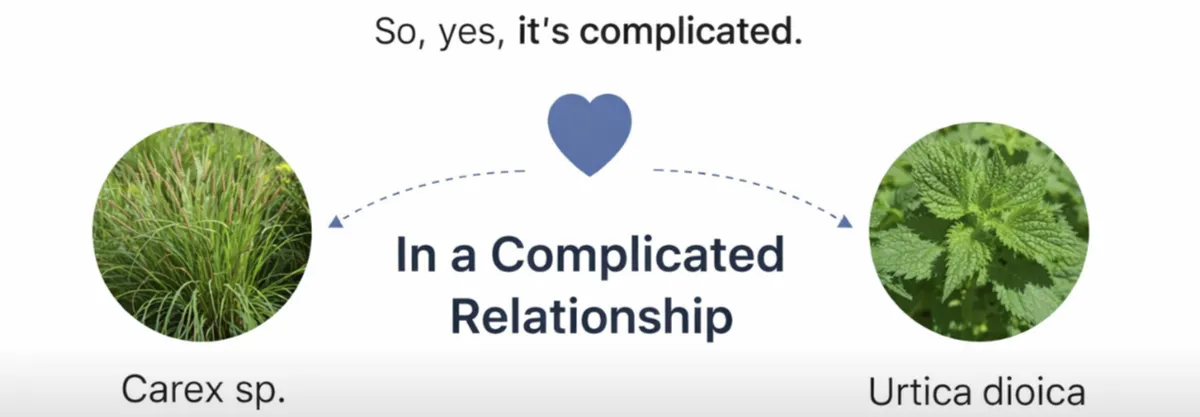
Let me try to walk you through the full cycle from the beginning:
Stage one: basidiospores.
The cycle begins in spring with the overwintering teliospores, which are the final stage of the previous year's cycle, that are sitting on dead sedge tissue start to germinate and produce basidiospores. These basidiospores are microscopic, short-lived, and travel on the air. They will try to land on and infect nettles.
Stage two: pycniospores (spermatia).
If they happen to land on a nettle, the fungus will first produce tiny flask-shaped structures called pycnia. These pycnia are usually visible as small orange or yellow dots on the upper leaf surface. Inside the pycnia, pycniospores are produced (also called spermatia), which function in sexual reproduction. Insects that are attracted to the sweet droplets that the pycnia produce, will carry pycniospores between pycnia of different mating types, and by doing that, they are effectively fertilising the fungus. This is the sexual stage, and it is the most easily overlooked.
Stage three: aeciospores.
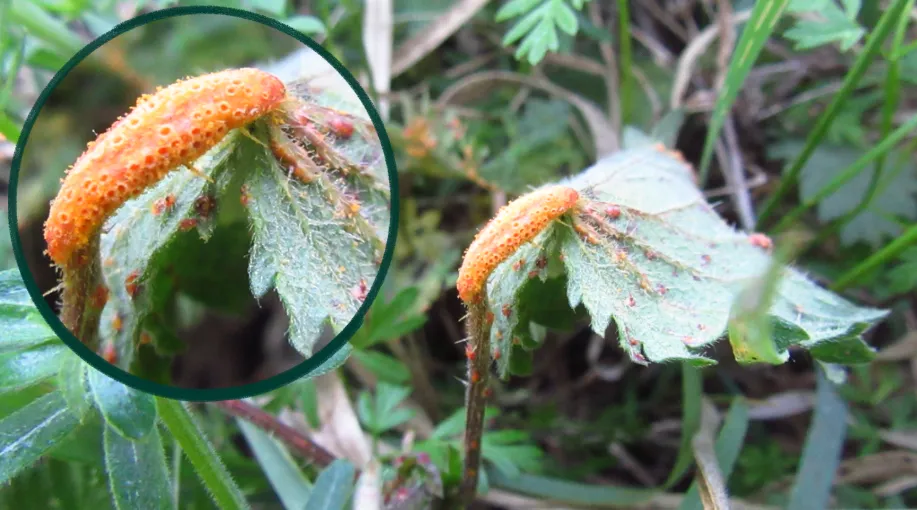
After fertilisation, the fungus produces the aecia, the orange cups I photographed on the nettles. The aeciospores released from these cups cannot reinfect nettles. They can only infect sedges. This is the moment of host switching, the point where the fungus leaves one plant entirely and seeks a completely different species.
Stage four: urediniospores.
On the sedge, the fungus produces uredinia, the pustules in the photograph below. Urediniospores spread the infection from sedge to sedge throughout summer, the asexual amplification phase that builds up large populations on the alternate host.
Stage five: teliospores.
As the season ends and conditions change, the fungus switches from producing urediniospores to producing teliospores. These are thick-walled, dark, overwintering spores that remain sitting in the dead sedge tissue through winter. These will germinate the following spring to produce basidiospores, and the whole cycle begins again.
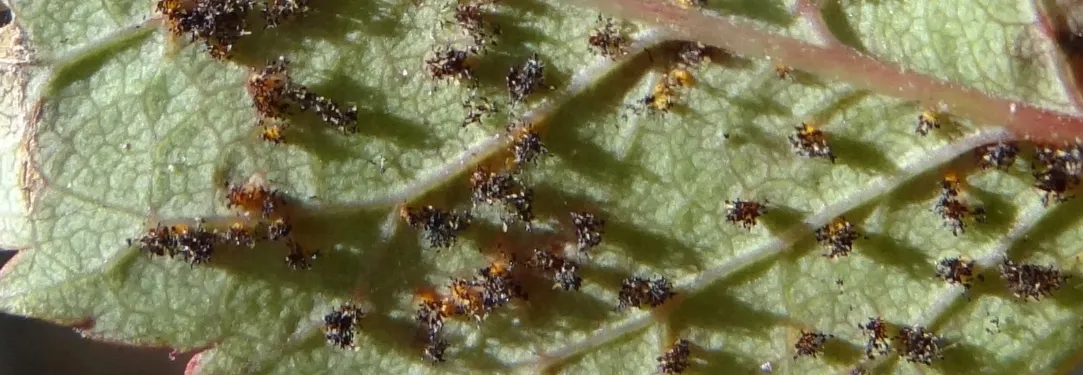
So we get five morphologically distinct spore types, two unrelated host plants and one continuous cycle that links a plant in a hedgerow to a plant in a ditch, through a fungus that travels invisibly between them.
Why This Complexity Exists
The rust fungi, the order Pucciniales, have the most complex life cycles of any fungi, and quite possibly of any eukaryotes. The question of why that complexity evolved, and how, has occupied mycologists for decades. The short answer is that we don't fully know. But molecular studies have given us a much clearer picture than we had even twenty years ago.
Rust fungi are ancient. The oldest probable rust fossil dates to the Carboniferous, roughly 300 million years ago, though molecular clock studies suggest the group diversified primarily between 70 and 160 million years ago, during and after the great radiation of flowering plants. This timing is not coincidental. The diversification of rust fungi correlates closely with the diversification of their hosts, as if the two groups drove each other's evolution in a feedback loop. New plant groups appeared; rust fungi jumped to them; each new host created a new ecological opportunity; the fungus diversified further.
The key mechanism driving that diversification was almost certainly host jumping, a rust lineage adapted to one host acquiring the ability to infect an unrelated one, and then specialising on the new host over subsequent generations. Molecular analyses comparing the evolutionary relationships of rust fungi with those of their hosts suggest that this happened repeatedly throughout the group's history, and that the host relationships preserved in the aecial stage, the sexual stage on the primary host, reflect the deeper evolutionary history of the fungi more faithfully than the uredinial stage on the alternate host.
In other words, the nettle is the older relationship. The sedge is the newer one. Somewhere in the evolutionary past of Puccinia urticata, an ancestor that previously completed its entire life cycle on a single host acquired the ability to use a sedge as an alternate host. And it seems like that acquisition, at some point tens of millions of years ago, proved sufficiently advantageous to persist.
So why would that be advantageous?
The leading hypothesis is that alternating between two unrelated hosts provides the fungus with several benefits simultaneously. It separates the sexual stage (on the primary host) from the asexual amplification stage (on the alternate host), which may reduce the risk of inbreeding and increase genetic diversity.
It may also allow the fungus to exploit two different ecological niches and two different seasonal windows, reducing dependence on any single host's availability. It may also complicate the host plant's ability to evolve resistance since a plant that develops resistance to the basidiospores arriving from sedge has not solved the problem of aeciospores arriving from nettle, and vice versa.
The result of this evolutionary complexity is a fungus that is, by most measures, extremely successful. There are roughly 8,000 described species of rust fungi, making the Pucciniales the largest natural group of plant pathogens on earth. They parasitise hosts from ferns and conifers to grasses to broadleaved flowering plants. They occur on every continent, at every altitude, in every habitat where their hosts grow.
The wheat rusts alone, like Puccinia triticina, Puccinia striiformis, and Puccinia graminis, have shaped the history of human agriculture, causing famines, driving plant breeding programmes, and remaining a serious threat to global food security even today. The same life cycle strategy visible in these sedge leaves has cost humanity an incalculable quantity of food over the last ten thousand years.
The Connection Made Visible
What I photographed last week on the nettles and this week on the sedges are two stages of a single continuous process. The orange cups on the nettle stems. The orange pustules on the sedge leaves. The curling leaf held in my hand, its surface textured with thousands of spore structures almost too small to see individually without magnification.
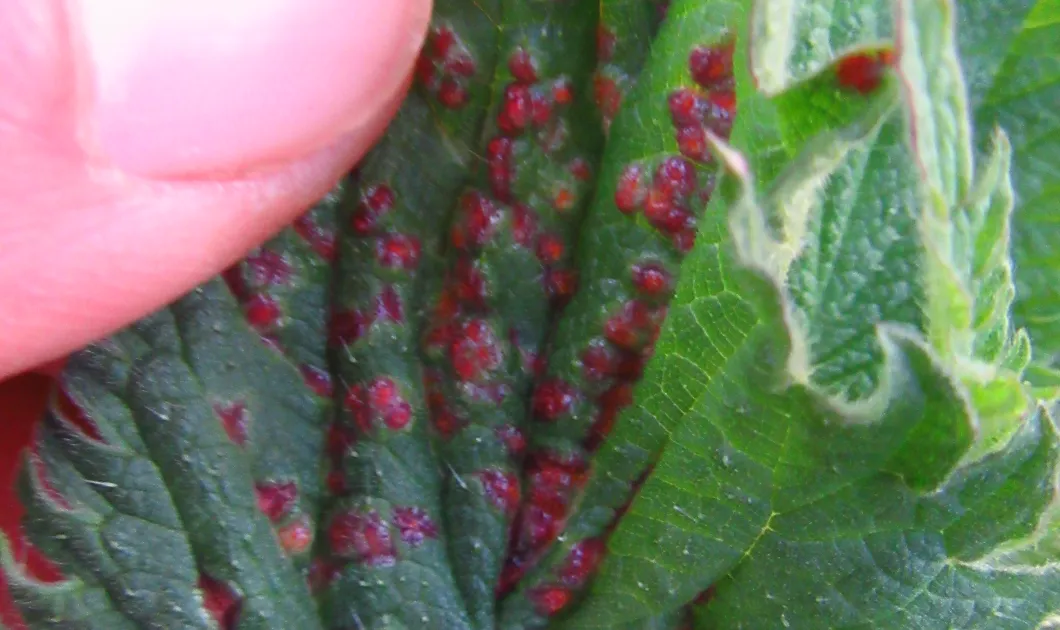
Between those two photographs, invisible and unmeasurable, spores moved through the air from one plant to the other. The nettle and the sedge are linked, not by roots, not by proximity, not by any visible connection, but by a fungus that discovered, somewhere in deep evolutionary time, that using two unrelated plants was better than using one.
Next, if conditions are right and the season cooperates, the sedge plants will start to produce teliospores. Dark, thick-walled and able to overwinter, to wait for spring, when maybe the nettles will have orange spots again.