Three Moths by the Beehives
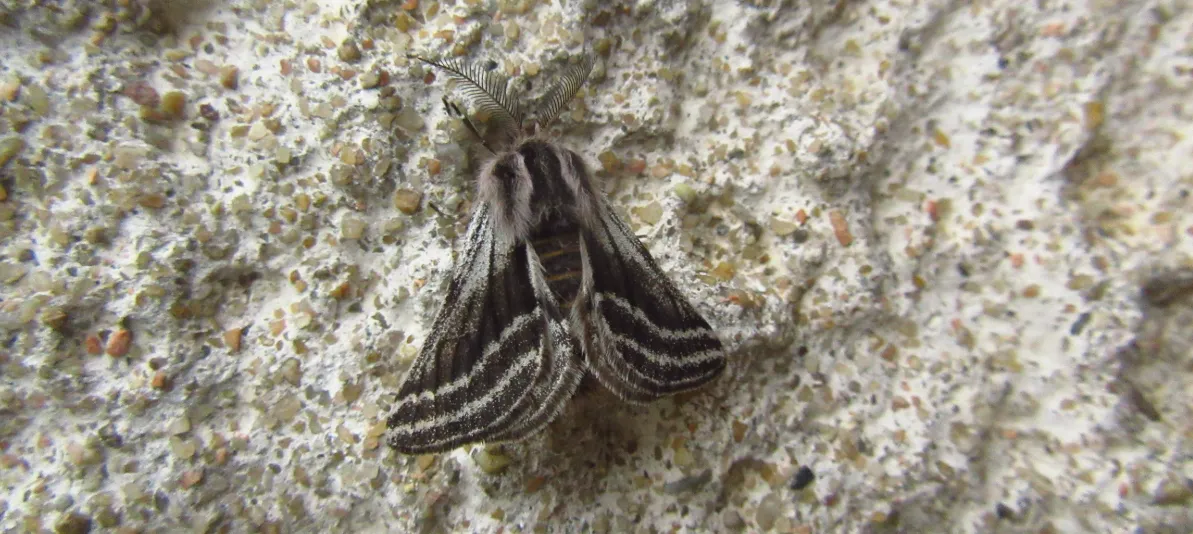
I didn't find the Belted Beauty (Lycia zonaria) myself.
My wife found it yesterday while walking one of the dogs. Near the neighbor’s beehives she noticed three male moths on the ground. Two were already dead, their heads bitten clean off by something. The third looked dead as well.
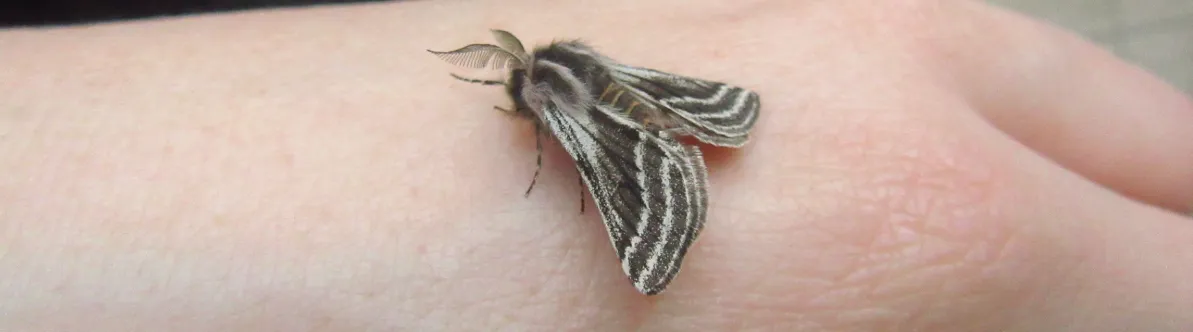
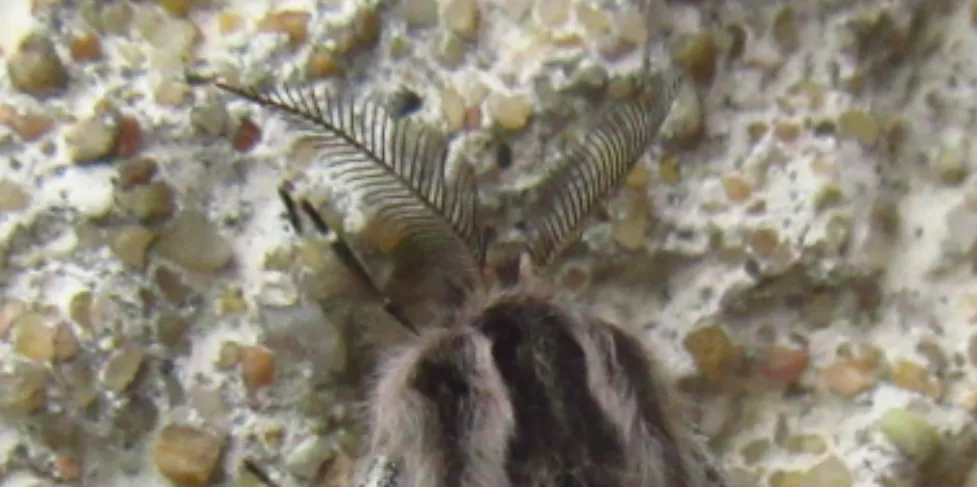
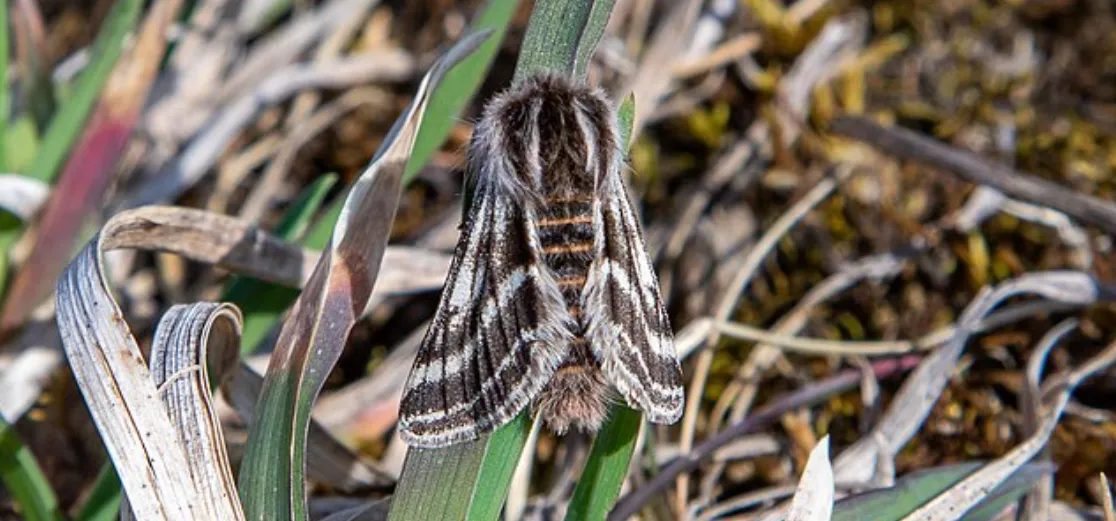
She picked it up anyway. She wanted to show me the pattern on its wings: a sharp, monochrome design of black and white stripes, finished with a fuzzy, feathered 'collar'. It is a beautiful moth, even when you think it’s a corpse.
But on the 100 meter walk back to the house, something happened. The moth 'awoke' again. The warmth of her hand must have been enough to get its metabolism going again. By the time she reached the door, it was clinging to her finger, very much alive but perfectly happy to stay put for a while.
The Mystery of the Beehives
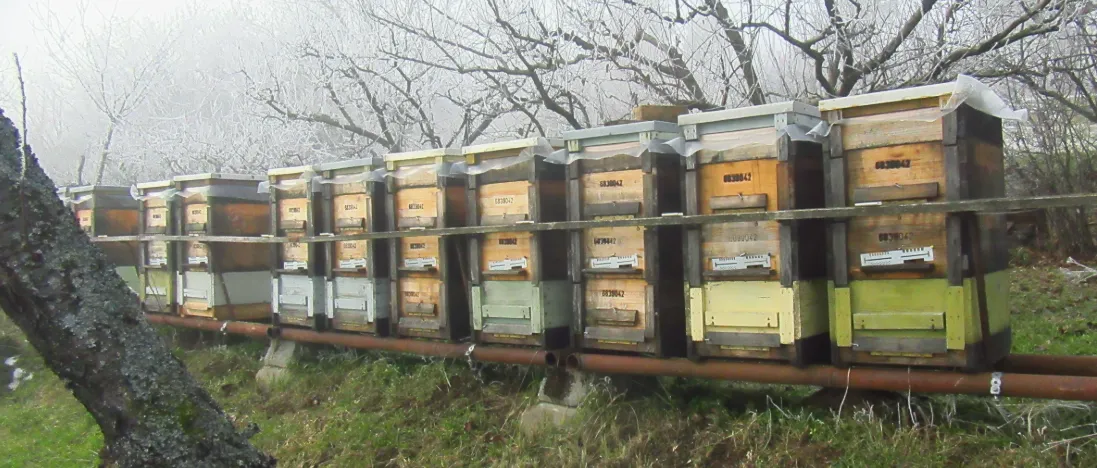
Nature is rarely as gentle as the 'pretty flower' crowd likes to believe. Finding three males in one spot suggests they were likely drawn to the same scent. Most likely, a female was nearby.
The missing heads are a classic naturalist’s puzzle you encounter more often than you’d expect. In early March, the usual suspects are few. It could have been a hungry shrew or a bird looking for a quick, high-protein meal before the spring breeding season takes off. To a predator, a moth is little more than a fat-filled cylinder with wings attached. The wings are discarded. It's the thorax and abdomen that are the prize.
This one was lucky. I suspect it had been 'switched off' by the cold, and appeared just dead enough to be ignored. Or perhaps it simply hadn’t been found yet.
The Strategy of Staying Put
The Belted Beauty is a strange creature. While the male has these bold, striped wings and large, feathered antennae, the female looks like a different species entirely. She has no wings at all.
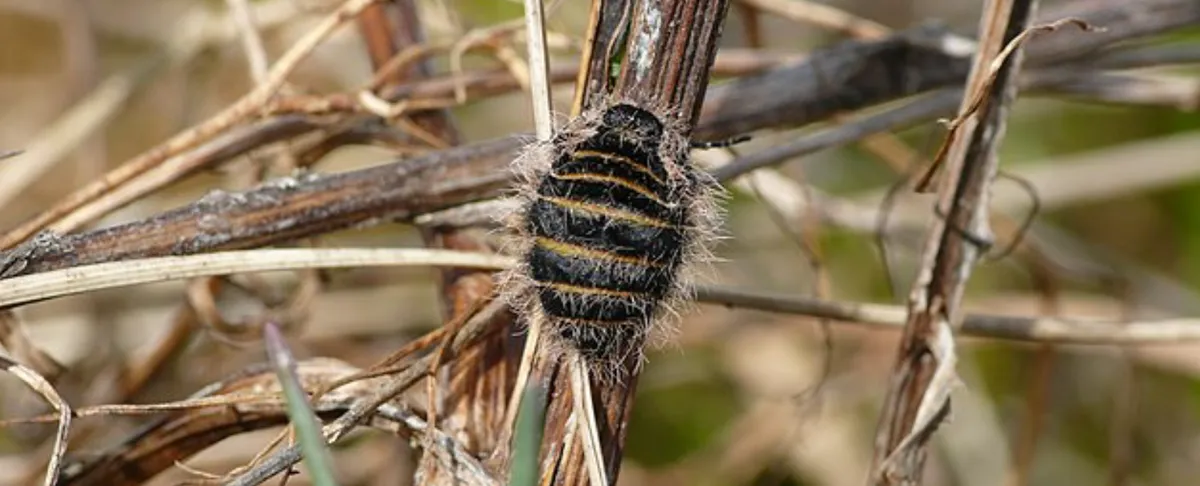
She is what biologists call brachypterous. Her wings have been reduced to tiny, useless stubs. She spends her entire life in the grass where she was born. From an evolutionary standpoint, it’s a brilliant slow trade-off. Developing the muscles and energy for flight is expensive. By giving up the sky, she can put all her resources into producing eggs.
The male's job is to find her. Those feathered antennae are actually chemical sensors. He isn't looking for a visual shape; he is scanning the cold March air for a few molecules of pheromones. He is navigating a map made of scent.
A Hand-Warmed Encounter
The fact that this moth stayed on my wife’s hand even after it woke up? It isn’t friendliness. It’s physics.
Moths are ectothermic. Their body temperature is dictated by their surroundings. In the early Hungarian spring, the ground is cold. A human hand, by comparison, is a massive heat source. By staying there, he simply absorbed enough body heat to get his muscles working again.
It eventually flew off, but that brief interaction is a nice example of what happens when you move slowly through a landscape. If my wife had been looking at a phone, she wouldn't have seen three bits of grey on the ground in front of the beehives. Instead, she now noticed the patterns on the wings and took a closer look.
The Permanent Residents
In our gardens, we tend to pay the most attention to the travelers. The birds and butterflies who pay us a short visit, before flying off again. The species I am most interested in in my garden, are the ones that can't leave.
Because the female Belted Beauty cannot fly, she cannot simply 'move to a better neighborhood' if a garden is paved over or a field is sprayed. If a colony is destroyed, it’s gone forever. They rely entirely on the continuity of the land.
They are the ultimate residents. They are born here, they breed here, and, if they aren't careful around the beehives, they die here.
Knowing they might be in the grass changes how one thinks about a garden. It turns a patch of 'weeds' into a vital corridor for a wingless female and a feathered male who is just trying to keep his head.