A Glitch in Nature: The Double-Headed Dandelion
Today, while walking through the garden, I came across a dandelion that didn’t look quite right.
At a distance it passed as normal. Yellow, low to the ground. Just one of dozens scattered across the grass. It was only when I got closer that the shape resolved into something else.
The stem wasn’t round.
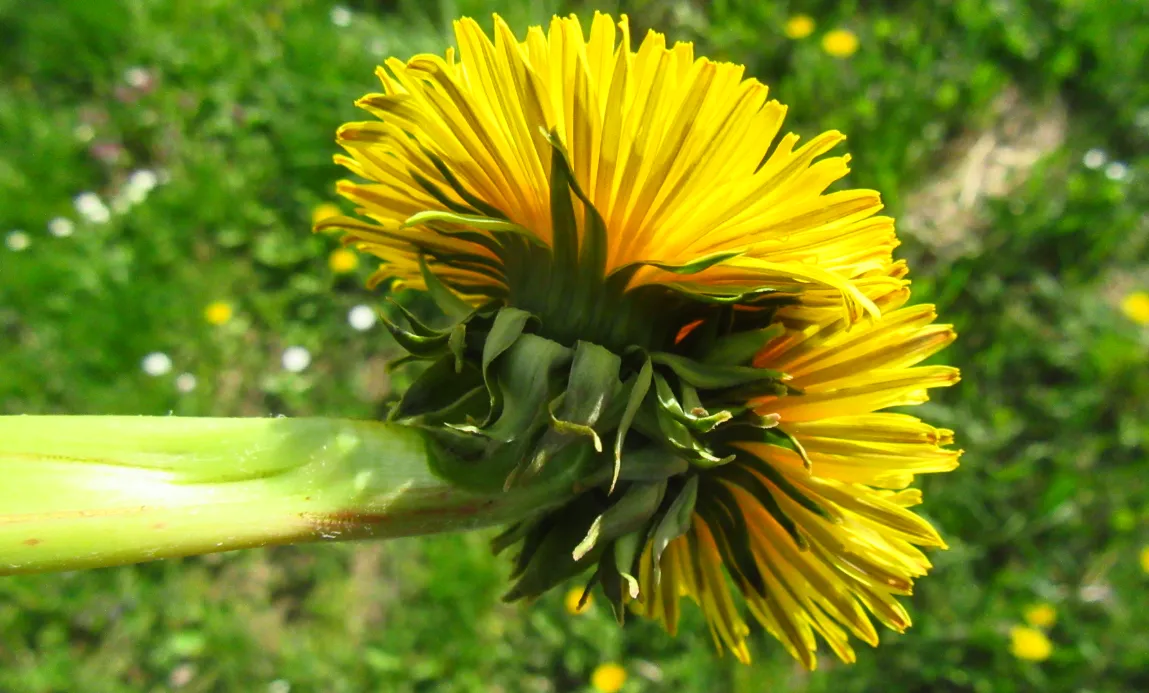
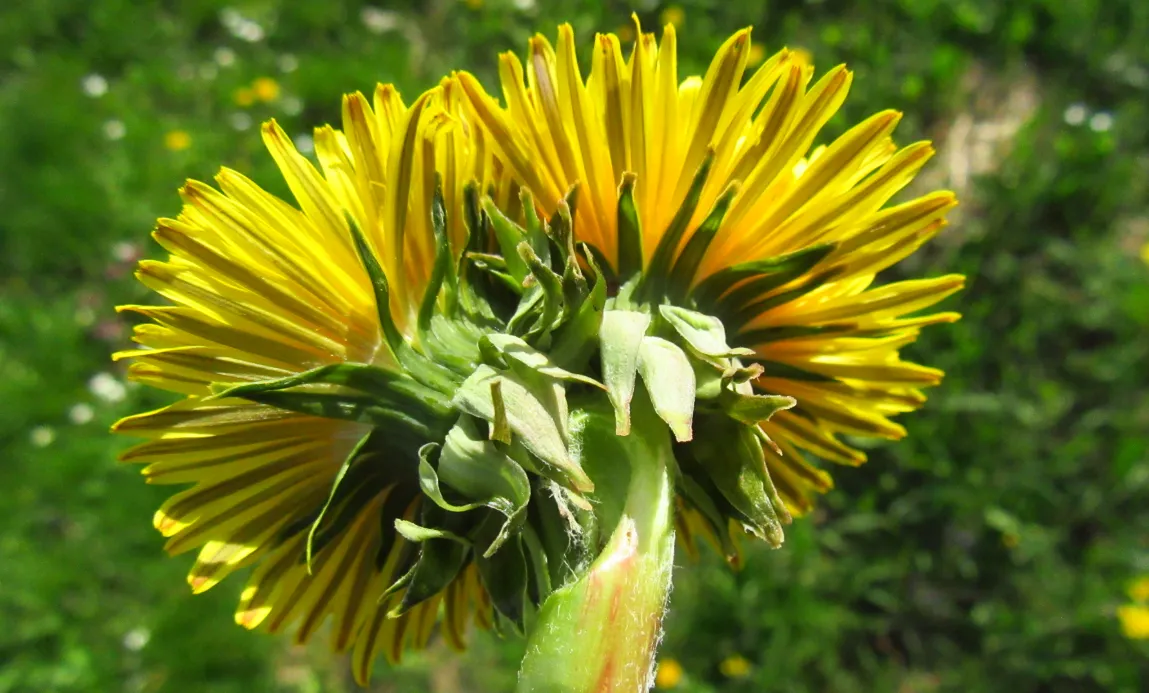
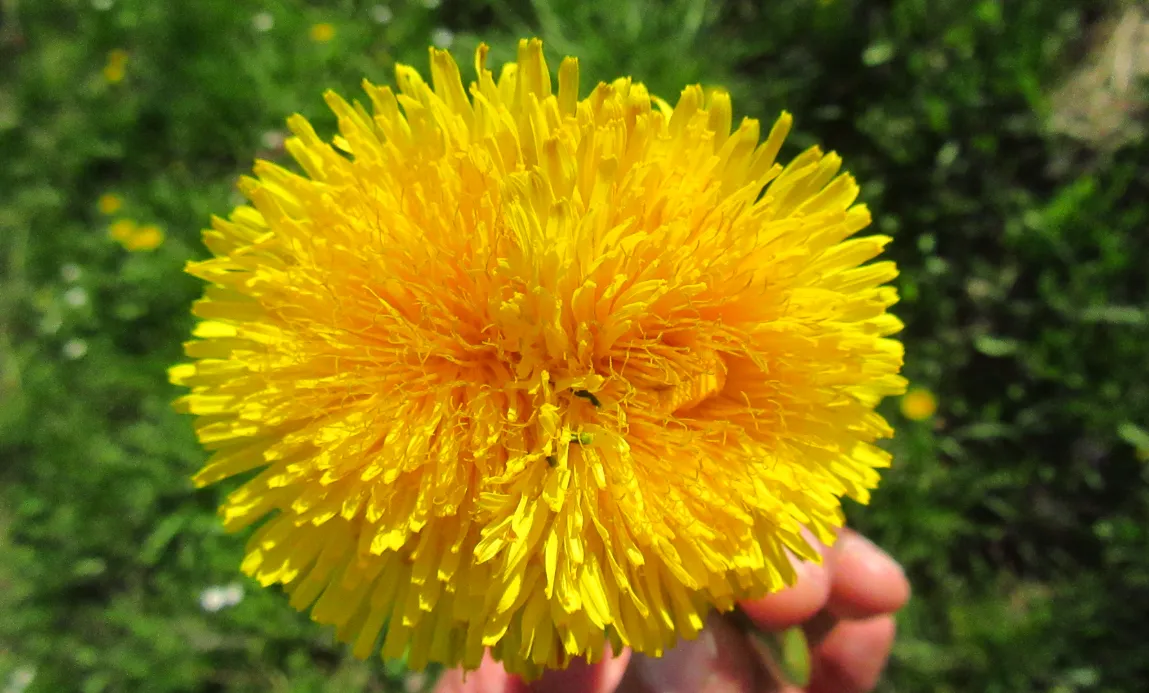
It was flattened, stretched sideways into a broad, ribbon-like strip, as if two stems had been pressed together and fused. At the top, instead of a single flower head, there were two, partially merged, sharing the same distorted structure. Not separate, but neither just one.
A double-headed dandelion.
A Growth Pattern Gone Sideways
This is an example of fasciation, a developmental anomaly seen across a wide range of plants.
The term comes from the Latin fascia, meaning 'band' or 'bundle', which is a fairly literal description of what happened here. The growing tip of the plant, the apical meristem, stops behaving like a single point and instead expands into a line, losing its usual radial symmetry.
Instead of producing a cylindrical stem, the plant lays down tissue in a flattened plane. What should have been one stem becomes a ribbon. What should have been one flower can become many, fused or clustered along that expanded surface.
In extreme cases, the results can look almost artificial. In this case, just enough distortion to be noticeable, but not enough to disrupt the overall form completely.
What Causes It
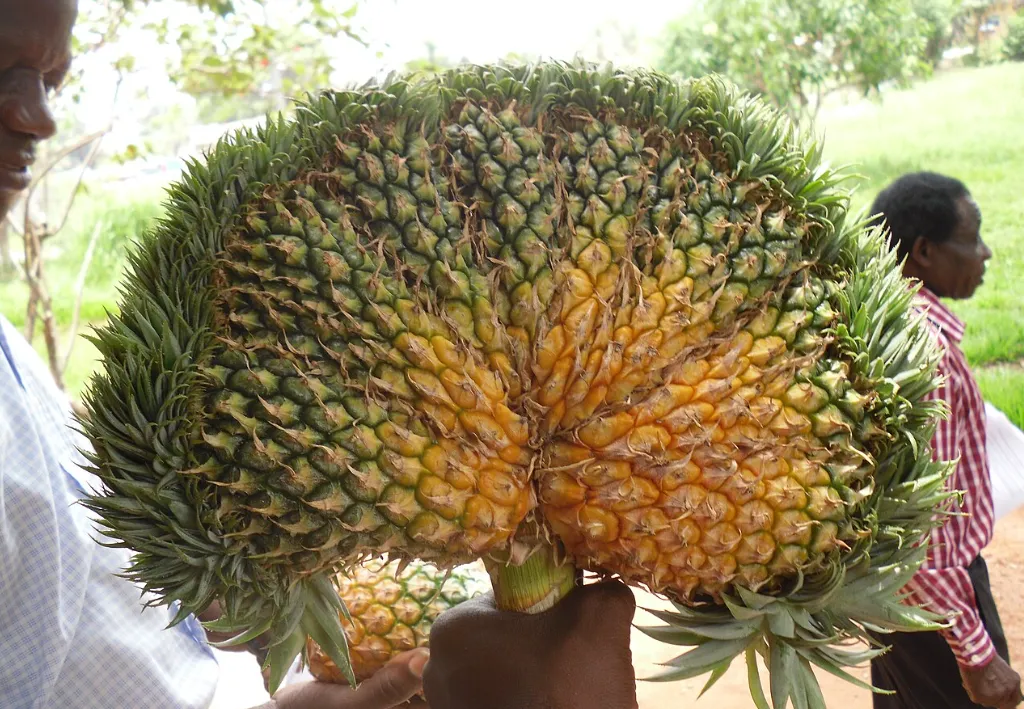
Fasciation is uncommon, but not particularly rare, and it can occur in almost any vascular plant. Dandelions, foxgloves, willows, even cacti all have documented cases. More extreme examples exist. In some cases, even entire fruits become fasciated:
The exact cause is not always clear, but it generally traces back to a disruption at a very specific moment in development, when the meristem is actively dividing.
That disruption can come from several directions. It can be a genetic mutation affecting growth regulation, a hormonal imbalance within the plant, a result of physical damage (such as an insect feeding or a frost event) or it can be caused by an infection, occasionally bacterial or viral.
But no matter what the trigger is, the effect is the same. The growth point loses its normal organisation and begins expanding laterally instead of radially.
Does It Matter to the Plant?
In most cases, fasciation is neutral or mildly disadvantageous.
The altered structure can interfere with normal flower development or reduce the efficiency of seed production, although many fasciated plants still manage to reproduce. In species like dandelions, which are already highly resilient and often reproduce apomictically, a single malformed stem is unlikely to have any lasting impact.
What’s more important is that the effect is usually local.
This is not a new 'type' of dandelion. It's just a single stem, on a single plant, where something in the developmental process went slightly off track.
A Temporary Deviation
If this plant returns next year, it will almost certainly produce the usual round stems and single flower heads, with no sign of what happened here.
Fasciation rarely persists in dandelions. It doesn’t spread through the plant in any meaningful way, and it isn’t something you would expect to see repeated in the same individual.
This is what makes botany so exciting. There's always something new, strange or weird to be found when you don't expect it.
From a distance, this was just another dandelion in a field full of them. Up close, it became an observation of a small error in development. A moment where the underlying instructions were followed just slightly differently, and the structure of the plant shifted with them.
By next week, it will be gone, and the field will look exactly as it always does.