January: Cold - Snow - Ice
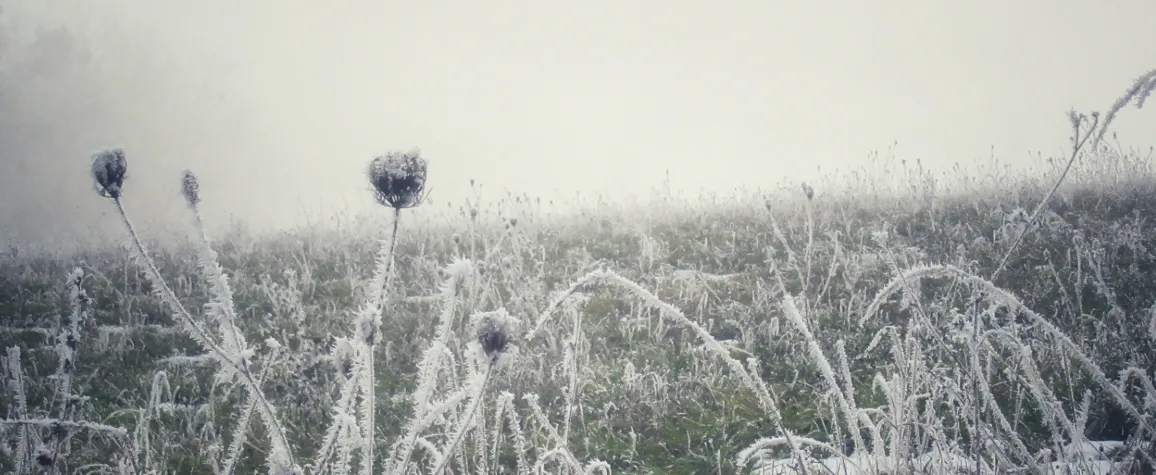
The first month of this new year is already almost over. In terms of events in the garden, it has been a dull month.
The year started with the entire garden being wrapped in a thick layer of snow, and it is only since a few days ago that this snow—apart from the occasional stubborn patch of ice here and there—has disappeared again. For the coming days, however, they are already predicting a fresh snowfall, so I can only hope that the weather forecast turns out to be wrong once again this time. I have seen quite enough snow and ice for a long while.
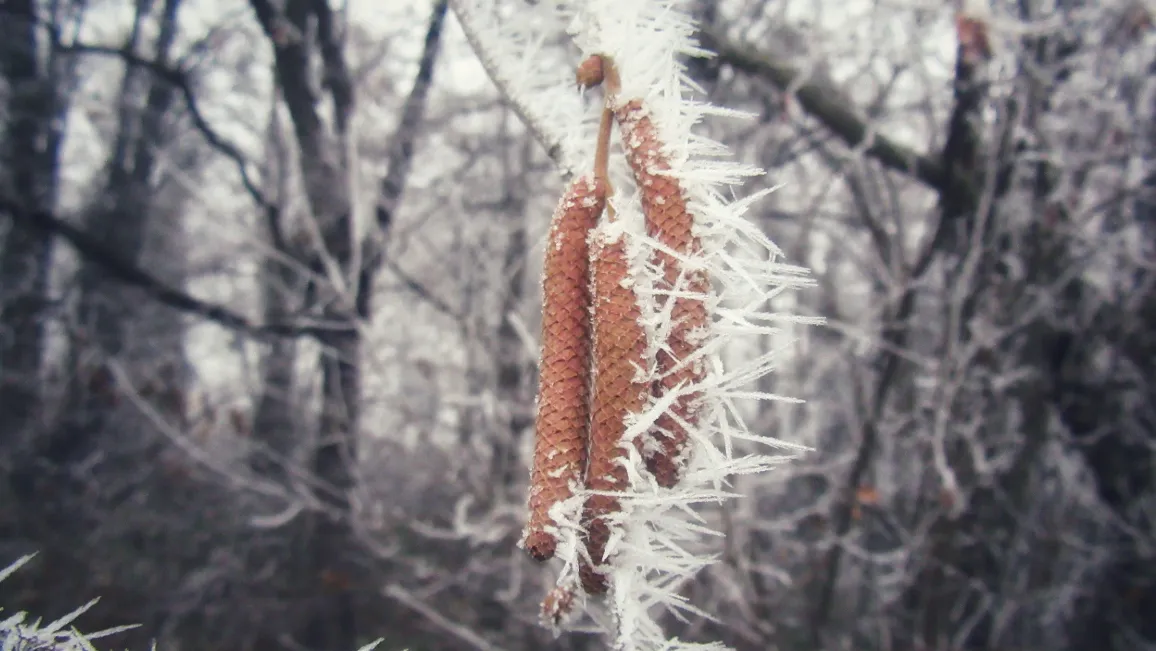
Still, snow also has a whole range of benefits:
Melting snow provides a slow and steady supply of moisture to the soil. In contrast to heavy rain showers, where the water simply runs off over the ground, meltwater slowly seeps into the soil, giving plant roots plenty of time to absorb it. The groundwater level is also replenished this way, thus providing the garden with a natural source of nourishment for growth in spring.
Snow is often called “the poor man’s fertilizer.” As it falls, snow absorbs nitrogen—an essential nutrient for plants—from the air. When the snow melts, this nitrogen is released into the soil, giving plants a small nutritional boost.
Cold temperatures and a thick blanket of snow also reduce populations of overwintering pests, such as aphids, whiteflies, and some fungal spores. Although it is not a complete solution, snow does give us the opportunity to start the next growing season with a slightly cleaner slate.
Snow also helps improve soil structure. The weight of the snow lightly compacts the ground, which promotes the breakdown of organic material. As the snow melts, this helps soil particles settle into a more cohesive structure, improving aeration and drainage.
For perennials, shrubs, and bulbs in the garden, snow provides an extra layer of protection. By insulating the soil and plant roots, snow protects them from extreme cold and drying winds.
So I won’t complain too much. It may be inconvenient for a while, but it also helps ensure that the garden will have a slightly easier time awakening again in the coming weeks.
The snow also revealed a few visitors to the garden whose presence we would otherwise not have noticed. Hoofprints in the snow told me that a small herd of red deer had passed through the garden, as well as a wild boar, which used our garden as a passageway to reach the neighbour’s apple tree, where it rooted under the snow for fallen apples.
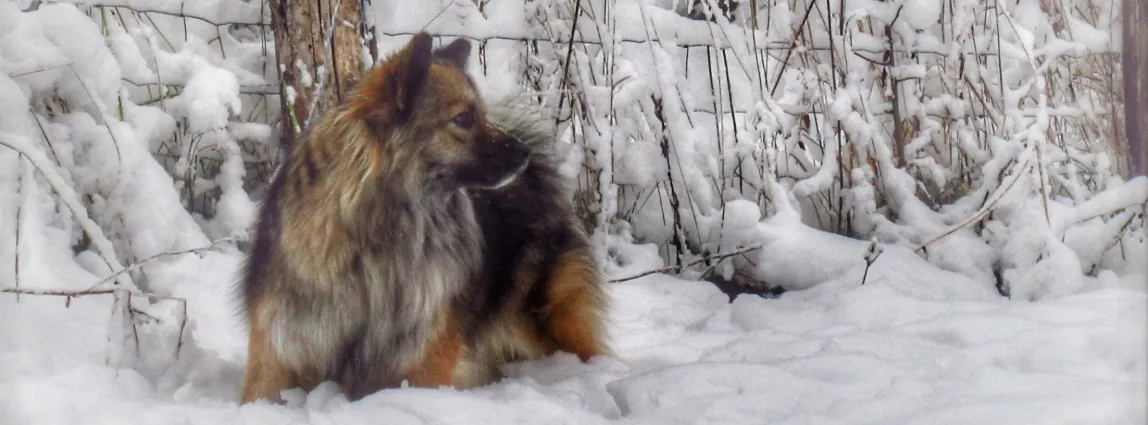
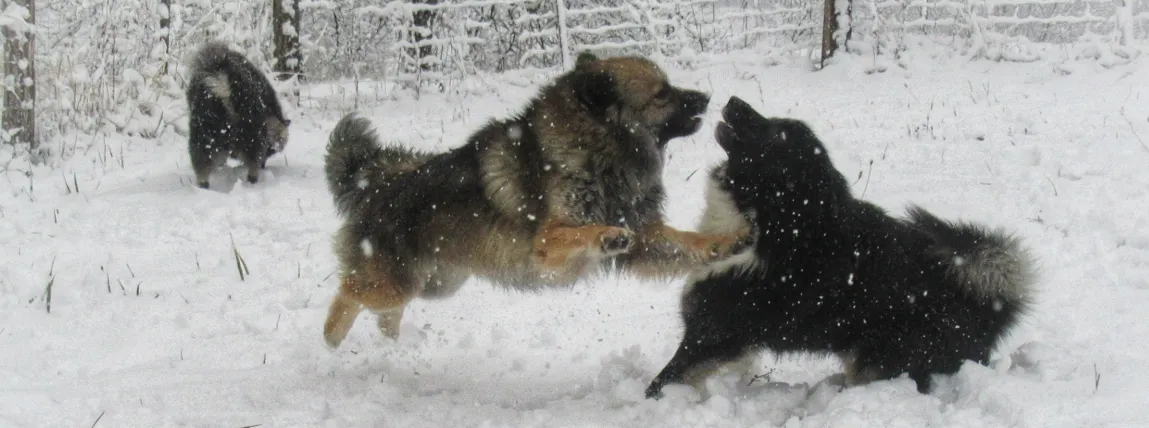
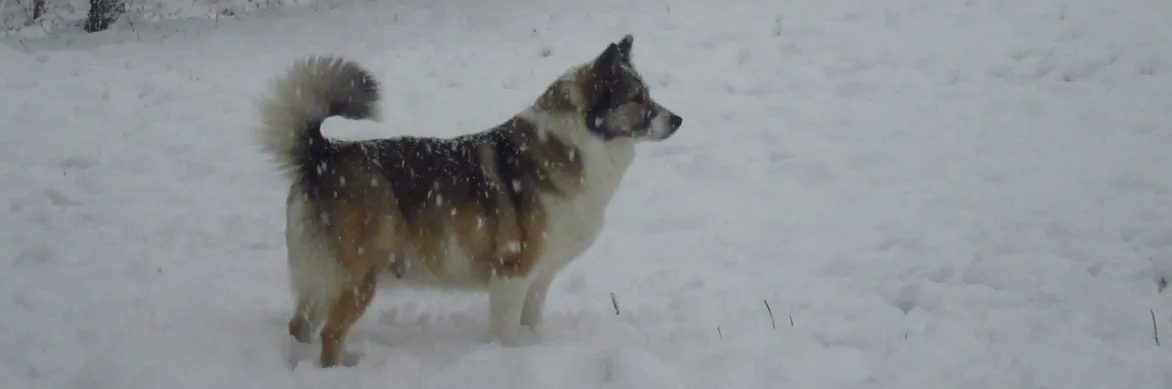
Of course, the dogs absolutely loved all that snow. After all, they are Icelandic Dogs for a reason. Cold and snow do not bother them. Ideal weather, even, if you ask them. Nice and crisp, soft to walk on and to roll around in, and because snow also traps scents, there is extra sniffing to be done during walks. Still, they are always very quick to claim the best spots by the wood stove once we go back inside to warm up.