Madwoman’s Milk and the Botanical Illusion

Some plants make you stop and look twice.
Today it was Euphorbia helioscopia, the sun spurge, also known by the wonderfully dramatic name 'madwoman’s milk'.
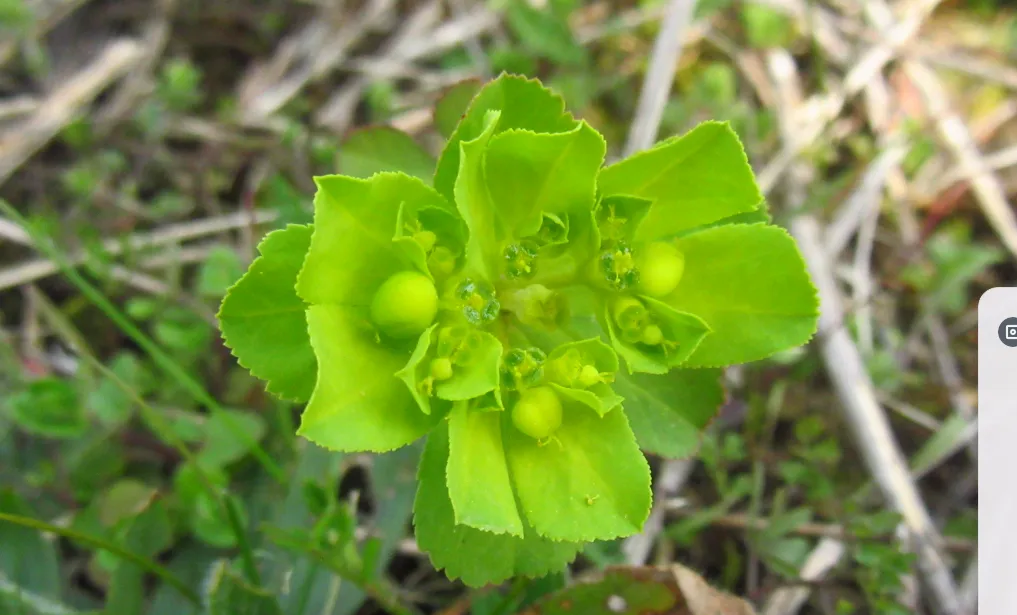
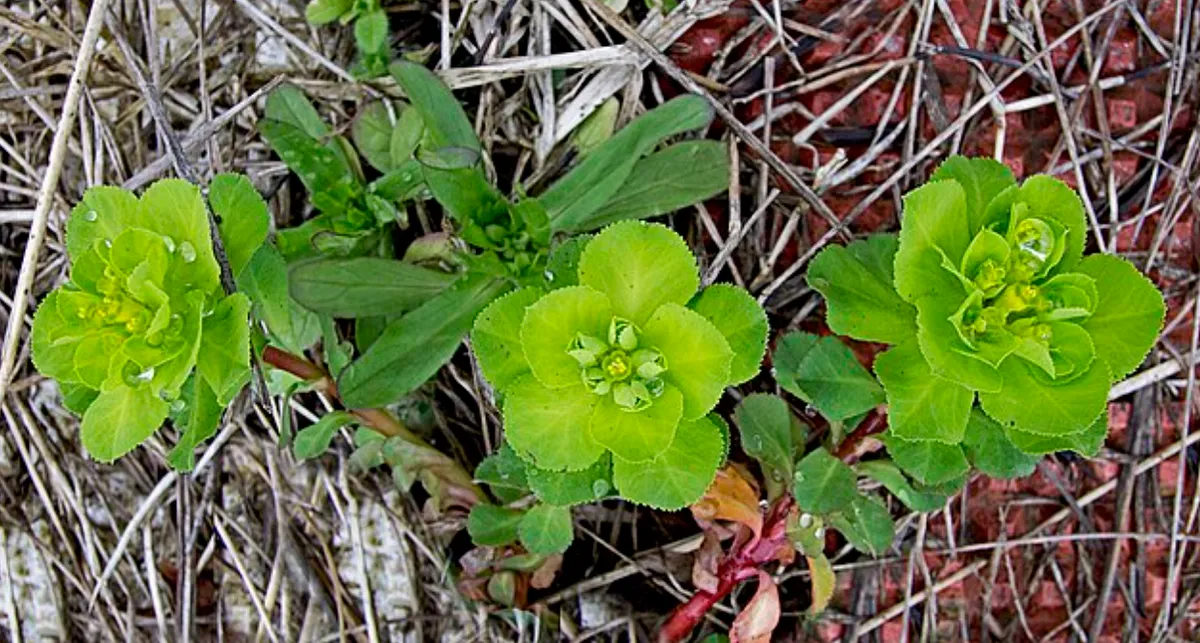
At first glance, the plant seems to be flowering. Small yellow-green structures sit at the top of each stem, arranged in neat little circles. From a distance they look like simple flowers, a bit modest maybe, but perfectly ordinary.
But when you kneel down and take a closer look, something feels slightly wrong.
There are no petals.
No obvious stamens.
No familiar floral structure at all.
So what exactly are we looking at?
The Botanical Illusion
The answer is that what appears to be a single flower is not a flower at all.
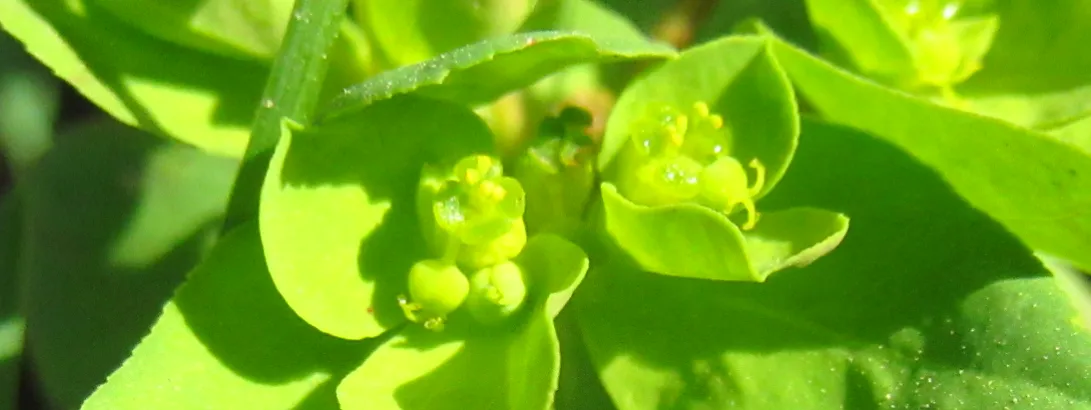
Plants in the genus Euphorbia use a remarkable evolutionary trick. Instead of producing a conventional flower with petals, stamens, and pistils arranged together, they build a structure called a 'cyathium'.
A cyathium is essentially a miniature stage on which several extremely reduced flowers perform together.
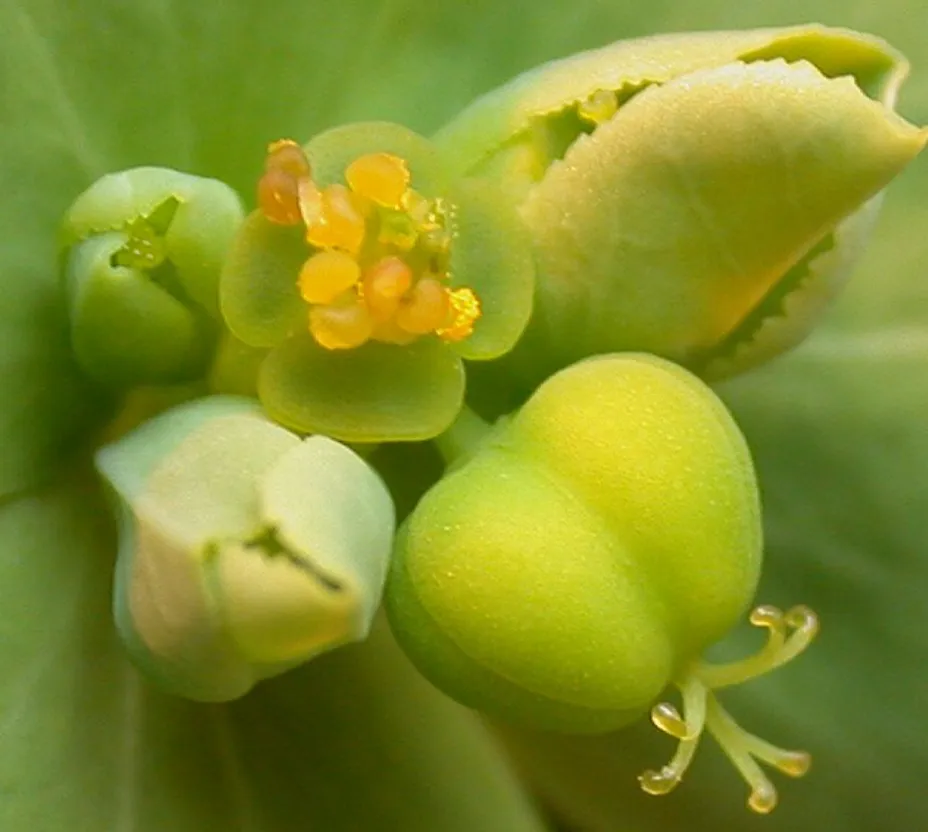
At the center sits a single female flower, which is little more than an ovary on a stalk. Around it stand several male flowers, each reduced to just a single stamen. Surrounding them are small nectar glands that act like visual signals for pollinators.
To an insect flying past, the whole arrangement looks like a normal flower with nectar waiting in the middle.
Botanically, however, it is something very different: a cluster of simplified flowers cooperating to behave like one single bloom.
Once you notice this trick, the plant suddenly becomes much stranger than it first appeared.
Why Build a Fake Flower?
Producing a large, colorful flower is expensive for a plant. Petals require energy and nutrients, and they only exist for a short time before they wither.
Spurges solved this problem in another way.
Instead of investing energy in large petals, they reduced their flowers to the bare essentials and arranged them into a structure that still functions as a pollinator target. The nectar glands attract insects and guide them toward the center, while the tight arrangement of male and female flowers ensures that visitors brush against both.
The plant gets the advantages of a large flower without actually building one.
It is an elegant compromise between efficiency and visibility — evolutionary engineering in miniature.
The success of this strategy is reflected in the numbers. The genus Euphorbia contains over two thousand species and occurs on nearly every continent.
For a plant built around a fake flower, that is quite an achievement.
A Botanical Puzzle
Even more interesting is the question of how this strange structure evolved in the first place.
Most botanists believe the cyathium began as a normal cluster of tiny flowers, the kind of inflorescence seen in many other plant families. Over time, the individual flowers became more and more reduced, losing petals and other parts, while the surrounding structures took over the job of attracting pollinators.
Eventually the cluster stopped looking like a group of flowers and started looking like a single one.
In other words, evolution slowly compressed an entire bouquet into something that behaves like a single bloom.
Once you know this, the plant stops being a simple weed and becomes a fascinating example of evolutionary design.
Watching the Sun
The species name helioscopia comes from Greek and roughly means 'watching the sun'.
Early botanists noticed that the plant often seemed to orient its flower clusters toward sunlight. It’s not quite as dramatic as the famous turning of sunflowers, but the impression was strong enough that the name stuck.
Standing in a sunny patch of soil, with its yellow-green heads spread out, the name feels surprisingly appropriate.
Madwoman’s Milk
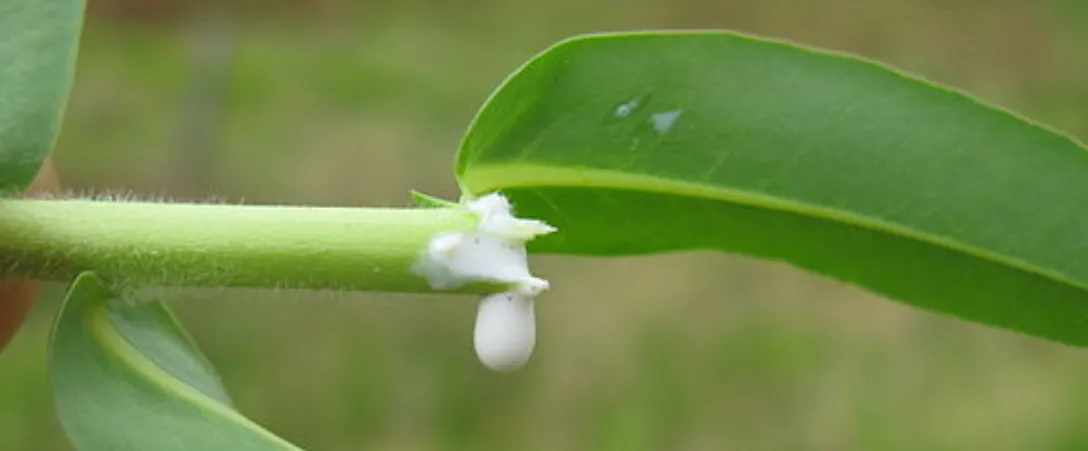
If you break the stem of a spurge, another surprise appears.
A thick white sap quickly starts seeping from the wound. This latex is typical for spurges and contains a mixture of defensive chemicals designed to discourage animals from eating the plant.
The sap can irritate the skin and is definitely not something you want in your eyes.
Despite this, people have historically used it in folk medicine for things like wart removal or as a very strong purgative. Many of these remedies were risky at best, which probably explains some of the colorful common names attached to the plant.
'Madwoman’s milk' suggests a treatment that may have been administered with more confidence than caution.
A Small Rabbit Hole in the Garden
Plants like this show just how deceptive the ordinary world can be.
At first glance, this looks like just another small weed growing along a path or between stones. Something green, something vaguely flowering and easy to overlook.
But once you start asking simple questions; 'Is that actually a flower?' 'Why does it look like that?', the plant reveals a surprisingly elaborate strategy.
What looked like a single bloom turns out to be a carefully staged illusion built from many tiny parts working together.
And suddenly a modest little plant becomes another entrance to the endless rabbit hole of natural history.