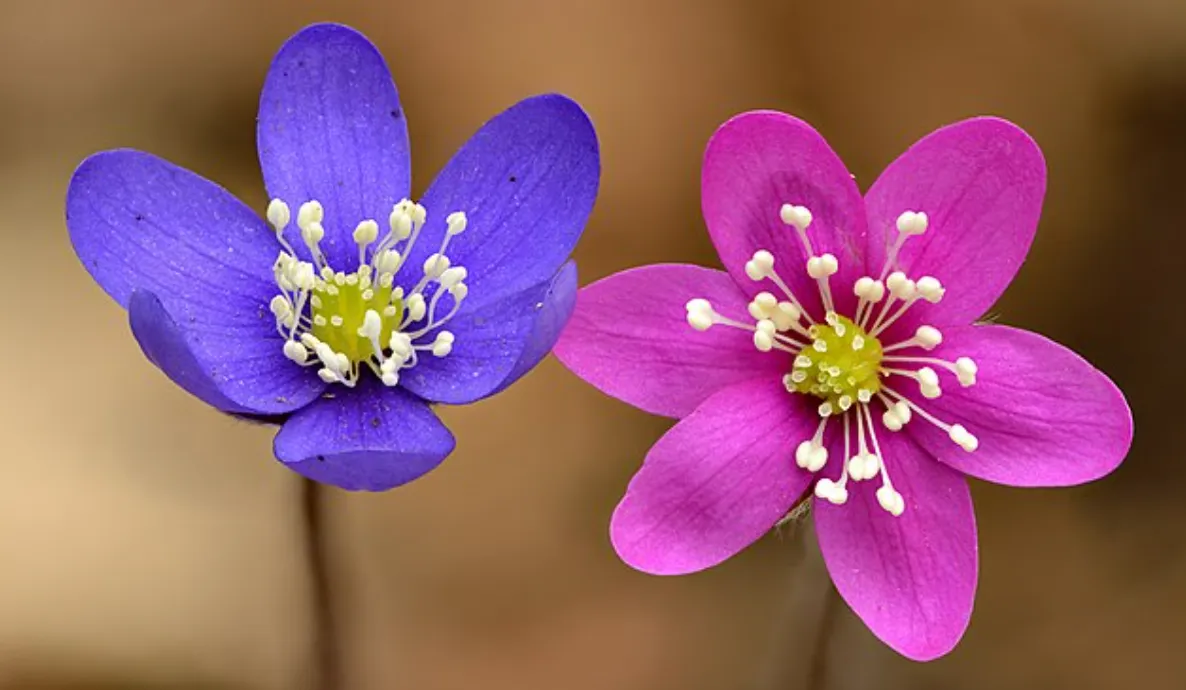
Reading Plants - Part 2: The Rise of the Flowering Plants
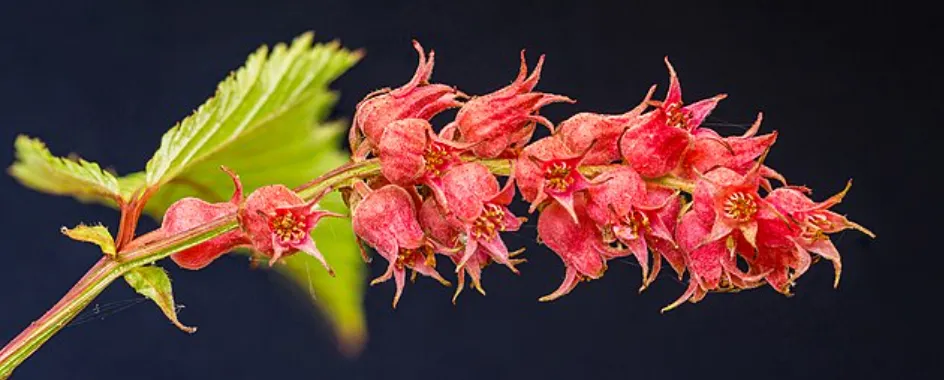
Let's start at the beginning.
Not the beginning of flowers, we'll get there, but the beginning of plants on land. Because to understand why a dandelion looks the way it does, or why a pea flower is shaped like a small fist, or why a mint smells the way it does when you crush a leaf, we need to understand the hundreds of millions years long war that made them the way we now know them.
Plants are not passive. They are not fragile. They are not the quiet background to the more dramatic stories of animals. They are, in many ways, the most successful colonisers in the history of life on earth. And the story of how they got here is one of the most extraordinary survival stories the planet has produced.
The First Invasion
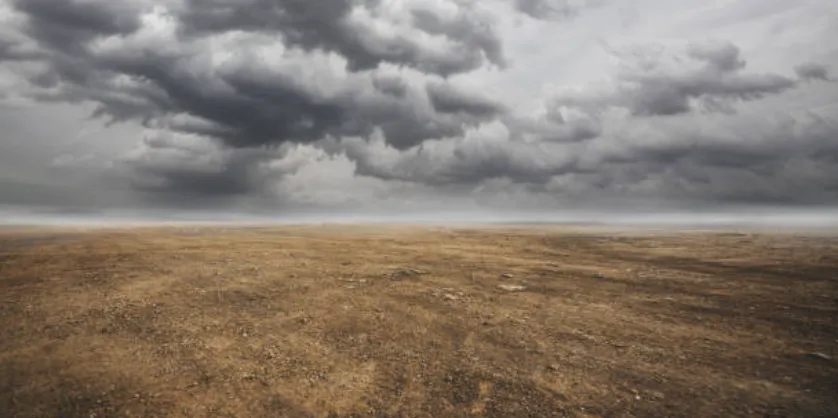
470 million years ago, the land was bare.
Not barren in the way a desert is barren. There was water, there was something you can think of as soil and there was sun. But nothing grew on it. There was life in the ocean, complex and diverse, but the land surface of the earth was little more than naked rock and sediment, scoured by UV radiation, alternately flooded and desiccated, without shelter, without shade, without organic soil and without a food web of any kind. It was, by all means, a pretty hostile place.
The first plants to colonise land were the descendants of green algae. Little more than simple, flat, thin-walled organisms that had been living in shallow coastal water for millions of years. It's a bit of an overstatement to say that they invaded the land, it was rather that they crept up onto it gradually, from the water's edge, into the wet margins, into the splash zones where the rocks met the sea.
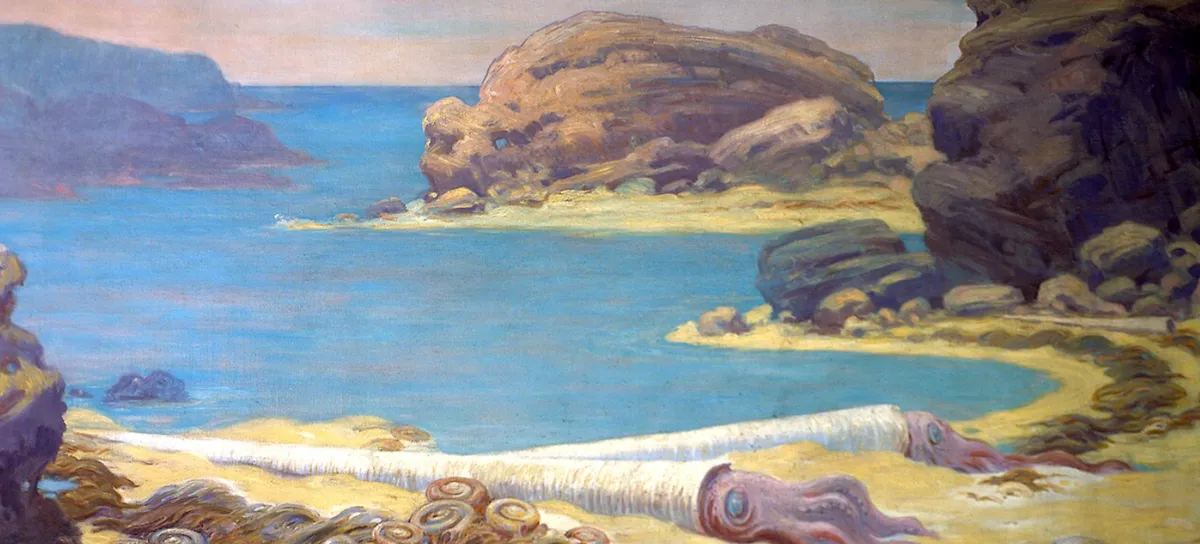
The biggest problem they faced was desiccation. When you're living in the water, every cell is surrounded by moisture. But when you're on land, the air is dry, the sun is relentless, and water evaporates continuously from every exposed surface. These first land plants had almost no protection against this. They were essentially aquatic organisms trying to survive in an alien environment.
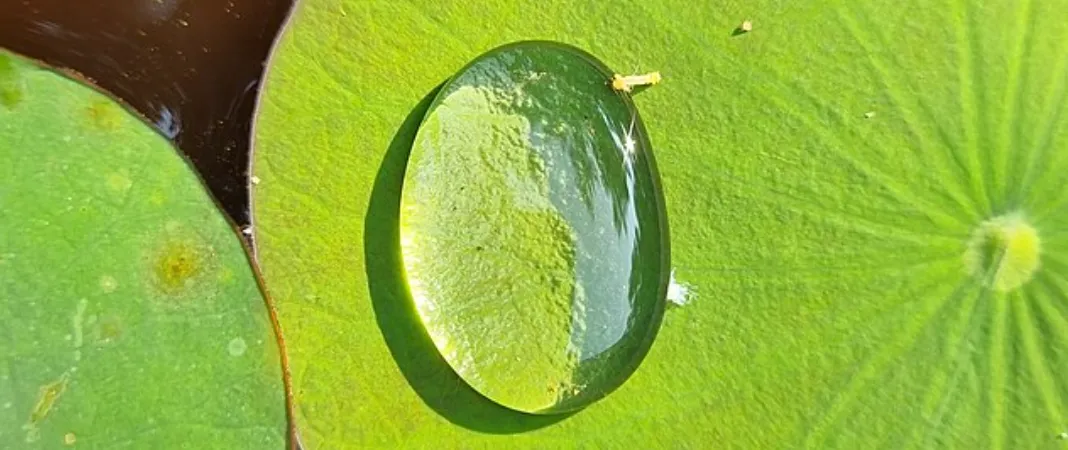
Their solution was to develop a cuticle; a waxy, waterproof coating over the surface of their cells that slowed water loss. While this might seem like a small thing, in fact, it was a huge breakthrough. The cuticle is the single most important reason there are plants on land at all. Without it, every cell surface would lose water to the air faster than it could be replaced, and every plant would shrivel and die within hours of leaving the water.
Now, this cuticle solved the water loss problem, but it also created a new one: gas exchange. Photosynthesis requires carbon dioxide to enter the plant and oxygen to leave it, but the cuticle that keeps water in also keeps gases out. The solution to this was the stoma; a tiny adjustable pore in the surface of the plant that opens to allow gas exchange and closes to prevent water loss.
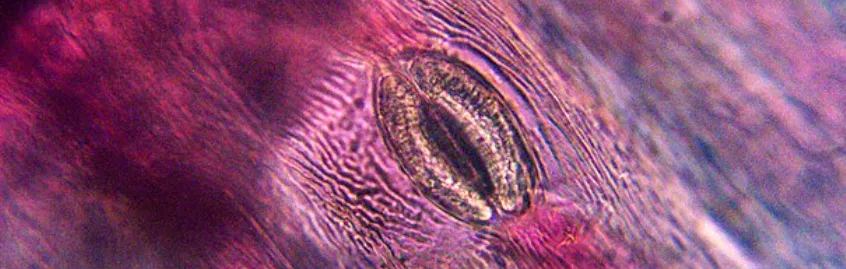
Plants today still use exactly the same mechanism. Every leaf you've ever looked at is covered in stomata, opening and closing in response to light, humidity, and carbon dioxide levels, managing the fundamental trade-off between photosynthesis and desiccation that has defined plant life on land since the beginning.
The first land plants, the ancestors of today's mosses and liverworts, never fully solved this problem. They remained small, flat, and dependent on being wet. They could survive dry periods by drying out almost completely and then rehydrating when water returned, but they couldn't grow tall, couldn't move water efficiently through their bodies, and couldn't colonise dry ground. They were beachhead organisms, the first wave of an invasion that would take hundreds of millions of years to complete.
The Invention of the Pipe
The next great innovation appeared roughly 430 million years ago, and it changed everything.
Vascular tissue, a system of tubes running through the plant body that could transport water from the roots to the leaves and sugars from the leaves back down to the roots, allowed plants to do something their ancestors couldn't: grow tall.
This might seem obvious in retrospect, but the implications were enormous. A tall plant gets more light than a short plant and in a world where every organism is competing for sunlight, height is a decisive advantage. Once vascular tissue appeared, the evolutionary pressure to grow taller became intense, and plants responded by growing faster and in greater variety than anything that had come before.

The first vascular plants were still small by modern standards, only a couple centimetres high, with simple branching stems and no leaves. But within only a few tens of millions of years, they already had diversified into forests.
By 350 million years ago, the Carboniferous period, the earth was covered in dense forests of tree-sized ferns, horsetails, and early seed plants, some reaching 30 metres tall, with trunks a metre across. These forests were vast and continuous and covering much of the land surface of the earth.
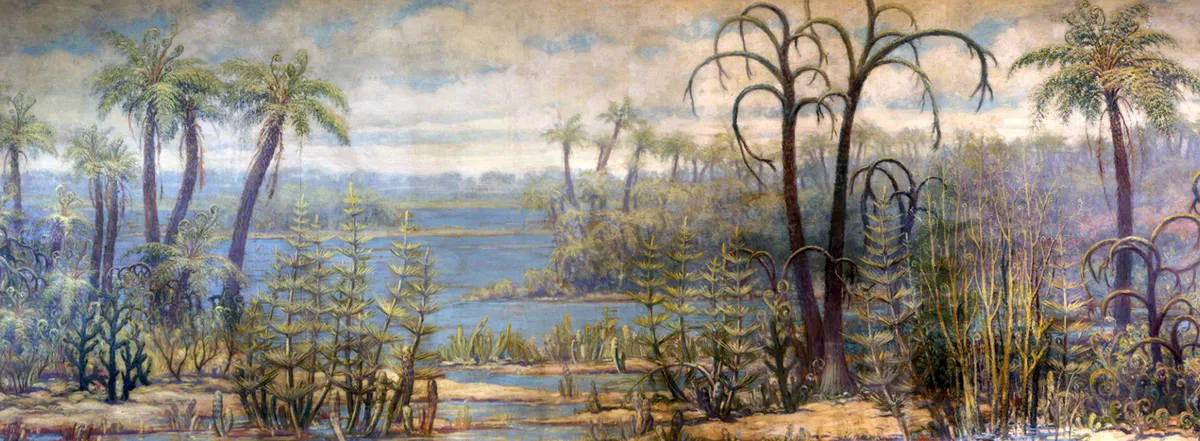
Most of the coal we burn today is the compressed remains of those forests, the carbon they fixed from the atmosphere over millions of years, buried and fossilised when they fell into swamps and were covered by sediment. When we burn coal, we are actually releasing carbon that was pulled out of the air by a fern forest 300 million years ago. The history of plant evolution is literally embedded in the energy system of the modern world.
The Seed: The Greatest Survival Technology in Plant History
Vascular tissue might have allowed plants to grow tall, but they still had a fundamental reproductive problem.
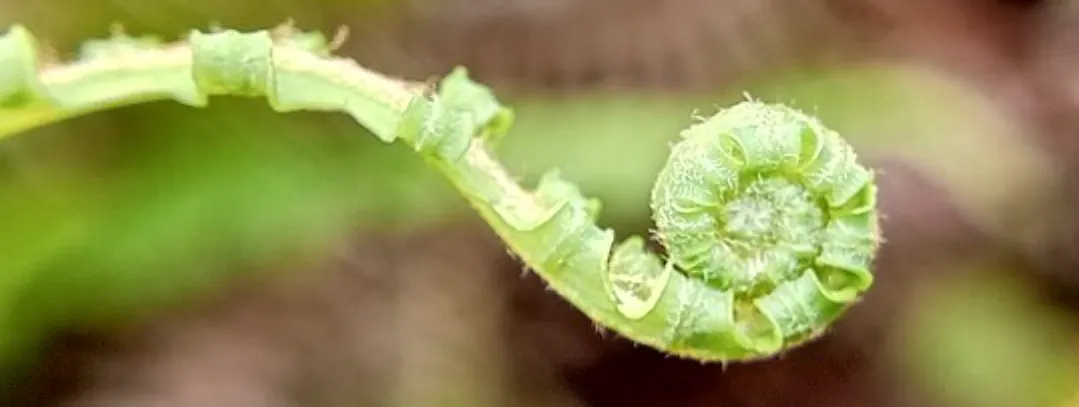
Early vascular plants like ferns and their relatives, reproduced by releasing spores. Spores are tough, light, and can travel long distances on the wind, but they are also tiny and carry almost no energy reserves. A spore that, by chance, lands in a good spot might germinate successfully, but all the spores that land somewhere dry, dark, or nutrient-poor will simply die. The spore strategy is one of quantity over quality. Produce millions and hope enough of them land somewhere suitable to continue the survival of the species.
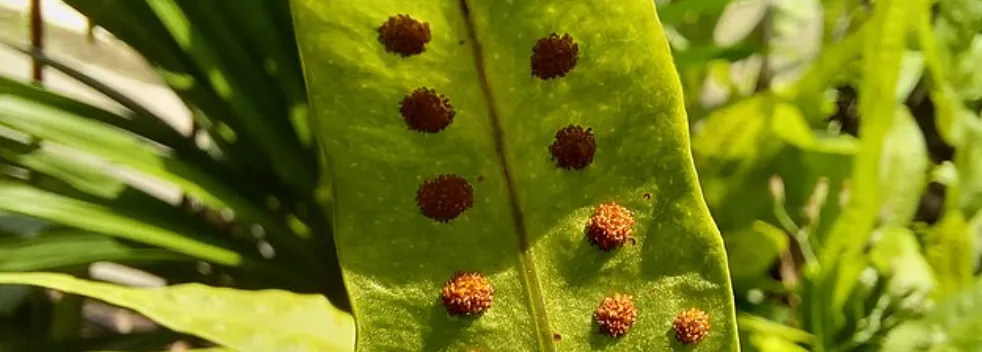
More critically, the actual fertilisation process in ferns still requires water. The sperm cells of ferns are mobile and they swim through a film of water to reach the egg cells. This meant that however well a fern spore dispersed, the actual moment of reproduction required wet conditions. Ferns could colonise land, but they remained dependent on wet environments for sex.
The seed solved this problem quite elegantly.
A seed is an embryo, a fertilised egg that has already begun developing, packaged with its own food supply and protected by a tough outer coat. Instead of releasing a spore that has to germinate, grow, and reproduce on its own, a seed-producing plant packages the first stages of the next generation's life into a single unit that can survive drying, freezing, and burial for years, decades or sometimes even centuries. When conditions become suitable, it germinates, drawing on its stored food supply to fuel growth until the seedling can photosynthesize on its own.
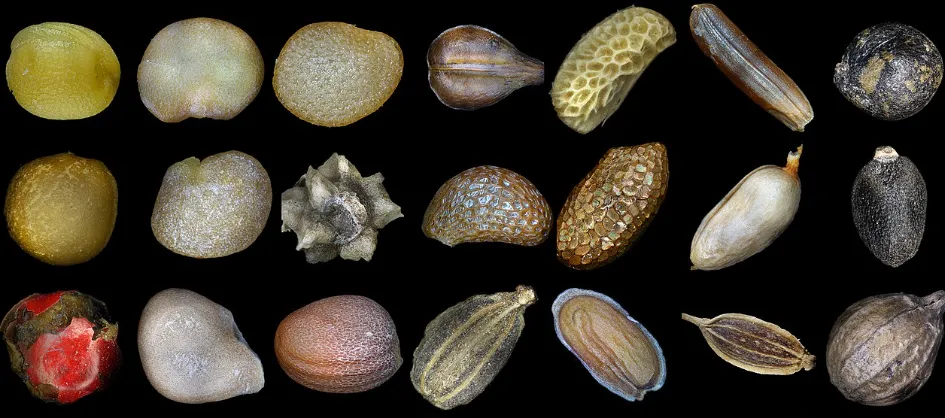
Seeds also solved the water problem. Pollen, which is the seed plant's equivalent of sperm, doesn't swim. Instead, it travels through the air or on the bodies of animals, and the fertilisation that produces the seed happens inside the protected tissues of the parent plant, with no water required. This means that seed plants could reproduce in dry conditions that would have been impossible for their fern ancestors.
The first seed plants appeared roughly 360 million years ago. They were the ancestors of today's conifers, cycads, and ginkgos. These are the group called the gymnosperms, meaning 'naked seed', because their seeds were exposed on the surface of scales or leaves rather than enclosed in a fruit. For 200 million years, the gymnosperms dominated the land. They developed into the great conifer forests that still cover vast areas of the northern hemisphere today. These are the forests of pine, spruce, fir, and larch that are among the most extensive ecosystems on earth.
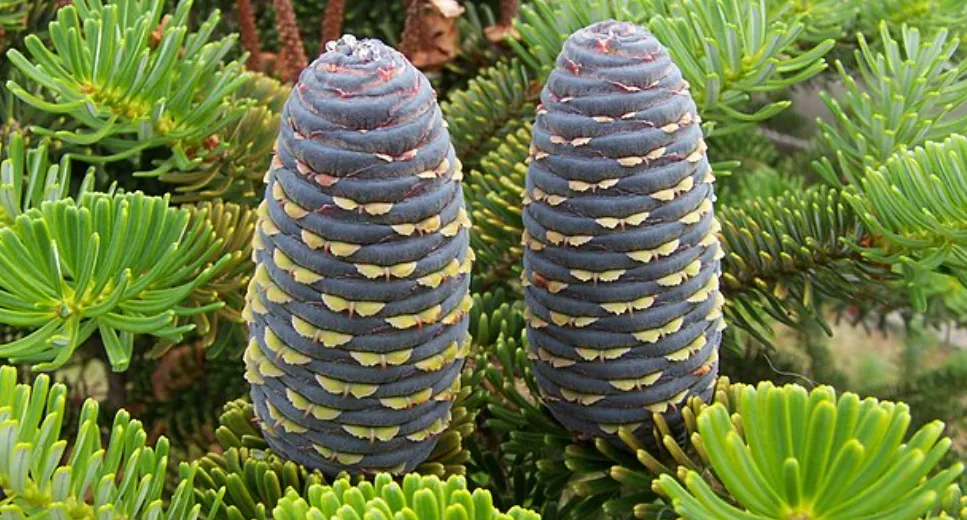
But the gymnosperms had one remaining problem. Their pollen still travelled by wind. Billions of grains released into the air, the vast majority landing on the wrong surface and dying. Effective, given enough volume, but wasteful, unreliable, and expensive.
The Flower: A Deal With the Animal Kingdom
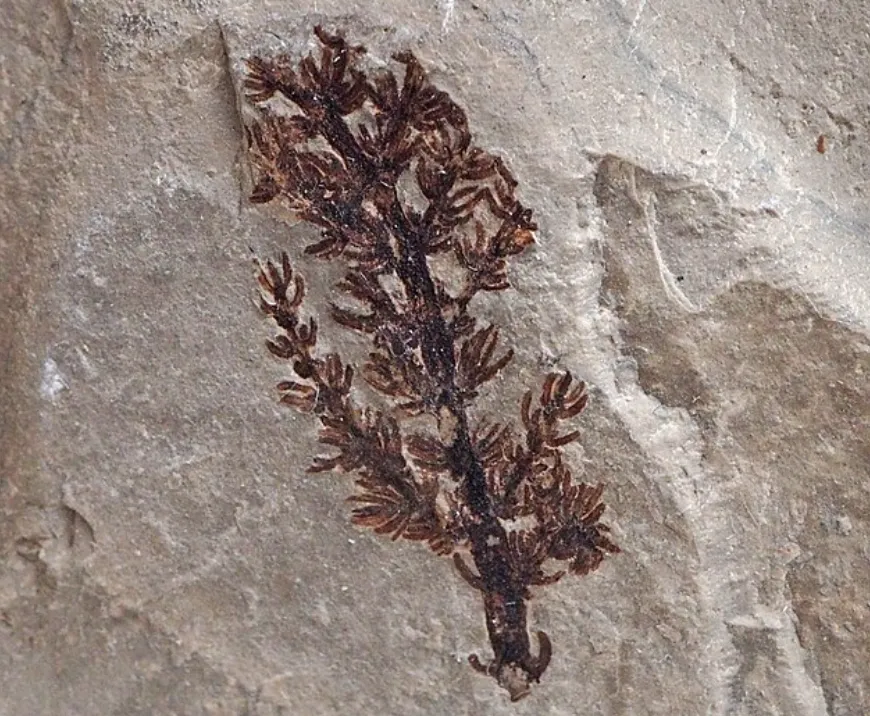
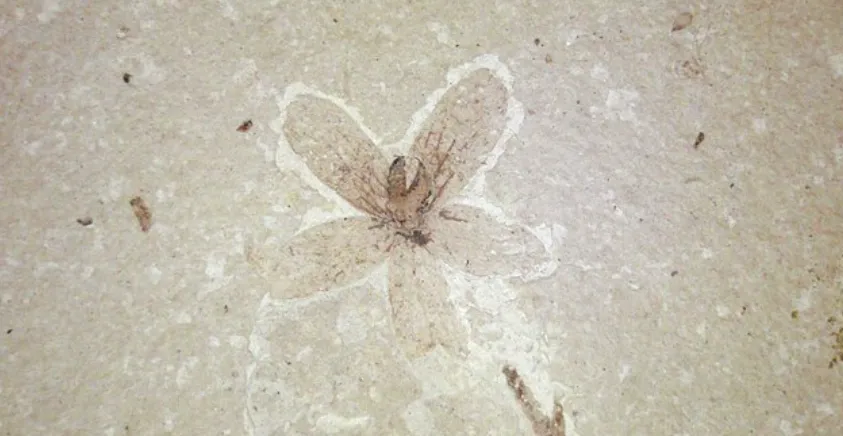
Around 250-140 million years ago (there's some lively debate on the time of origin of the first flower), something new appeared in the fossil record.
A plant with its seeds enclosed. Not naked on the surface of a scale, but wrapped in a protective structure that would eventually become a fruit. And with that seed-enclosing structure came something else: a flower.
These were the first angiosperms, from the Greek for 'enclosed seed', and they were about to change the world.
The flower was not primarily a beautiful thing. It was a recruitment device. Instead of producing billions of pollen grains and releasing them to the wind, the early angiosperms offered a reward: nectar, rich in sugar and energy, to any animal that visited them. In exchange for the reward, the visiting animal would pick up pollen on its body and carry it to the next flower it visited.
Targeted delivery, instead of broadcast dispersal. One insect visiting two flowers could now accomplish what a pine tree needed billions of pollen grains to attempt. That's one hell of an upgrade.
The insects that took up this offer, the earliest pollinators, were already present. Beetles, flies, and primitive wasps had been visiting plants for millions of years, feeding on pollen and whatever else they could find. The flower now simply formalised the arrangement, offering a more reliable reward in exchange for more reliable service.
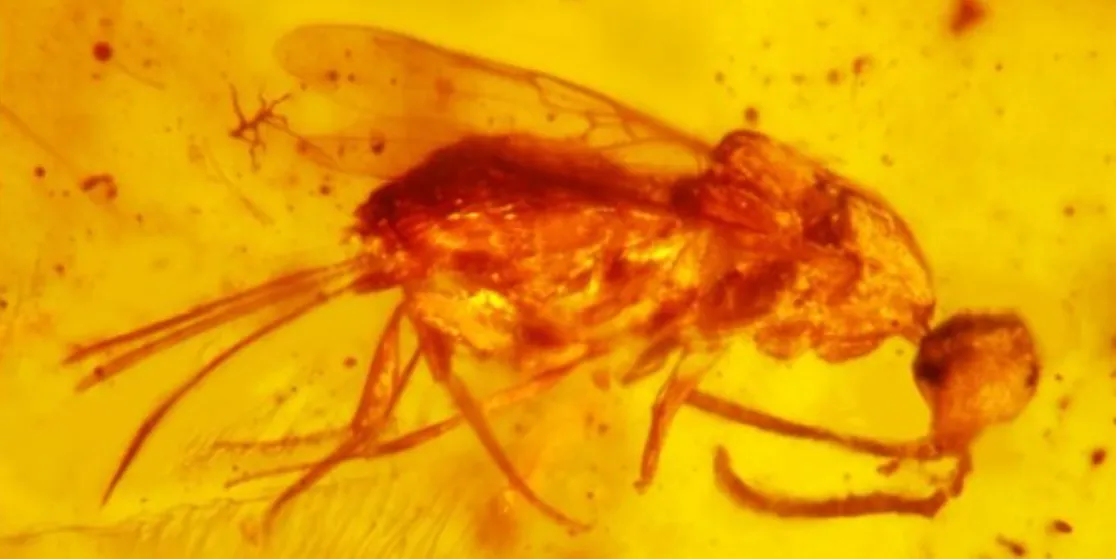
What followed was one of the most extraordinary episodes of co-evolution in the history of life.
As flowering plants diversified, offering different rewards in different shapes and arrangements, the insects diversified alongside them. They evolved things like longer tongues, suitable to reach deeper nectar, specialised pollen-collecting structures and colour vision tuned to the wavelengths plants were using to advertise their flowers. Plants and pollinators drove each other's evolution in a feedback loop that, over tens of millions of years, produced the amazing diversity of both groups that exist today.
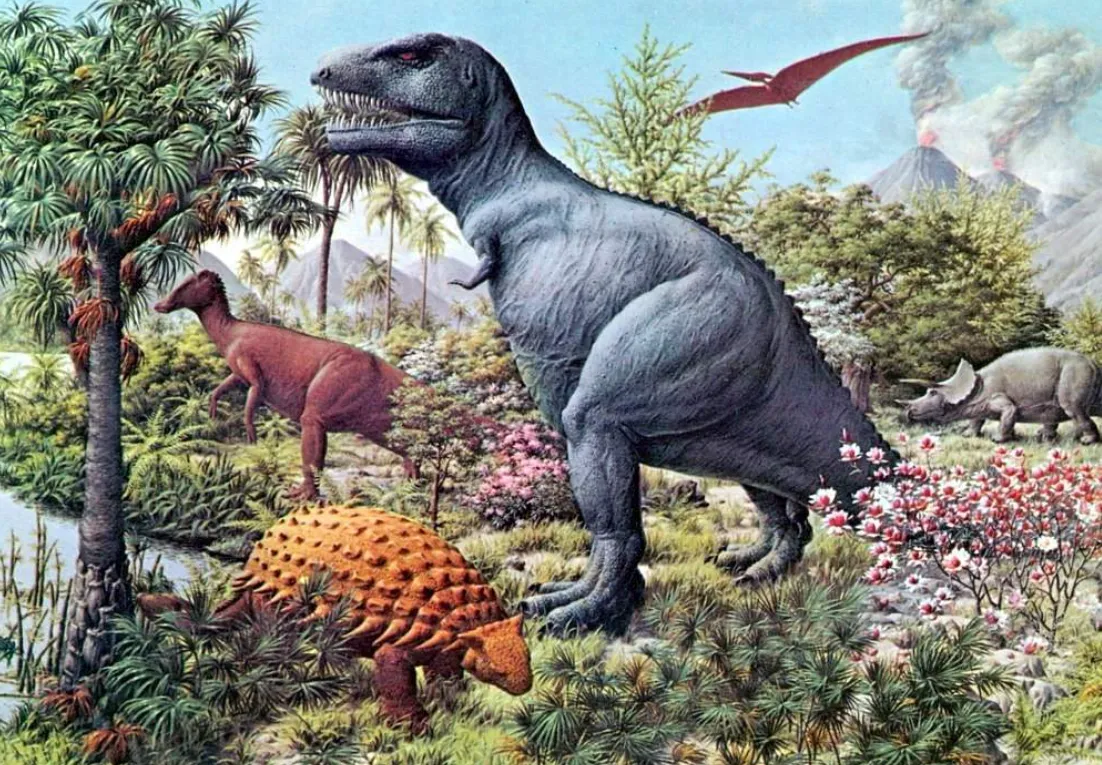
By the time the dinosaurs went extinct 66 million years ago, flowering plants had already spread across most of the earth. In the aftermath of the extinction, with vast ecological niches suddenly empty and ecosystems that were rebuilding from scratch, they accelerated. Within a few million years, angiosperms dominated the land flora of the earth. The great conifer forests retreated to the cold north and the high mountains. Grasslands, which are also angiosperms, spread across the continental interiors. Broad-leaved forests, angiosperms again, covered the temperate zones.
Today, of the roughly 400,000 known species of land plants, about 300,000 are flowering plants. They dominate almost every terrestrial habitat on earth. They are the primary food source, directly or indirectly, of almost every land animal. And the insects that co-evolved with them, particularly the family of bees, which appeared roughly 130 million years ago and diversified explosively alongside the angiosperms, are the most species-rich group of animals on the planet.
And all of it traces back to a deal struck between a small weedy plant and a visiting beetle, about 180 million years ago in a world of dinosaurs.

But here is where the story gets interesting in a different way.
Charles Darwin knew about flowering plants, of course. He studied them obsessively. But the speed at which they appeared and spread across the earth troubled him deeply, because it seemed to contradict his own theory.
Evolution by natural selection is a slow process. It works through the gradual accumulation of small changes, each one slightly better than the last, over vast stretches of time. Darwin's theory required this slowness. But the fossil record showed flowering plants appearing, diversifying, and dominating the earth's flora in what seemed, geologically speaking, like almost no time at all. For hundreds of millions of years, the land was dominated by ferns and gymnosperms. Then, within a few tens of millions of years, little more than a blink in geological time, flowering plants were everywhere.
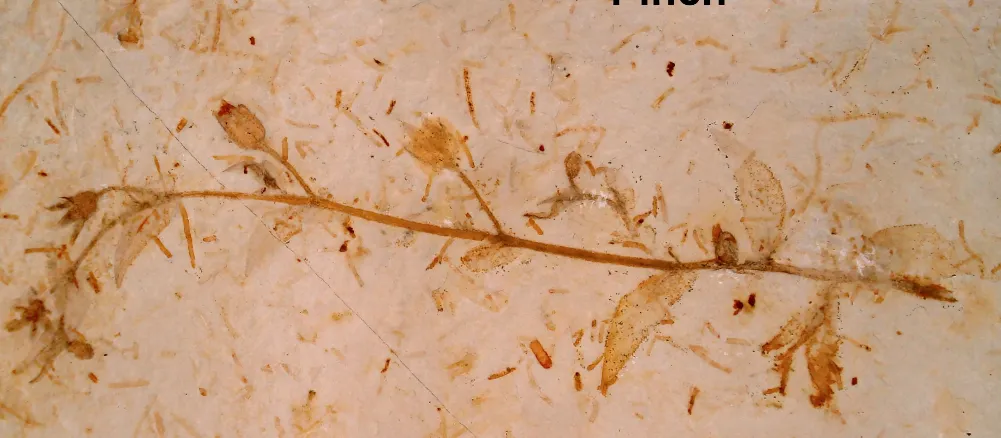
In 1879, Darwin wrote to his friend and colleague Joseph Hooker:
'The rapid development as far as we can judge of all the higher plants within recent geological times is an abominable mystery.'
He never fully resolved it.
We now have a much better understanding of what happened, though the details are still heavily debated. The key was almost certainly the co-evolutionary feedback loop between flowering plants and their pollinators. Once the basic flower-pollinator deal was established, both parties began to specialise, and it was this specialisation that drove the diversification in overdrive.
Each new flower shape created a new opportunity for a pollinator. Each new pollinator created a new selective pressure on the flowers it visited. The feedback loop accelerated both groups simultaneously, producing diversity at a rate that wind-pollinated plants, with no such partner driving their evolution, simply couldn't match.
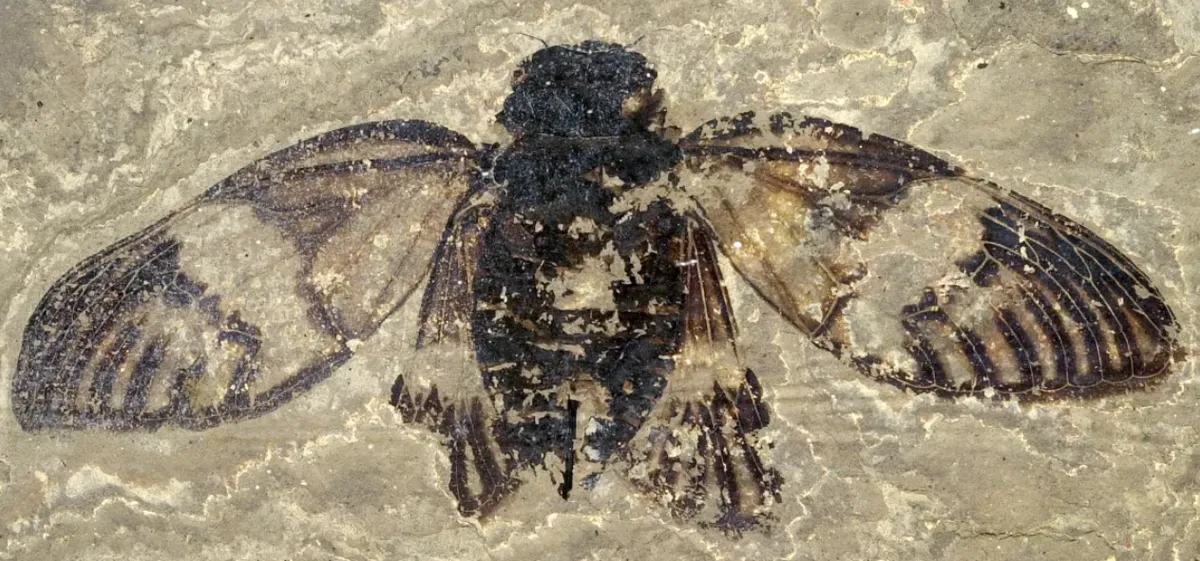
The angiosperms didn't just evolve faster. They evolved faster because they had recruited animals to help them, and those animals were evolving faster too, in response to the plants. It was the deal itself that produced the explosion.
Darwin was right that it was a mystery, but he was simply missing half the picture.
Chemical Warfare
The co-evolution of plants and animals was not always cooperative. For every insect that visited a flower and carried pollen away, there were hundreds of others trying to eat the plant, to consume its leaves, bore into its stems, lay eggs in its tissues, drain its fluids... And unlike animals, plants cannot run away. They cannot fight back with claws or teeth. They are rooted in place, and they have to deal with whatever comes to eat them.
Their solution was chemistry.
Over hundreds of millions of years, plants have evolved a magnificent arsenal of chemical defences, compounds produced specifically to deter, poison, or confuse the animals trying to eat them. Tannins that bind to proteins and make leaves indigestible. Alkaloids, including caffeine, nicotine, morphine and strychnine, that interfere with animal nervous systems. Terpenes that make tissues smell or taste repellent. Glucosinolates (the compounds that give mustard and horseradish their burning taste) that break down into toxic chemicals when leaf tissue is damaged.
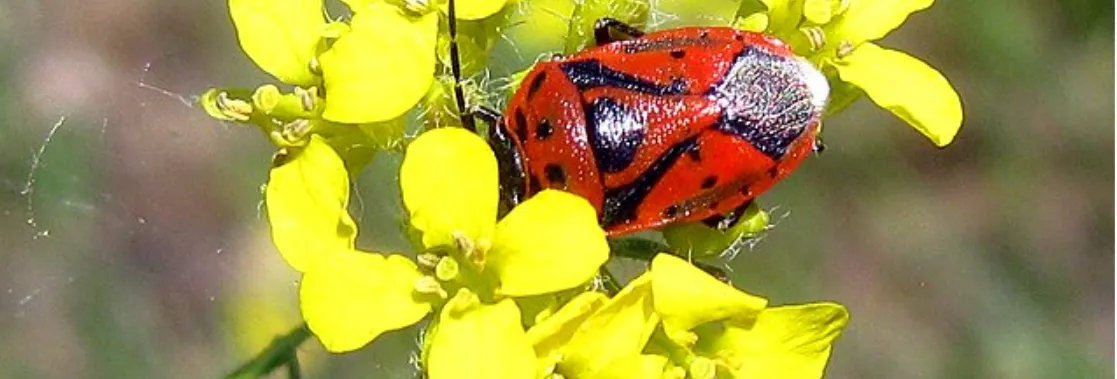
These are the reasons most plants are not simply eaten to the ground. A world without plant chemical defences would be a world in which plants couldn't exist, because every herbivore would consume every plant it encountered until nothing was left.
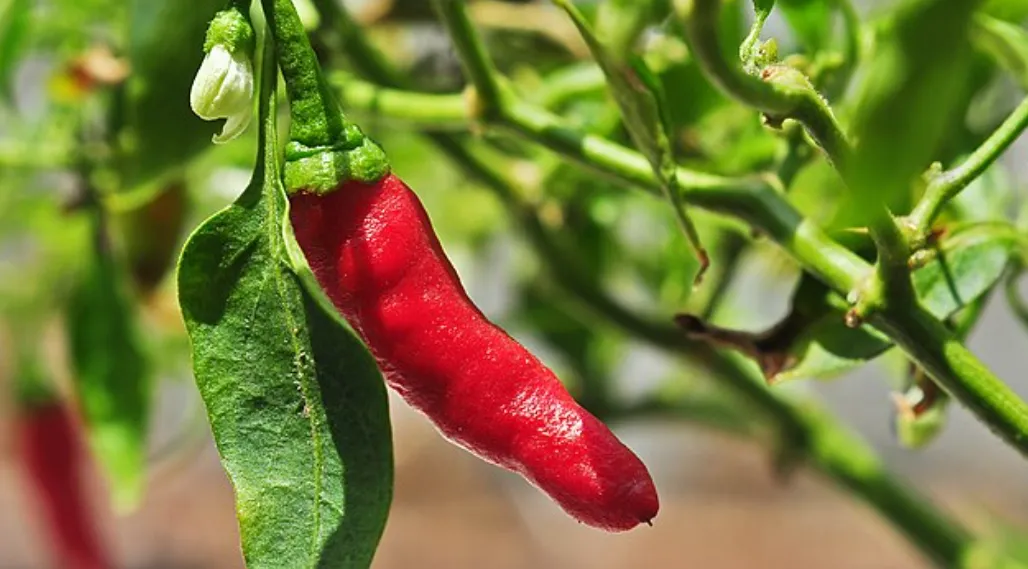
The chemical arsenal also explains many of the things we find most useful about plants. The reason mint smells the way it does when you crush a leaf, is that the plant is releasing volatile chemicals designed to deter insects from eating it. We find the smell pleasant, but the spider mite trying to colonise the plant does not. The reason hot peppers are hot is that capsaicin, the compound responsible for that, deters mammals from eating the fruit, while leaving birds unaffected. Birds disperse the seeds over long distances. Mammals would chew them up and destroy them. The pepper evolved a mammal-deterrent that doesn't affect birds.
The reason so many plants are medicinal, why willow bark relieves pain, why foxglove affects the heart, why opium poppies alter consciousness... is that these plants evolved chemicals targeted at animal physiology, and animal physiology is similar enough across species so that what affects an insect, often affects a mammal too, sometimes usefully, sometimes dangerously.
When you crush a leaf and smell it, you are smelling the plant's defence system. When you eat a chili pepper, you are experiencing a chemical weapon aimed at mammals. When you drink a cup of coffee, you are consuming a compound that evolved to paralyse insects feeding on coffee plant roots.
The flower is the deal. The chemistry is the defence. Both are part of the same story.
The Physical Arsenal
Chemistry was not the only weapon in the plant's defence system.
Some plants took a more direct approach. Thorns, spines, and prickles evolved independently in dozens of unrelated plant lineages, not because they all share a common ancestor with thorns, but because the same solution kept working. A stem covered in sharp projections is simply harder to eat. A herbivore that learns to avoid thorned plants will eat something else instead.
It is worth knowing the difference between these structures, because they come from different tissues and reflect different evolutionary origins.
A thorn is a modified stem or branch. It is connected to the plant's vascular system and cannot be broken off cleanly without damaging the wood beneath. Hawthorn and blackthorn have true thorns. Try to snap one off and you'll feel that it's part of the plant.
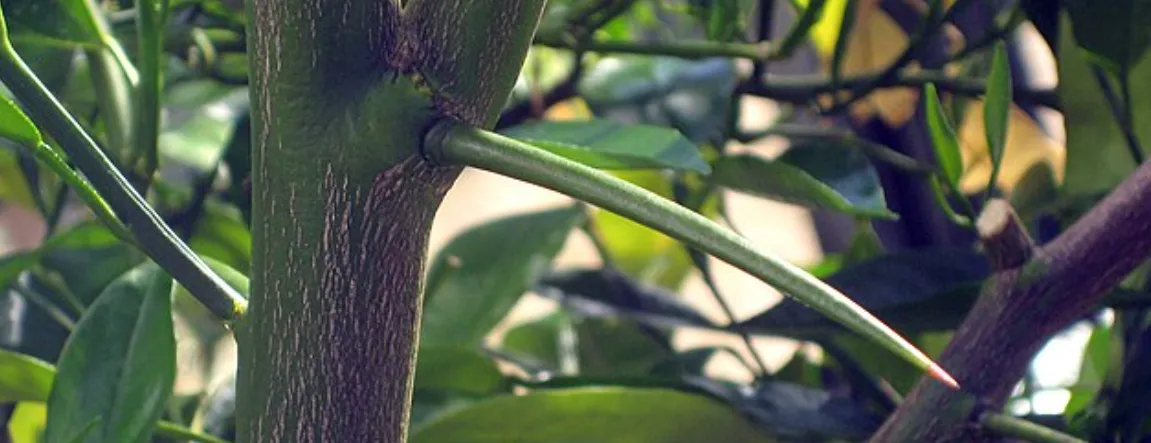
A spine is a modified leaf or part of a leaf, like the spines of a cactus, for instance, that are nothing more than highly modified leaves. Holly leaves have leaf-margin spines. Like thorns, spines are connected to the plant's vascular tissue.
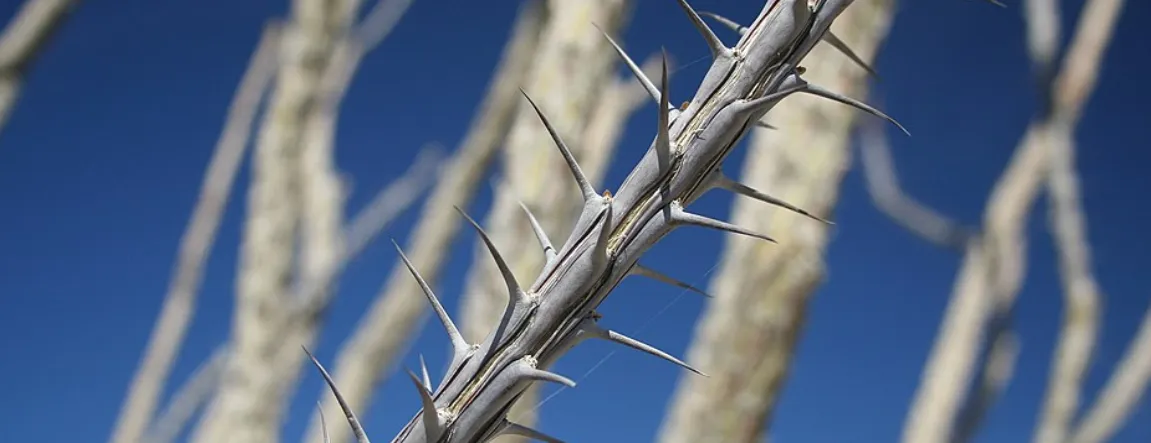
A prickle is simply a sharp outgrowth of the surface tissue, the epidermis, with no vascular connection. Rose prickles (commonly called thorns, though botanically they are not) can be snapped off relatively cleanly because they are not connected to the woody tissue beneath. Gooseberry and raspberry prickles work the same way.
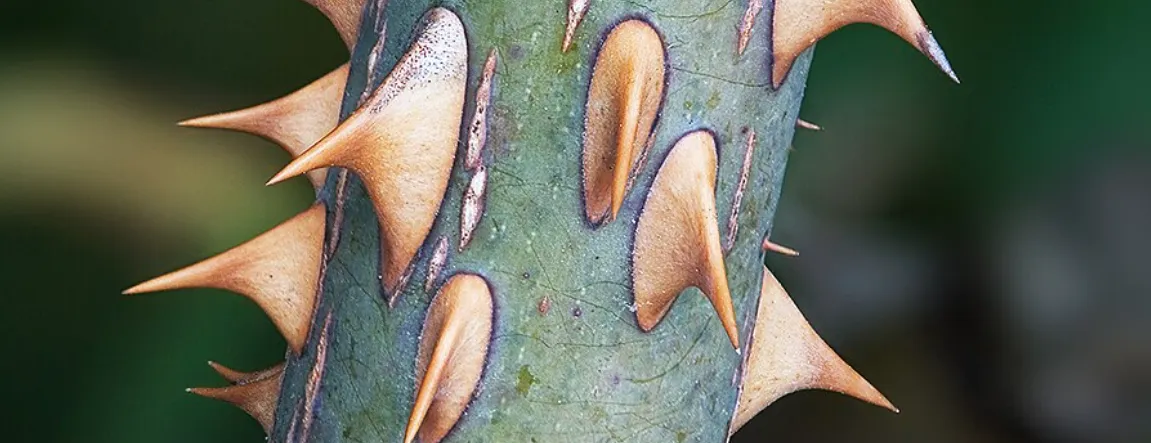
This distinction matters for identification because it is consistent within families. Rosaceae plants have prickles, not thorns. Hawthorn has thorns, not prickles. Once you know which structure a family uses, you have another reliable clue.
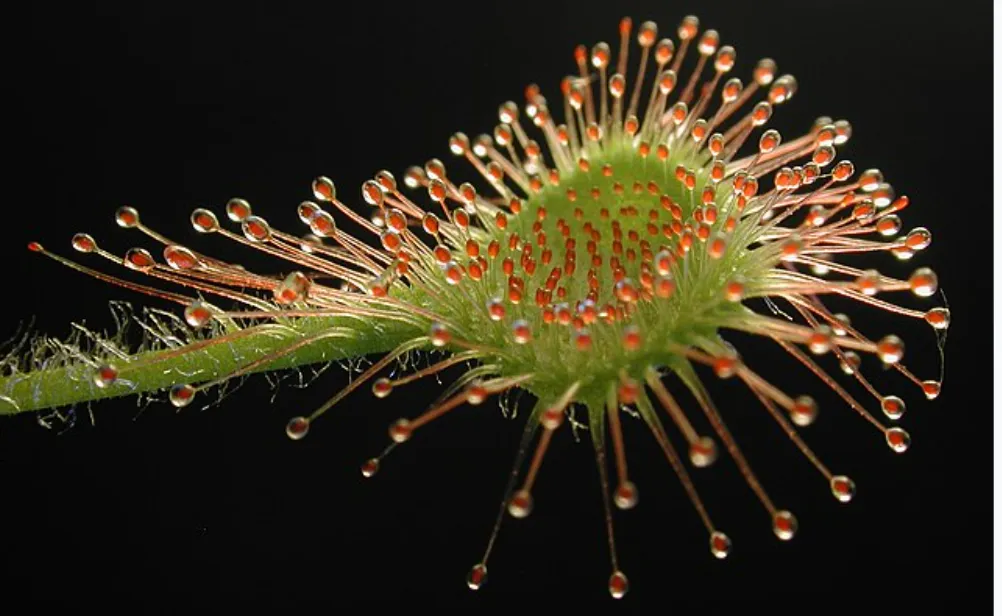
Beyond sharp structures, plants evolved other physical defences. Dense hairs, called trichomes, on leafs make feeding difficult for small insects, because they can become tangled in them. Some trichomes are glandular, releasing sticky or toxic compounds when touched. The hairs of a sundew trap insects this way, though the sundew takes this further than most by digesting them. Silica crystals deposited in leaf tissue make leaves abrasive and difficult to chew. Grasses are particularly well-armed in this way, which is why grazing animals wear down their teeth faster than browsing animals and have evolved continuously-growing molars to compensate. Calcium oxalate crystals in leaf tissue cause intense irritation in the mouths and digestive systems of animals that eat them (think of the burning sensation of raw rhubarb leaves).
Some plants went even further and evolved structures that recruit defenders rather than repelling attackers directly. Certain acacias provide hollow thorns as nesting sites for aggressive ant species, and nectar-producing structures on the leaves as food. In return, the ants patrol the plant, attacking anything that tries to eat it, including other insects, browsing mammals and even other plants that touch the acacia's branches. The plant outsourced its defence to an army, and pays for the service in sugar and accommodation.
The chemical arsenal and the physical arsenal are not separate strategies. Most well-defended plants use both, and the combination is often more effective than either alone. A leaf that is both chemically bitter and covered in abrasive hairs is considerably harder to eat than one that is only one of those things.
Evolution rarely stops at one solution when two are available.
The Strategies for Spreading Seeds
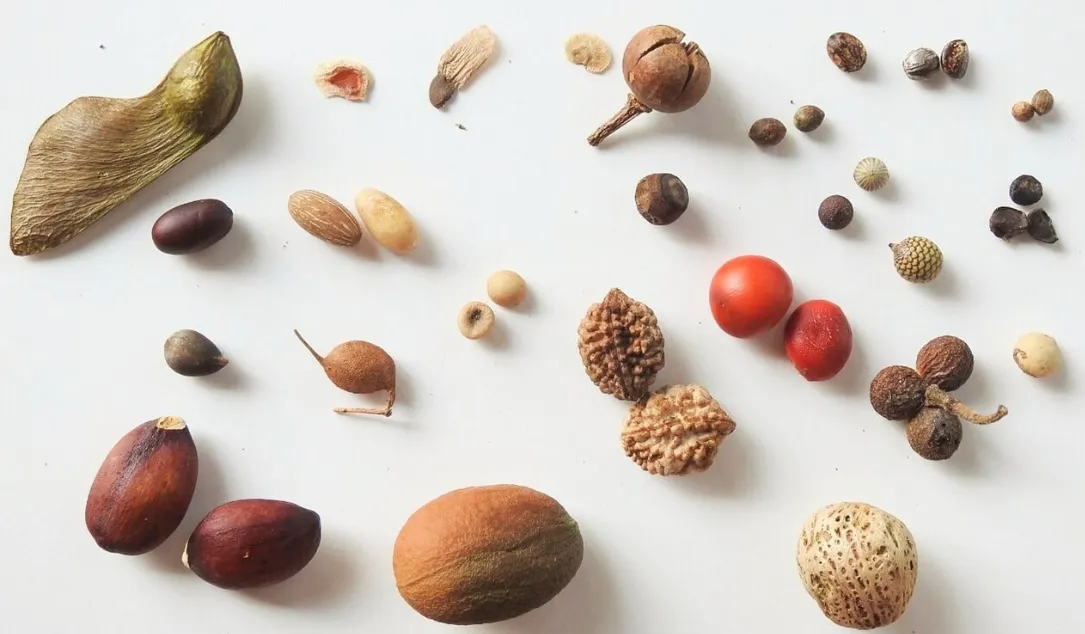
Once a plant has been pollinated and produced seeds, it faces one more big problem: getting those seeds away from itself.
A seed that falls directly under the parent plant has to compete with the parent plant for light, water, nutrients and space. Most seeds that germinate in the shadow of their parent plant will fail. Moving away from the parent is, in evolutionary terms, almost always better than staying put.
Plants have evolved an astonishing variety of solutions to this problem, and the diversity of fruits and seed structures you'll encounter reflects it directly.
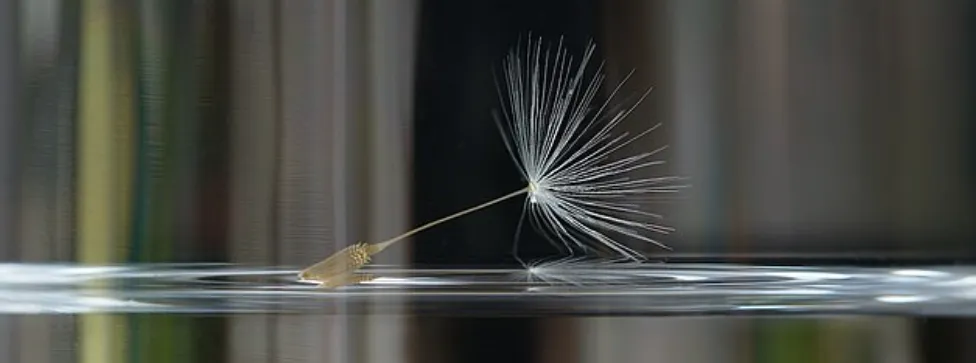
Some chose for wind dispersal. Dandelion seeds have feathery parachutes. Maple seeds spin like helicopters. Ash seeds are single-bladed wings. All of these structures slow the seed's fall and allow it to be carried by wind away from the parent plant.
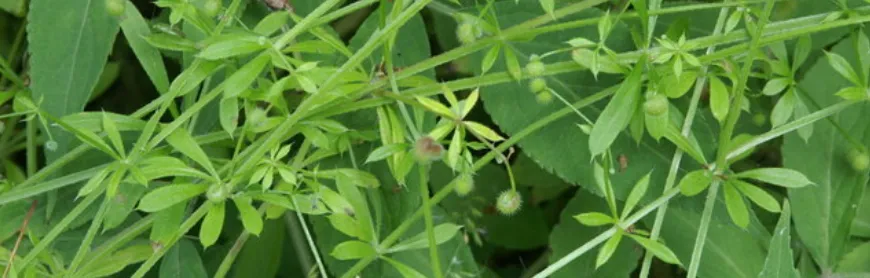
External animal dispersal is another favorite of many plants. Burdock seeds have hooks that catch in fur and clothing. Goosegrass seeds are covered in tiny velcro-like projections. These seeds evolved to hitch rides on passing animals, detaching and falling off somewhere away from the parent plant.
Internal animal dispersal is also a popular way to spread the genes. Fleshy fruits, like berries, cherries and apples are the plant's way of persuading animals to eat the seeds and deposit them elsewhere, neatly wrapped in a package of dung that will act as fertiliser. The sweetness of a ripe fruit is what attracts the animals. The hard seed coat inside is protection against digestion. The plant is using the animal's digestive system as a dispersal mechanism.
Some opt for a more explosive way of dispersal. Some plants,touch-me-nots, squirting cucumbers, wood sorrel... build up tension in their seed pods and release it explosively, firing seeds metres away from the parent. The squirting cucumber (Ecballium elaterium) can fire seeds over six metres. The sandbox tree (Hura crepitans), admittedly not a temperate plant, but a nice example anyway, explodes with enough force to send seeds 45 metres at speeds of up to 70 metres per second. That is, for me, a pretty remarkable piece of engineering for an organism without a nervous system.
Coconuts float. So do the seeds of many aquatic plants, and many plants growing near water have seeds adapted to travel on currents. The lotus, which grows in ponds and slow-moving water, produces seeds that can remain viable for over a thousand years. Some ancient lotus seeds found in a dry lake bed in China germinated successfully after being carbon-dated to over 1,200 years old.
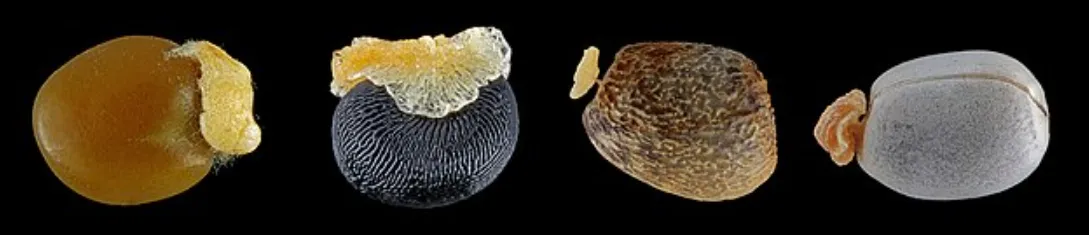
Violets, wild ginger, and hundreds of other plants produce seeds with a small nutritious attachment, called an elaiosome, that ants collect as food. The ants carry the seeds back to the nest, eat the attachment, and discard the seed in the nutrient-rich waste pile outside the nest entrance. The plant gets its seeds moved and planted in fertile ground. The ant gets a meal. Neither party is aware of the arrangement, but it has been working for millions of years.
The Result
Four hundred and seventy million years of evolution. From a flat, damp film of cells clinging to the edge of the sea to the dominant life form on land.
In that time, plants have invented waterproof coatings, adjustable gas exchange pores, transport systems, structural materials stronger than most metals by weight, chemical weapons targeted at specific enemies, elaborate recruitment systems for pollinators and seed dispersers, and reproductive strategies that can survive centuries of dormancy and germinate in conditions that would kill most other living things.
They did all of this without a nervous system, without movement, without the ability to make a decision in any sense we would recognise. They did it entirely through the slow accumulation of small changes, each one surviving because it worked slightly better than what came before.
The flower in your garden is not a decoration. It is the current iteration of a four-hundred-million-year engineering project. Every petal, every stamen, every scent molecule released into the air is the result of millions of years of testing, failure, refinement, and success.
And all of it is visible, if you know how to read it.
What This Means for Identification
Understanding this history changes how you look at plants in the field and it makes identification considerably easier.
When you see a flower with numerous separate parts, radial symmetry, and a superior ovary, you are looking at a plant that retained the ancestral features of early angiosperms. The candidates are a relatively small number of old, primitive families like Ranunculaceae, Papaveraceae and Magnoliaceae.
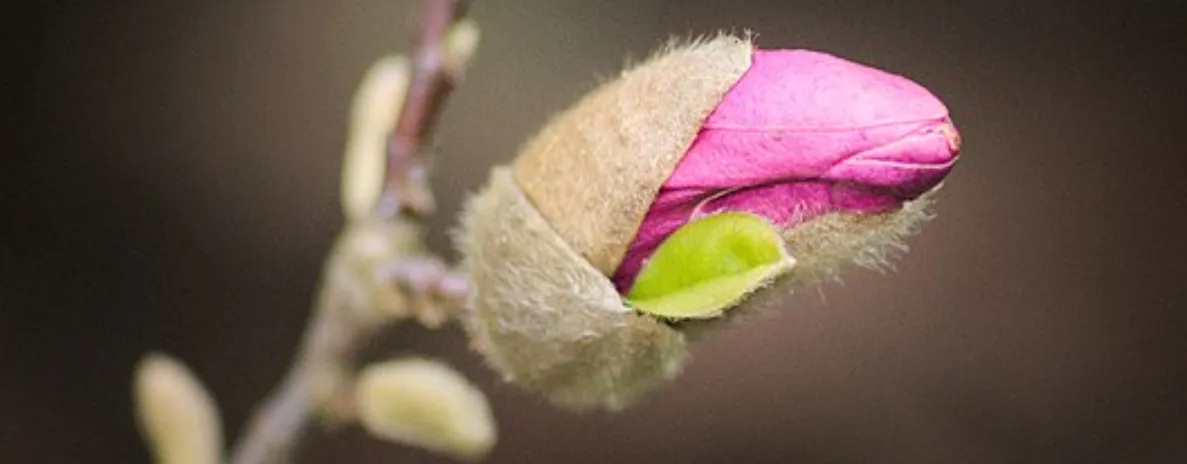
When you see a flower with fused petals, bilateral symmetry, and an inferior ovary, you are looking at a plant that has been through a long process of specialisation. The deal with its pollinators has been refined over a long time, and the flower reflects that refinement in every structural detail.
When you smell something sharp or bitter when you crush a leaf, you are encountering the chemical arsenal, a clue about the family, because different families evolved different chemical strategies, and those strategies are often consistent enough within a family to be diagnostically useful. The square-stemmed plants that smell of aromatic oils are almost certainly Lamiaceae. The plants that smell of mustard when you break a leaf are almost certainly Brassicaceae.
When you look at the fruit or the seed structure, you are reading the dispersal strategy, another useful family-level feature that is often remarkably consistent. The paired winged fruits of maples, the hooked burs of burdock, the pods of the pea family, the achenes of the daisy family... all of these are recognisable once you know the family, and they are recognisable precisely because the dispersal strategy is part of the same evolutionary package as everything else.
The flower, the chemistry, and the seed are not separate features. They are parts of the same story, written by the same evolutionary history, readable by anyone who knows the language.