Reading Plants - Part 3: Ranunculaceae — The Buttercups
Walk into any temperate meadow in spring and you will almost certainly find a member of the buttercup family within the first few minutes.
Ranunculaceae is, after all, one of the most widespread plant families in the temperate world, with around 3,700 species distributed across every continent except Antarctica. They grow in meadows, hedgerows, woodlands, mountain slopes, wetlands, and arctic tundra. Some are among the first flowers of the year, some grow at altitudes where almost nothing else can survive, some are familiar garden plants and some are among the most toxic plants we can find in the northern hemisphere.
They are one of the great success stories of the flowering plant world. The reason for that success is not sophistication, but it's simplicity, or more precisely, using a very old strategy that today seems to work just as well as it did millions of years ago.
The Oldest Deal
Cast your mind back to part two, to the early angiosperms, the first flowering plants, the open-market flowers that offered nectar and pollen to anyone who visited.
Ranunculaceae is about as close as you can get to that original deal in a living plant family.
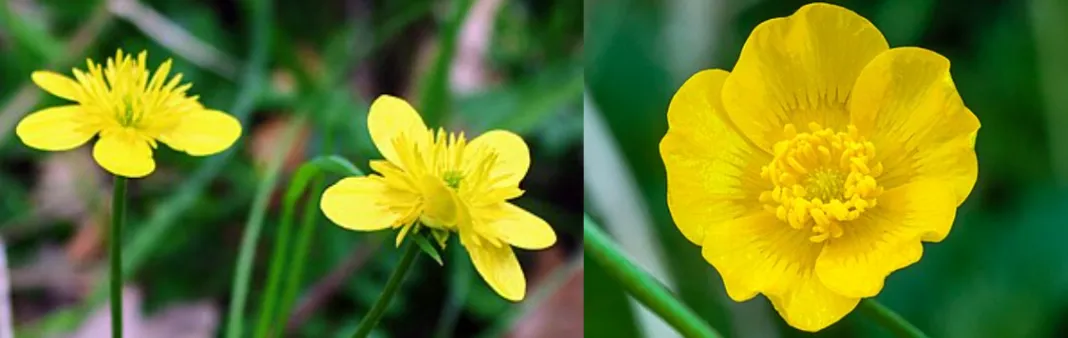
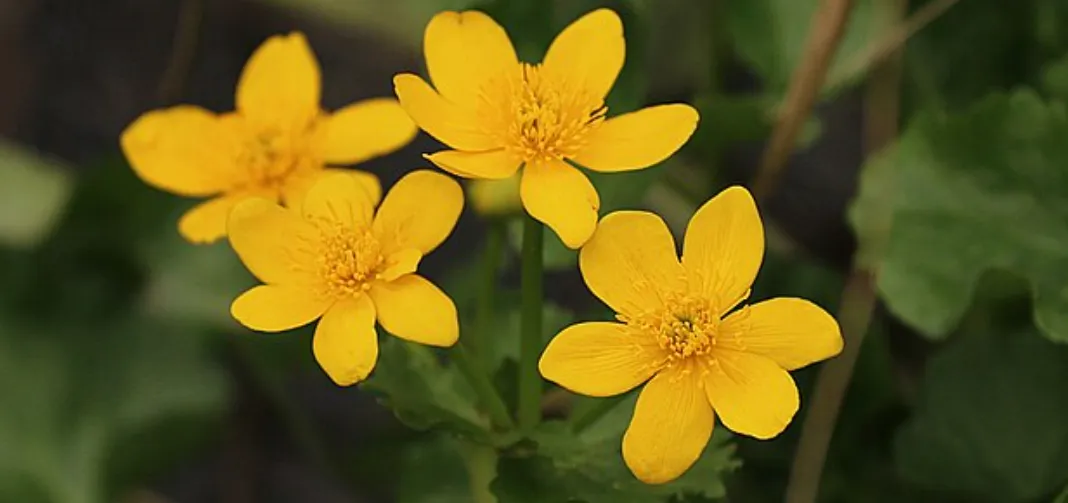
Pick up a buttercup and look at it. Five yellow petals, all roughly the same shape and size, arranged in a ring. Numerous stamens, all separate, radiating outward from the centre. Numerous separate pistils, clustered in a cone at the very centre. No tubes, no landing platforms, no hidden nectaries accessible only to visitors with specialised anatomy. The flower is open, symmetrical, and accessible from any direction to almost any visitor.
This is the open market strategy: come in, take what you want, and if you happen to brush against a stamen or a pistil on the way, so much the better. The plant is not trying to have a specific conversation with a specific pollinator. It is a broadcast to anyone in range.
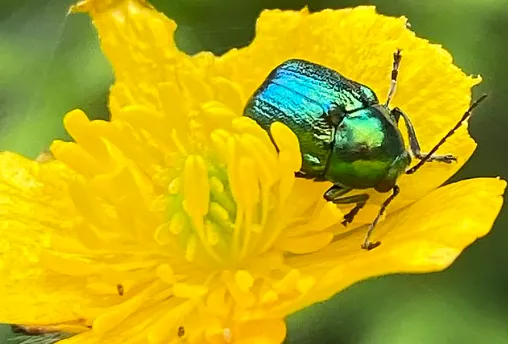
The result is that Ranunculaceae flowers are visited by an enormous diversity of insects, like bees, hoverflies, beetles, flies, small wasps, butterflies... without being specifically dependent on any of them. This generalism is, when you look at it as an evolutionary term, a form of resilience. A plant that depends on a single specific pollinator is in serious trouble if that pollinator has a bad year. A plant that welcomes everyone is almost always serviced by someone.
The Pattern: What to Look For
Ranunculaceae is one of the easier families to recognise once you know the key features, because most of them are visible at a glance.
Numerous separate parts.
This is the signature of the family. Numerous stamens, all separate from each other and from the petals (you can try to count them, though there are usually too many to bother), together with numerous separate pistils, which are often arranged in a tight cluster or a cone at the centre of the flower. Pull one pistil away gently and it comes free on its own. There is no compound pistil here, no fusion of carpels. Each one is an independent unit. This is the ancestral condition: the un-fused, un-specialised flower of an early angiosperm. Finding this, is the single most reliable indicator that you are looking at a Ranunculaceae.
Superior ovary.
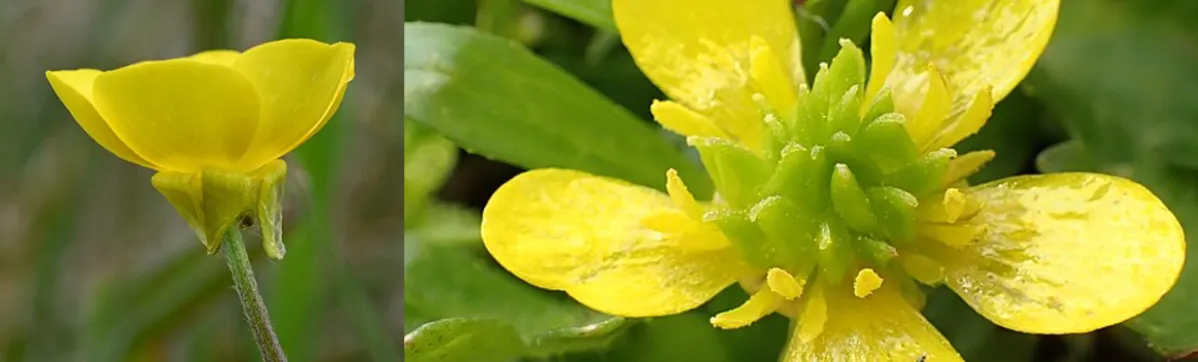
The ovary sits above the attachment point of the petals, clearly exposed. There is nothing wrapped around or under it. In some members of the family the cluster of pistils is raised up on a small dome at the centre of the flower. In buttercups, this is visible as a slightly raised green cone surrounded by the stamens.
Radial symmetry.
Most members of the family have regular flowers (so the flower looks the same from every direction). There are exceptions, and they are interesting ones, but we'll come to these later.
Alternate leaves, often deeply divided.
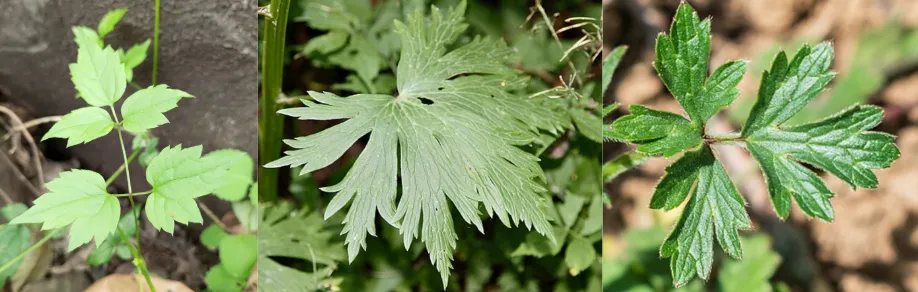
Most Ranunculaceae have leaves that are palmately lobed or divided, cut into sections radiating from a central point, like fingers on a hand. This is not universal, but it is common enough to be a useful supporting feature when the flower alone isn't enough to confirm the family.
No true petals in some members.
This is where things get interesting, and we'll address it properly in the experiments section below.
One important note:
The number five for petals is common in the family but not fixed. Anemones typically have five to eight, hellebores have five, lesser celandine has eight to twelve, clematis has four. What remains constant is not the petal count but the numerous separate stamens and the numerous separate pistils. When in doubt, look at the centre of the flower.
A Superior Ovary and What It Means
We covered ovary position in part one, but Ranunculaceae is a good place to see it clearly in the field because the superior ovary is so obvious. In a buttercup, the cluster of separate pistils sits at the very top of the flower, raised above everything else, surrounded by the stamens. It is exposed and unprotected by any surrounding tissue. There is no receptacle tissue grown up around the ovary and no fleshy structure is enclosing the developing seeds.
This matters ecologically because an exposed ovary is more vulnerable to damage from insects that eat developing seeds, physical damage from rain or wind or from fungi and bacteria. Many more advanced plant families protect the ovary by enclosing it in the receptacle, producing an inferior ovary surrounded by fleshy tissue that becomes the fruit.
Ranunculaceae compensates for this vulnerability in a different way: chemistry. Which brings us to one of the most important things about this family.
The Chemical Defence
Ranunculaceae is really toxic! Not selectively toxic, not mildly irritating, but genuinely, seriously toxic across almost the entire family, in ways that have been killing livestock, poisoning humans, and deterring herbivores for millions of years.
The primary weapon is a compound called ranunculin, which is stored harmlessly in the plant's cells as long as the tissue is intact. When the tissue is damaged, like when a leaf is chewed, a stem is crushed or a root is broken, an enzyme is released that converts ranunculin into protoanemonin, a volatile, blistering compound that causes intense irritation to mucous membranes, severe inflammation of the skin and digestive tract, and in large doses, it can cause serious systemic toxicity.
This is a brilliant defensive strategy. The plant doesn't waste energy producing toxic compounds continuously, but instead it stores a harmless precursor and only activates this weapon when actual damage occurs. The moment a caterpillar starts chewing a buttercup leaf, it is the chewing itself that triggers the production of the compound that will deter the caterpillar. The damage activates the defence.
This is why cattle and horses generally avoid buttercups in a meadow. They don't like the blistering sensation in their mouth (can you blame them?) and for them it is an immediate and unambiguous signal to stop eating. Dry the plant (in hay, for instance) and the protoanemonin breaks down into the less toxic anemonin, which is why livestock can safely eat hay that contains dried buttercups.
Beyond protoanemonin, many Ranunculaceae produce additional alkaloids and glycosides of remarkable toxicity.
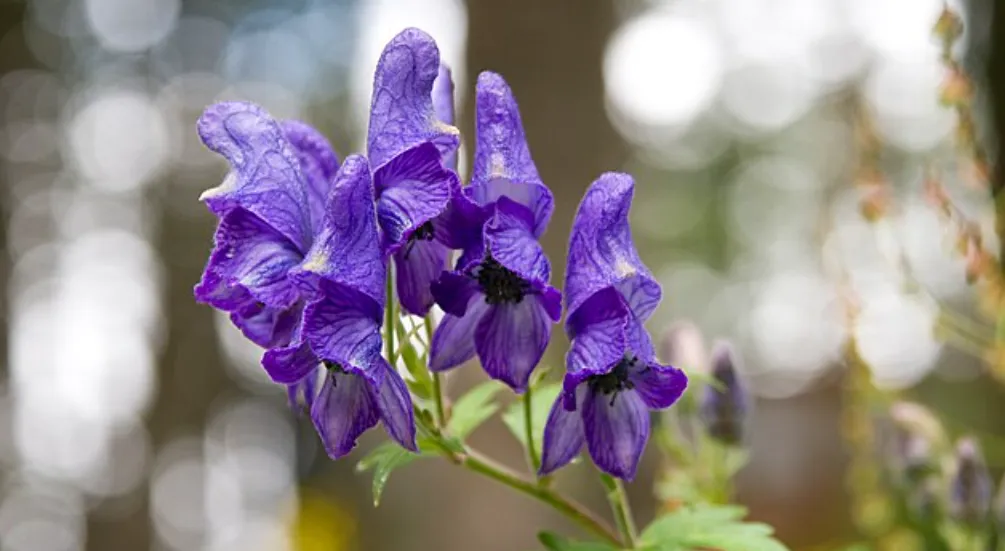
Monkshood (Aconitum) produces aconitine, one of the most toxic plant compounds known, with a lethal dose measured in micrograms per kilogram of body weight. Aconitum has been used as an arrow poison, an assassination tool, and as a murder weapon throughout human history. This makes it a bit strange that it is also a very common garden plant, sold freely in garden centres, usually without any particular warning. The entire plant is toxic: roots, leaves, flowers, seeds and toxicity can be absorbed through the skin just by touching it.
Larkspur (Delphinium) produces diterpene alkaloids that interfere with nerve and muscle function. Hellebore (Helleborus) produces cardiac glycosides similar in effect to those of foxglove. Baneberry (Actaea) produces compounds that cause cardiac arrest at sufficient doses. Even the relatively mild lesser celandine contains protoanemonin in its fresh state.
The family's open, unguarded flower that is offering nectar and pollen to all comers, is balanced by one of the most ferocious chemical arsenals in the plant kingdom. The pollinators get the food, but everything that tries to eat the plant itself gets a nasty surprise.
The Pollinators
Given the open, accessible flower structure of most Ranunculaceae, the range of pollinators is correspondingly broad.
Buttercups are visited by a wide range of bees, hoverflies, beetles, and flies. The flowers produce both nectar, which is secreted from small nectary scales at the base of each petal, visible as a small shiny patch, and pollen, which many visitors collect directly.
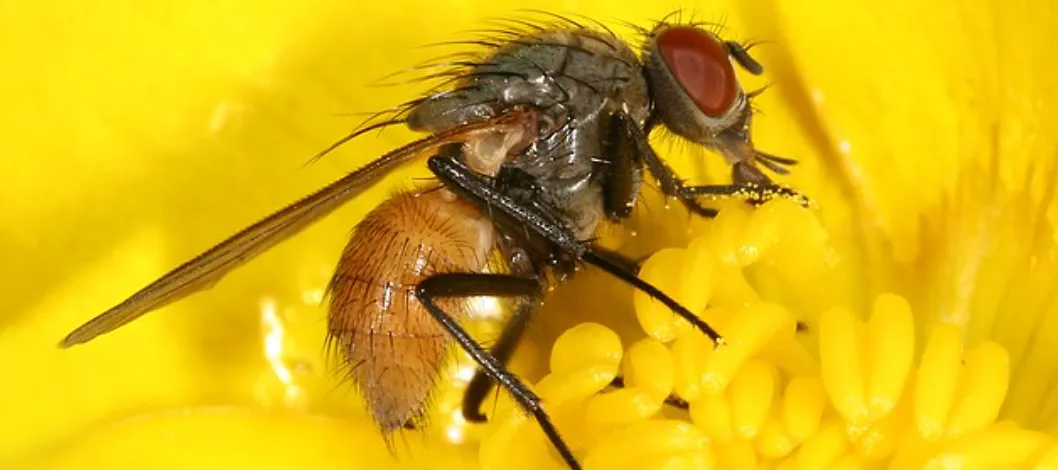
The shiny, almost lacquered appearance of buttercup petals is not accidental: it reflects UV light strongly and thereby makes its flowers highly visible to insects that see in the ultraviolet range, even though to our eyes they appear simply yellow.
A well-known experiment demonstrates this beautifully. If you hold a buttercup under someone's chin on a sunny day, the reflected yellow light gives their skin a golden glow. It's a piece of folklore that was used to determine whether someone likes butter or not. What it's actually demonstrating, is how strongly the petals reflect light, which is exactly what makes them visible to bees from a distance.
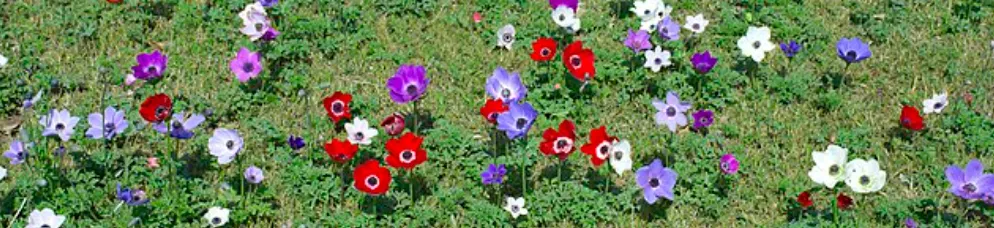
Anemones, which often appear earlier in the season than buttercups, are important early food sources for queen bumblebees emerging from winter dormancy, and for early-flying solitary bees. They produce pollen but typically little or no nectar. The visitor gets pollen and the plant gets pollination, a simpler deal than the nectar-plus-pollen offering of the buttercups.
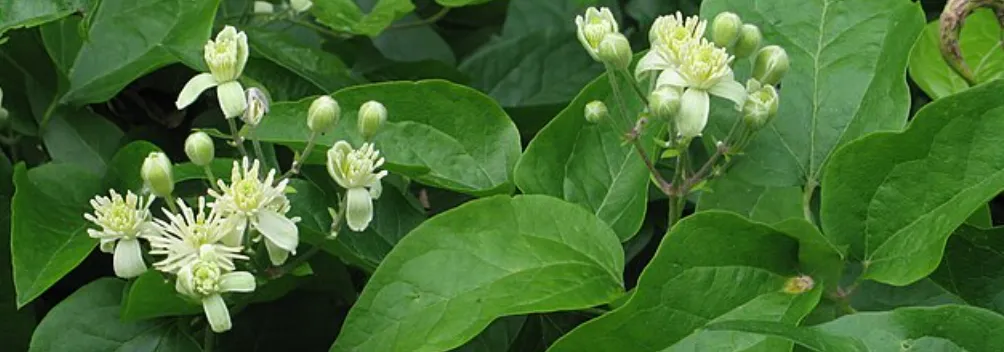
Clematis, which we'll discuss further in the experiments section, produces neither nectar nor particularly nutritious pollen in most species. It attracts visitors primarily through visual signals and, in some species, through scent. Some clematis species produce sterile outer stamens that mimic petals, providing a landing surface while the fertile inner stamens do the reproductive work.
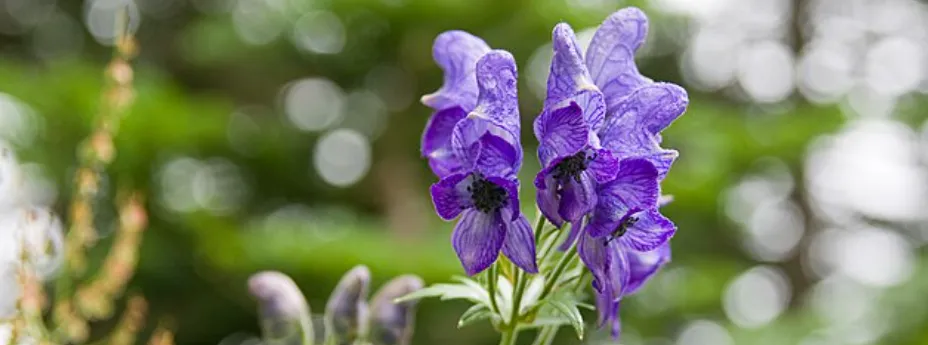
Monkshood is one of the more specialised Ranunculaceae in terms of its pollinator relationships. The complex hooded flower structure, the helmet-shaped sepal that gives it its name, encloses the nectaries at the top of the flower, making them accessible only to long-tongued bumblebees that can reach up inside the hood. This is a significant departure from the open-market strategy of the buttercups, and it represents one of the evolutionary experiments the family has been running.
The Experiments
The buttercup family is, in evolutionary terms, a collection of experiments running in parallel. The basic architecture; the numerous separate parts, radial symmetry and superior ovary make up the common starting point. But from that starting point, different lineages within the family have gone in strikingly different directions.
The Disappearing Petals
One of the most striking experiments in the family is the repeated loss of true petals.
In a typical flower, the sepals are green and leaf-like, and the petals are colourful and showy. In many Ranunculaceae, the petals have been reduced, modified or even gone entirely, and the sepals have taken over the role of attracting pollinators by becoming colourful and petal-like.
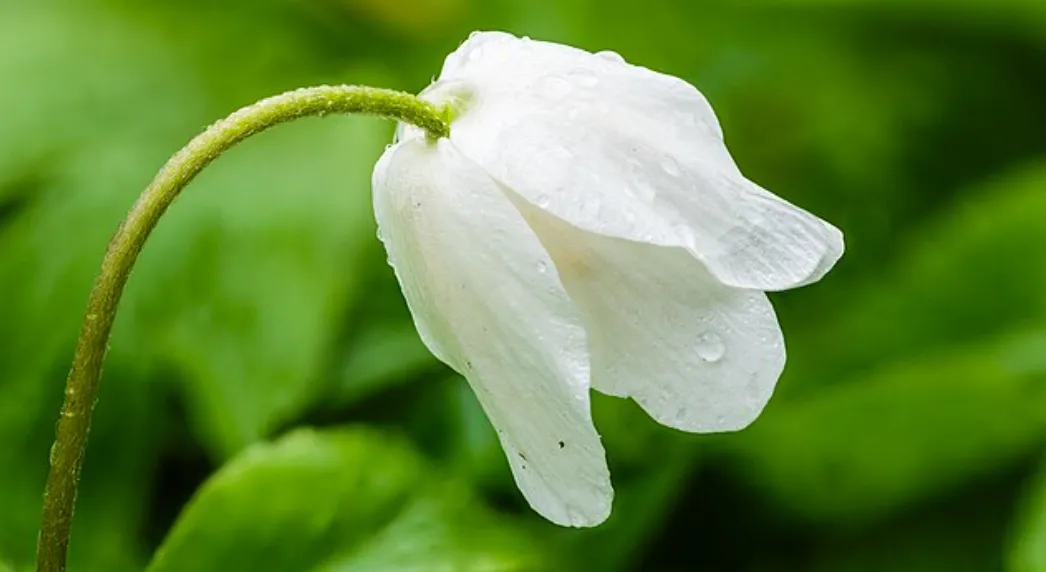
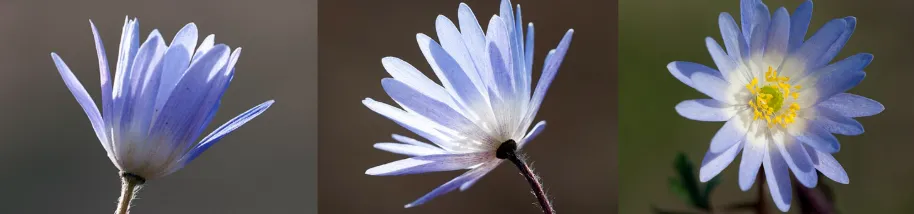
Anemones have no true petals at all. What looks like a ring of white, pink, or purple petals is in fact, entirely composed of coloured sepals. The actual petals have been lost somewhere in the evolutionary history of the genus. This happens so consistently across the genus that it is a reliable diagnostic feature: if you find what appears to be an anemone and the white structures pull away as one uniform ring, they are sepals, not petals.
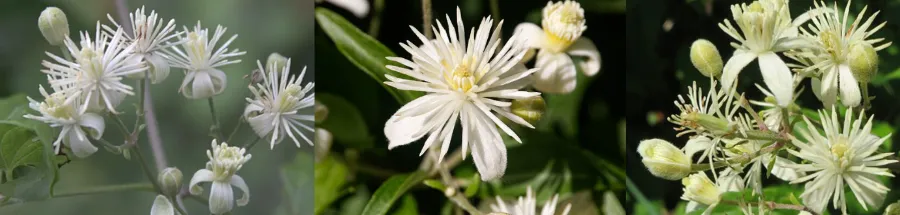
Clematis does the same thing. The large, showy structures of a clematis flower are sepals, typically four of them (though some cultivated varieties have more). The petals are absent or reduced to small nectary-producing structures. In the wild clematis of European hedgerows (Clematis vitalba, old man's beard), the four cream-coloured sepals are relatively small and the flower's display is supplemented by numerous prominent stamens that together create a fluffy, attractive appearance.
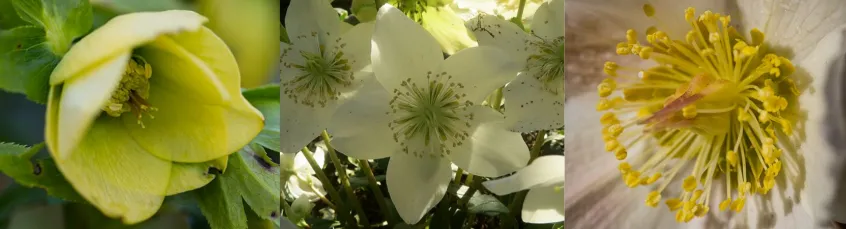
Hellebores retain their petals, but they have modified them into nectar-producing tubes, called nectaries, that sit inside the ring of sepals. The large, showy structures of a hellebore flower that you might mistake for petals are actually the sepals. The true petals are the small tubular structures inside them, entirely redesigned for the storage and presentation of nectar rather than for visual display.
This repeated modification of sepals into display structures, across multiple independent lineages within the same family, is a fascinating example of convergent evolution. The same solution arrived at independently, multiple times, in response to the same selective pressure. The family has discovered, repeatedly and independently, that sepals can do the work of petals just as well.
The Spurred Nectaries of Aquilegia
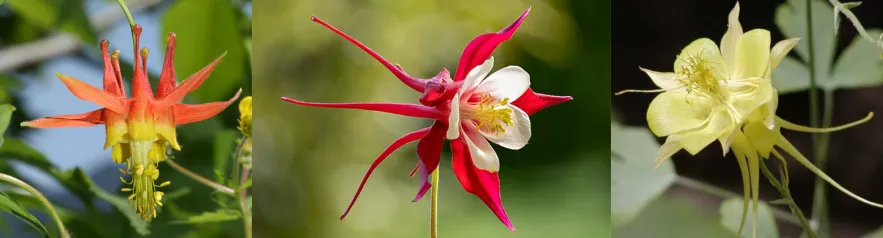
Columbines (Aquilegia) took a different evolutionary path. They retained their petals, five of them, but extended each petal backward into a long, hollow spur that contains nectar at its tip.
The length and curvature of the spur varies dramatically between species, and it corresponds precisely to the tongue length of the primary pollinator. Short-spurred species are pollinated by bumblebees with short tongues. Long-spurred species are pollinated by long-tongued bumblebees, hawkmoths, or hummingbirds depending on the region. Some North American species have spurs so long that only a few specialist pollinators can reach the nectar, a significant departure from the open-market strategy of the buttercups.
Aquilegia is one of the most rapidly speciating plant genera we know off. It has diversified into dozens of species in a relatively short geological time, largely driven by divergence in spur length and the corresponding divergence in pollinator relationships. Each new spur length, accessible to a slightly different set of pollinators, creates a new opportunity for reproductive isolation and therefore speciation.
Monkshood and the Bumblebee Lock
Monkshood (Aconitum) represents perhaps the most dramatic departure from the open-market strategy in the family.
The flower is bilaterally symmetrical, irregular, like a pea or a foxglove, which is highly unusual for Ranunculaceae. The uppermost sepal forms a large helmet or hood that arches over the rest of the flower, enclosing the nectaries and the upper parts of the stamens. To reach the nectar, a visitor must enter from below, push up inside the hood, and reach the nectaries at the very top of the flower interior.
Only long-tongued bumblebees can do this reliably. The hood excludes smaller insects entirely, and the required body size and tongue length mean that only a handful of bumblebee species are effective pollinators of monkshood in any given region.
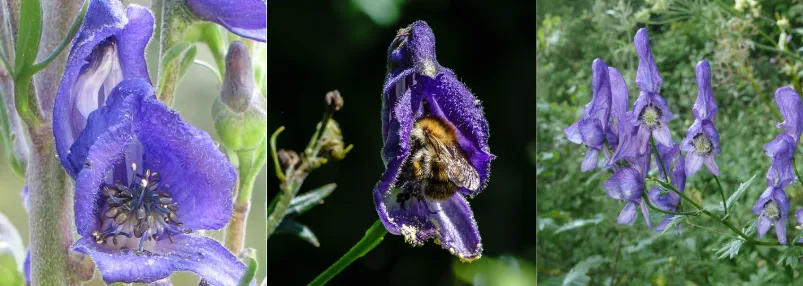
This specialisation is unusual enough in the family that monkshood was long placed in its own subfamily, and some botanists have argued it represents a distinct evolutionary trajectory within Ranunculaceae, namely a lineage that moved from the open market to a specialist shop, independently of other specialised members of the family.
The Heat Producers
Some hellebore species and their relatives produce heat in their flowers, a phenomenon called thermogenesis, through the rapid metabolism of starch stored in the flower tissues.
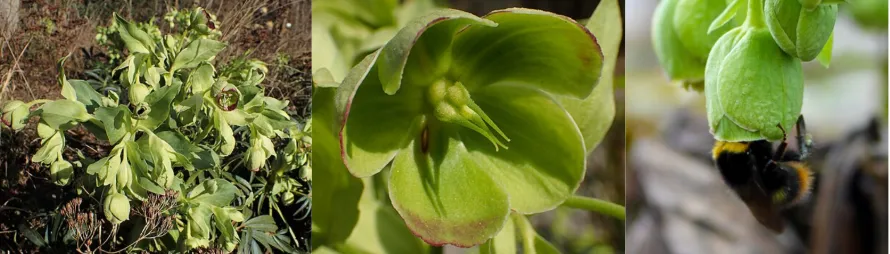
In Helleborus foetidus (stinking hellebore), flowers can maintain temperatures significantly above ambient air temperature on cold days, creating a warm microhabitat that attracts early-flying insects seeking warmth. A bee that enters a thermogenic flower gets not just nectar but a brief thermal refuge, what can be a significant benefit on a cold February morning when maintaining flight temperature is energetically costly.
This is a serious investment for the plant, producing heat requires metabolising a lot of stored energy, but it pays off by attracting pollinators at a time of year when very few flowers are competing for their attention. Stinking hellebore flowers in late winter, sometimes as early as January, and thermogenesis allows it to remain attractive to pollinators even on cold days when most insects would otherwise be inactive.
The Members - Common and Unusual
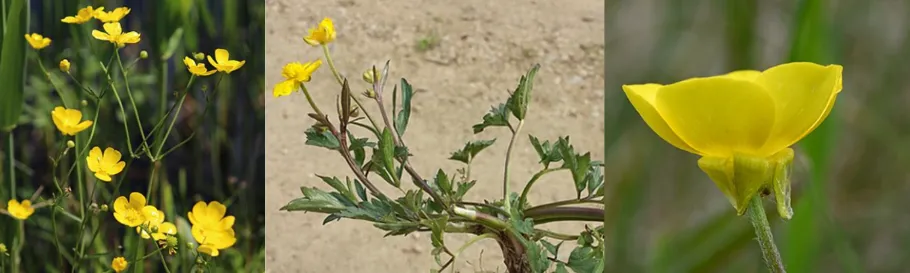
Ranunculaceae is a large family, and its members are familiar enough to appear in almost any garden or countryside walk in the temperate world. Buttercups (Ranunculus) are the reference point for the family. It's the flower that most clearly shows the ancestral pattern. Meadow buttercup (R. acris), creeping buttercup (R. repens), and bulbous buttercup (R. bulbosus) are the three most common species in European meadows and gardens, and telling them apart is a useful early exercise in field botany, as the flowers of these three species look just the same when look at from above.
Meadow buttercup has an erect, unbranched stem and upright sepals. Creeping buttercup has runners along the ground and upright sepals. Bulbous buttercup has a swollen stem base and reflexed sepals that fold back against the stem rather than spreading outward. The reflexed sepals of bulbous buttercup are one of the clearest examples of a single diagnostic feature that clinches an identification instantly.
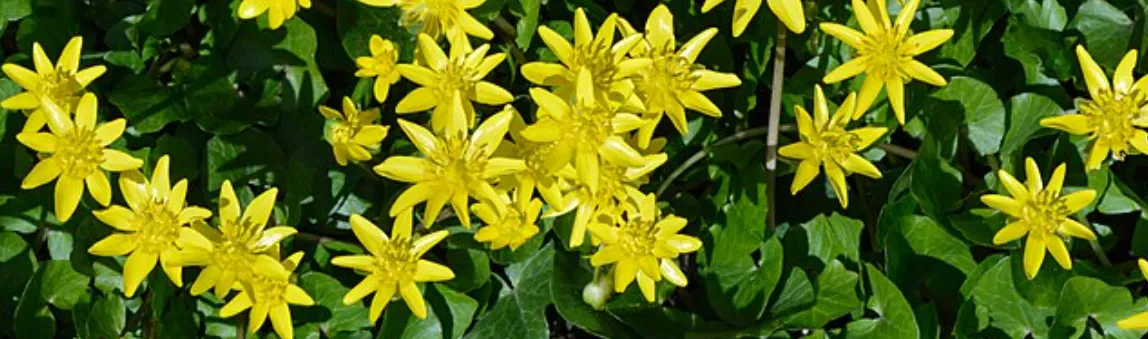
Lesser celandine (Ficaria verna, formerly Ranunculus ficaria) is one of the earliest spring flowers in European woodlands. It's a low-growing plant with glossy heart-shaped leaves and bright yellow flowers that have eight to twelve petals rather than the usual five. It carpets woodland floors in early spring before the tree canopy closes over and blocks the light, completing most of its growth and reproduction in a few weeks before dying back underground for the rest of the year. It is a geophyte, a plant that spends most of its life as an underground storage organ, and it's this strategy that allows it to exploit a seasonal light window that most plants miss.
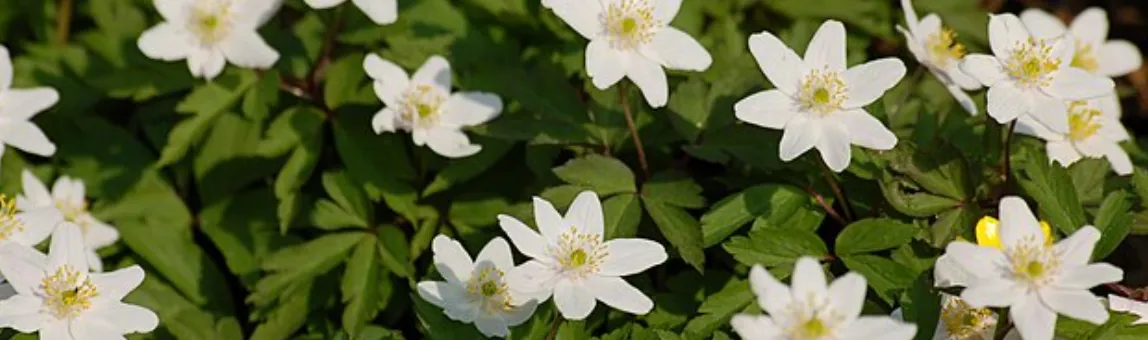
Wood anemone (Anemone nemorosa) follows a similar strategy. It's also a woodland floor specialist that flowers in early spring, using the same window of light before the canopy closes. Its flowers are white, sometimes flushed pink on the back, with five to eight petaloid sepals and numerous stamens. It spreads primarily by underground rhizomes rather than seeds, forming large colonies that expand very slowly. When you find a patch of wood anemone in an ancient woodland, it may be hundreds of years old, having spread from a single original plant at a rate of a few centimetres per year.
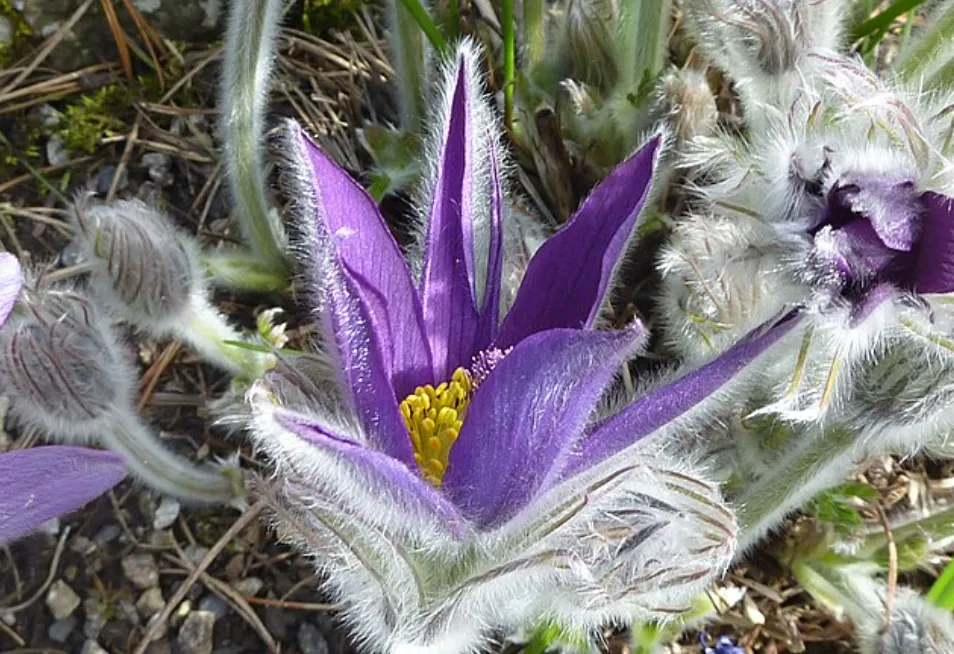
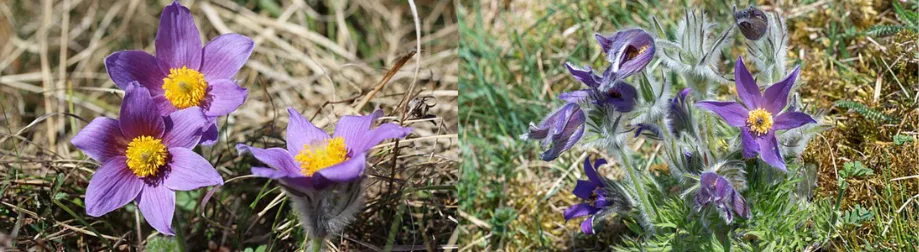
Pasque flower (Pulsatilla vulgaris) is one of the most beautiful and most threatened members of the family in Europe. It is a plant of ancient chalk and limestone grasslands with large purple flowers covered in silky hairs, appearing in April before the leaves are fully developed. It is a specialist of the very specific, ancient grassland habitats that these days have been largely destroyed by agriculture, so it is now a very rare sight across most of its former range. Where it survives, it is often an indicator of grassland that has never been ploughed, since it cannot recolonise once the soil structure is destroyed. Finding a pasque flower in flower is, for many botanists, one of the highlights of the spring.
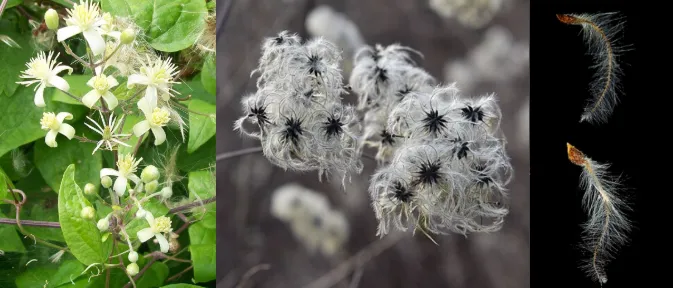
Clematis (Clematis vitalba in Europe, various species across the northern hemisphere) is the family's great climber and a personal favorite of mine. It's a woody liana that scrambles over hedgerows and woodland edges, producing masses of small cream-coloured flowers in summer and the distinctive fluffy seed heads that give it its common name, old man's beard, in autumn. The seed heads are worth examining closely: each seed has a long, feathery tail that acts as a sail for wind dispersal, and in autumn the plant can appear almost entirely white with the mass of fluffy tails. It is aggressive in the right conditions and can smother other vegetation. It clearly shows that the family's success is not just a matter of flower design.
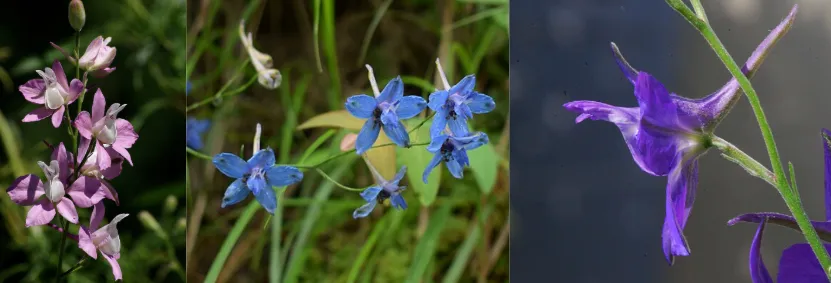
Larkspur and delphinium (Consolida and Delphinium) produce bilaterally symmetrical flowers with a prominent spur formed from the upper sepal. This is a different solution to the nectary problem from Aquilegia, achieved by modifying a sepal rather than a petal. Common larkspur (Consolida ajacis) was once a common arable weed across Europe, now much reduced by herbicide use. Garden delphiniums are complex hybrids selected for their tall spikes of large blue, purple, or white flowers, and are familiar to anyone who has spent time in a traditional English cottage garden.
Globe flower (Trollius europaeus), columbine (Aquilegia vulgaris), marsh marigold (Caltha palustris), and meadow rue (Thalictrum) round out the list of commonly encountered European Ranunculaceae.
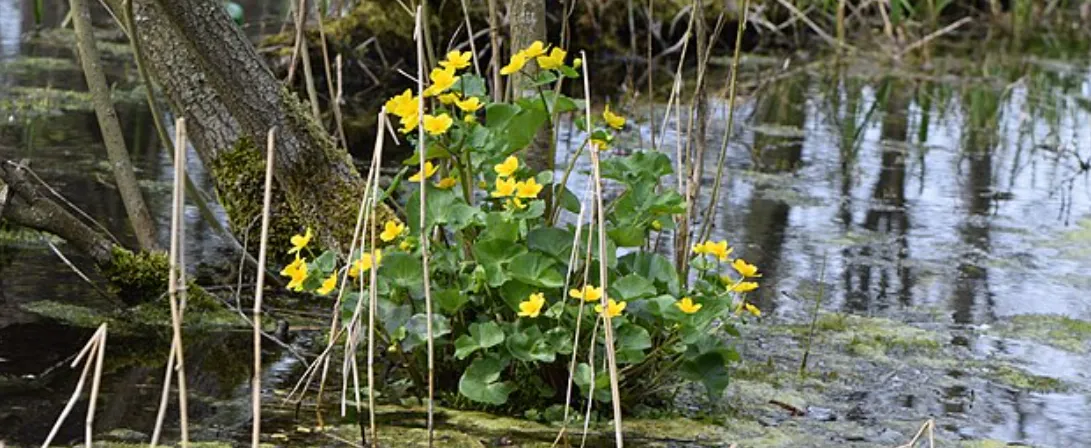
Marsh marigold is worth a special mention. This is a large, yellow-flowered plant of wet ground and stream margins that is often mistaken for a large buttercup but has no true petals, only petaloid sepals, and is one of the earliest flowers of the year in waterside habitats.
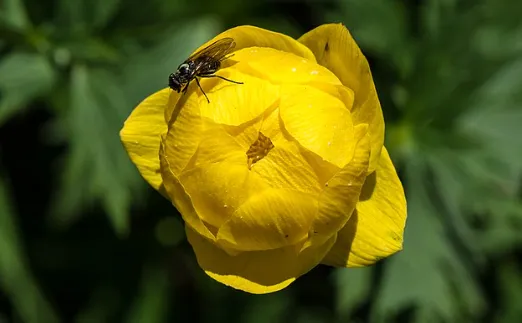
Globe flower is a mountain species with spherical pale yellow flowers formed by numerous incurved petaloid sepals that nearly close over the centre. A rather unusual form in the family that restricts access to smaller insects that can squeeze between the sepals.
The Weird Ones
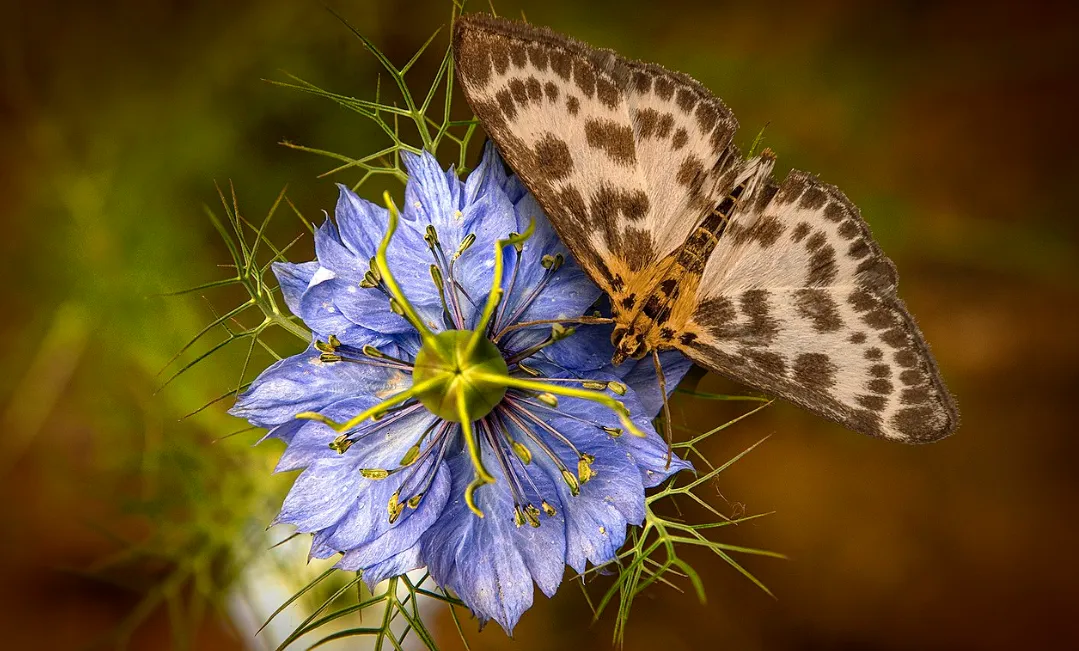
Nigella (love-in-a-mist) is a Ranunculaceae that surrounds its flowers with a ruff of finely divided bracts, which are modified leaves, that create the misty appearance that gives it its common name. The actual flower sits in the centre of this ruff, with petaloid sepals and modified petals that form small nectary cups. It is one of the more structurally complex members of the family and one of the best illustrations of how far the basic Ranunculaceae plan can be modified while remaining within the family.
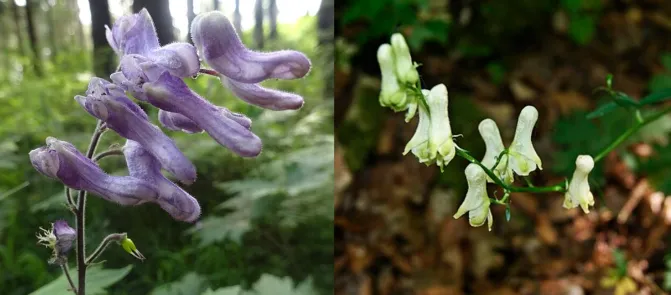
Aconitum lycoctonum (wolfsbane) was historically believed to be toxic to wolves (hence the name) and was used as a wolf poison mixed into bait across medieval Europe. Whether it actually worked as a wolf poison in this application is debatable, but the toxicity of the plant itself is not. It also appears repeatedly in folklore as a werewolf-repellent, a witches' ingredient, and a poison of choice in historical murder cases across several centuries.
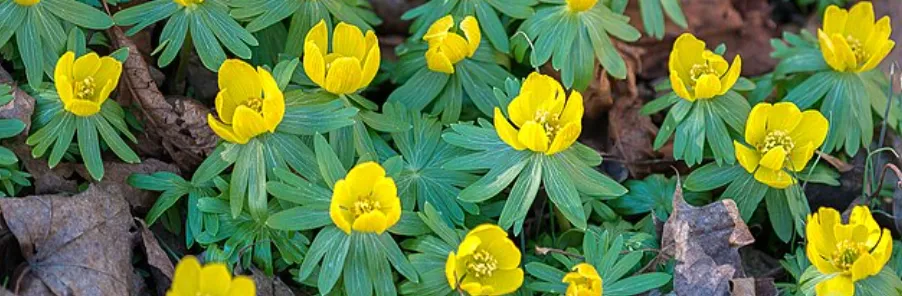
Eranthis hyemalis (winter aconite) flowers in January and February, sometimes pushing through snow, and is one of the first flowers of the year in European gardens and woodlands. It looks superficially like a small yellow buttercup but has a ruff of green bracts below the flower that are actually modified stem leaves, and is entirely leafless when flowering, the true basal leaves appearing only after the flowers have faded. It is one of the most cold-tolerant members of the family and one of the most important early nectar sources for queen bumblebees.
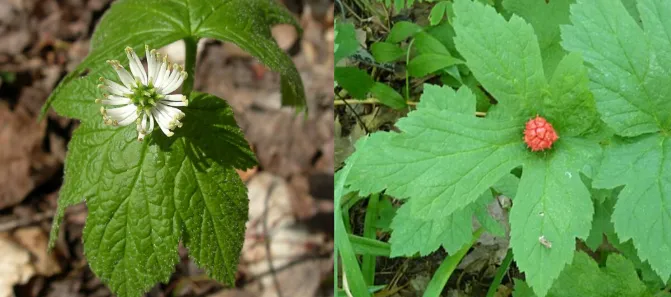
Hydrastis canadensis (goldenseal) is a North American Ranunculaceae with no petals at all. It just has sepals that fall off quickly after the flower opens, leaving a brush of stamens and pistils exposed. It is used in herbal medicine, has been heavily over-collected in the wild as a result, and is now considered threatened across much of its native range.
A Living Reference Point
Ranunculaceae is not just a plant family. In the context of this course, it is a reference point.
Every subsequent family we look at will be, in some sense, a departure from the Ranunculaceae starting point. A more specialised version of the original deal, with fewer parts, more fusion, more precise engineering of the flower-pollinator relationship. When you understand what an unspecialised flower looks like; open, numerous-parted, accessible to all, radially symmetrical... the specialisations of the families that come after become immediately visible as departures from that baseline.
The buttercup in the meadow is not a simple flower. It is a hundred-millions-year-old design that still works, protected by one of the most formidable chemical arsenals in the plant kingdom, visited by dozens of species that have never learned to distinguish it from something safer to eat.
It is, in its own way, just as impressive as an orchid. It is just a bit less showy about it.