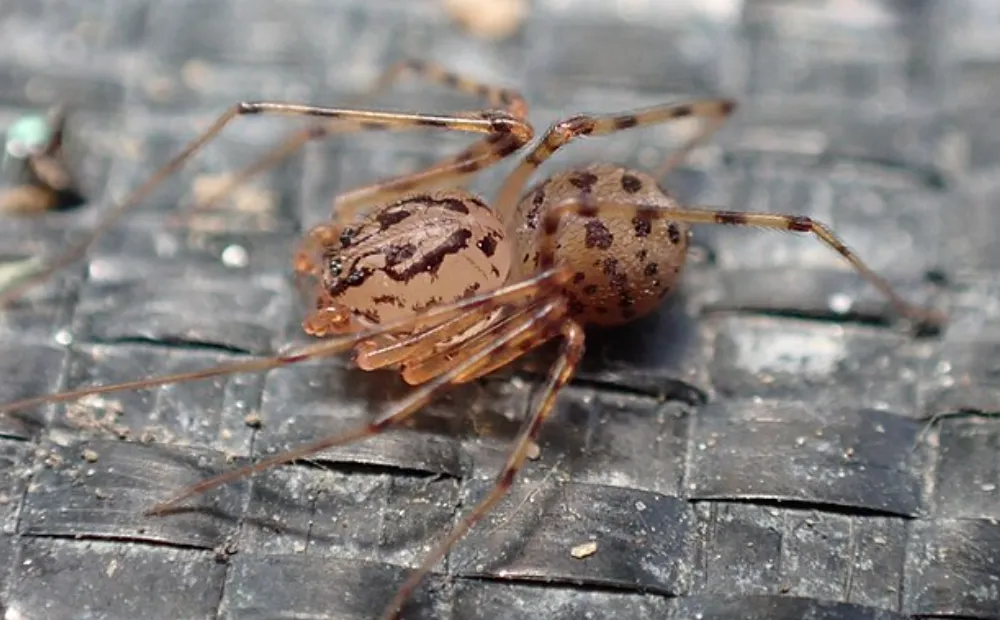
The Spider-Man-Spider
I'm not a big Spider-Man fan, and no, I have no idea what kind of spider it was that bit him, besides that it was a radioactive one.
But yesterday evening, I found a cool little spider on the wall that always makes me think of Spider-Man when I see it. I'm talking about Scytodes thoracica, the Common Spitting Spider.
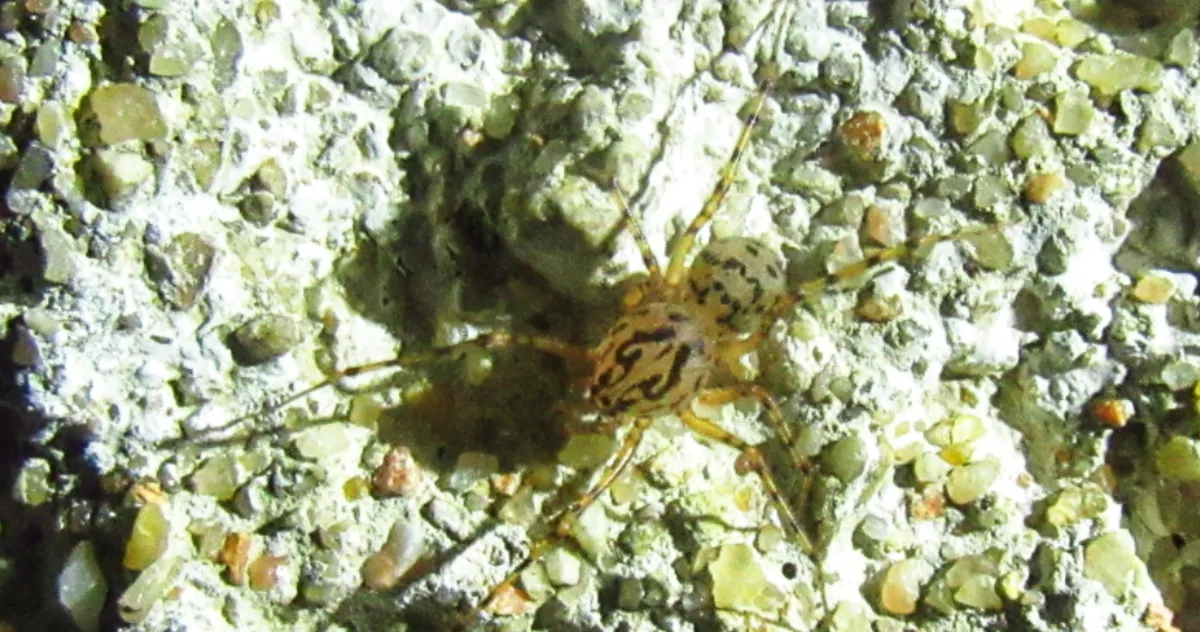
The most remarkable fact about it, is its hunting method:
Operating under the cover of darkness, this spider tracks its prey by using highly sensitive hearing hairs (trichobothria) on its legs to detect vibrations in the air. Vibrations as minimal as the wingbeat of a flying mosquito or the air currents created by a tiny crawling insect.
Once the prey has been located, the spider then starts moving towards it, with a slow, deliberate 'cat-crawl', getting as close as 10 to 15 millimeters without alerting the victim of its presence.
When in range, the spider stops and will begin to very gently tap the air or the surface with its exceptionally long front legs. This isn't just a feeler; it is a very precise way to center the prey and 'triangulate' the exact distance between him and his prey.
When the target is centered, the spider executes its signature move in a staggering 1/700th of a second. Massive glands in its domed head start squeezing out a pressurized liquid. This substance is a unique mucilaginous blend of liquid silk and a special kind of glue, that instantly becomes sticky when it comes in contact with the air. While the fluid is being ejected, the spider vibrates its fangs side-to-side at incredible speeds (up to 1,800 times per second). By doing this, the two streams of silk are cross-hatching with each other, creating a sticky, zig-zag net that instantly pins the prey to the ground where the silk strands automatically contract by 40% to 60% at impact, further tightening the trap around the victim.
Now think about that for a second. In 1/700th of a second!!!, faster then the human eye can register, or the prey can move, he creates a web, not just a single thread of silk, but an actual web that he throws over it's victim, where the net contracts to secure and immobilize.
Spider-Man may shoot webs from his wrists, but Scytodes thoracica shoots them from its face, in a fraction of a second, with better aim, and without the radioactive backstory. I know which one I find more impressive.
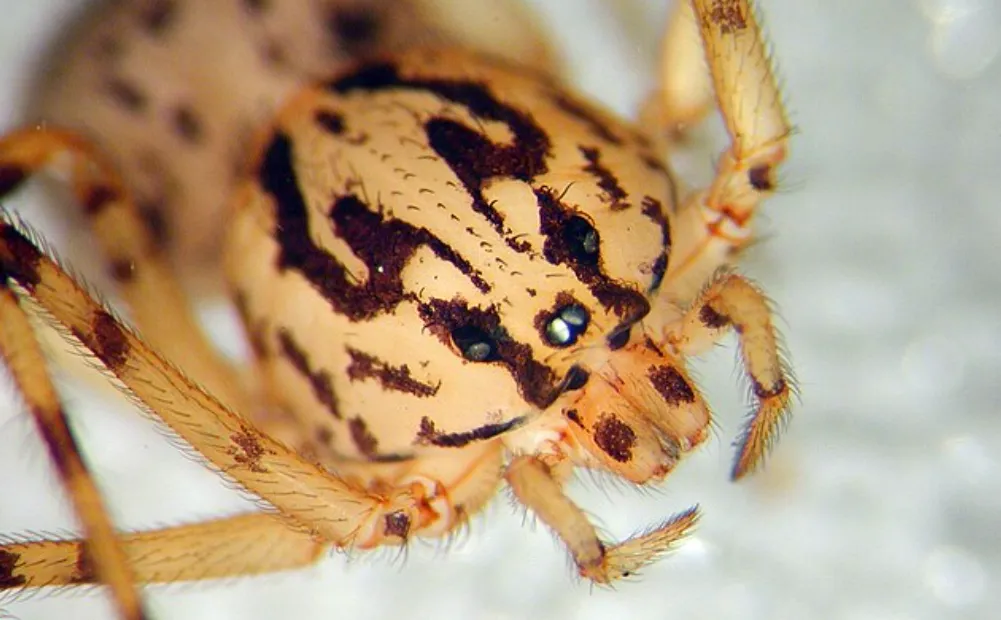
Now, with the victim glued down and unable to move, the spider can approach safely to deliver a final, lethal bite with its fangs, injecting a concentrated paralyzing venom and digestive enzymes.
Once the prey is subdued, the spider may wrap it in more traditional silk from the spinnerets at the back of its body. It then begins the process of feeding, which involves regurgitating enzymes to liquefy the prey's insides and sucking them out through several bite holes.
Like other spiders, the spitting spider also has spinnerets at the back of its body. This silk is not sticky and it's mainly used for creating a safe 'bed' or retreat to rest in during the day, securing the prey after it has been sprayed and most importantly, for weaving an egg sac.
It's not a rare species. You can find them all over Europe and in most of the US. They prefer the warm and cosy confines of houses and sheds over nature, keeping out of sight in dark crevices, closets and under rocks during the day. Next to that, most spitting spiders are tiny, and S. thoracica is no different. Its body ranges from just 3 to 6 mm (0.12 to 0.24 in) long.
Somewhere in the room where you're reading this, there is probably one sitting in a dark corner right now, motionless, waiting for something to move. You'll never see it happen. At 1/700th of a second, you never could.