Reading Plants - Part 1: How to Read a Flower
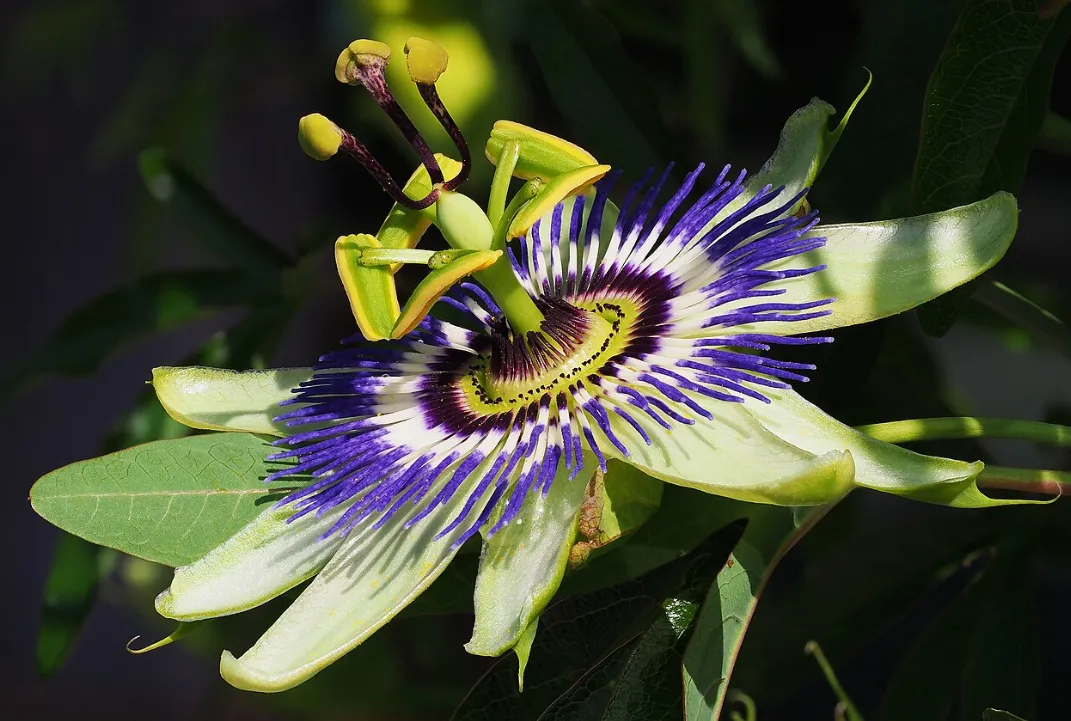
Go outside, pick up any flower and look at it. Take an actual flower, from your garden, from a crack in the pavement, from the edge of a path or even a blossom from a fruit tree. Now hold it between your fingers and look at it from the outside in.
What you are holding in your hand, is in fact a highly sophisticated communication device.
Every part of it, the colour, the shape, the number of petals, the arrangement of the stamens, the position of the ovary... is a message that is directed at a specific audience. That audience isn't you. It is the insect, the bird or the wind. The plant you're looking at now, has spent millions of years learning to communicate with it. You are little more than an accidental eavesdropper.
The fun thing is, that once you learn the language, you can 'hear' what the flower is saying. And once you can 'hear' what it is saying, you'll start to understand why it looks the way it does and it's this understanding that will make plant identification feel like discovery rather than just the memorisation of names.
This first part is all about that language. Not all of it, just the parts you actually need to get started.
The Flower From the Outside In
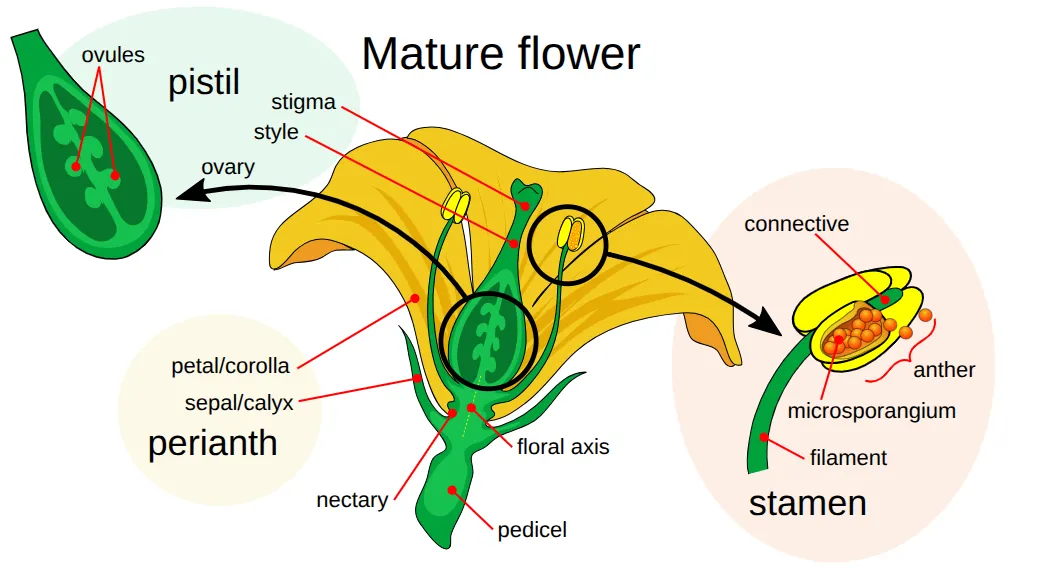
The best way to learn the parts of a flower is to start at the outside and work your way inward, layer by layer. This is also, not coincidentally, the way a pollinator experiences a flower. It arrives at the outside and moves through the layers to find the reward at the centre.
Pick up your flower and hold it with the stem pointing away from you, so that you're looking at it face-on. Now turn it slowly, looking at the profile.
Sepals
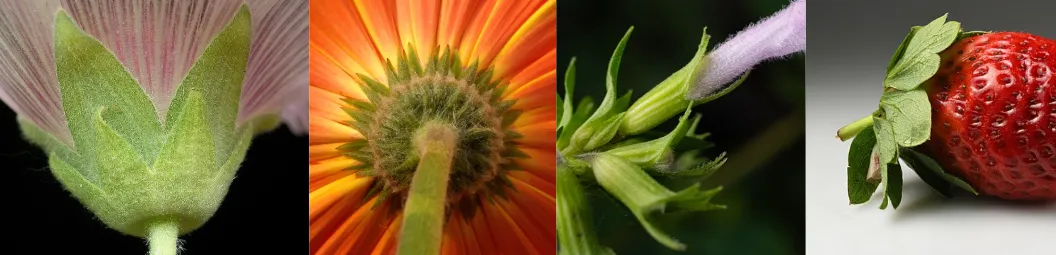
The outermost layer of a flower is almost always green, and almost always leaf-like. These are the sepals, and all together they form what botanists call the calyx.
If you look at a flower bud before it opens, the sepals are what you see on the outside. They wrap around the developing bud like a protective case, keeping it from drying out, shielding it from damage, and in some cases deterring insects from eating it before it's ready to open. In many flowers, once the bud opens, the sepals fold back and sit below the petals, where they remain more or less inconspicuous for the rest of the flower's life.
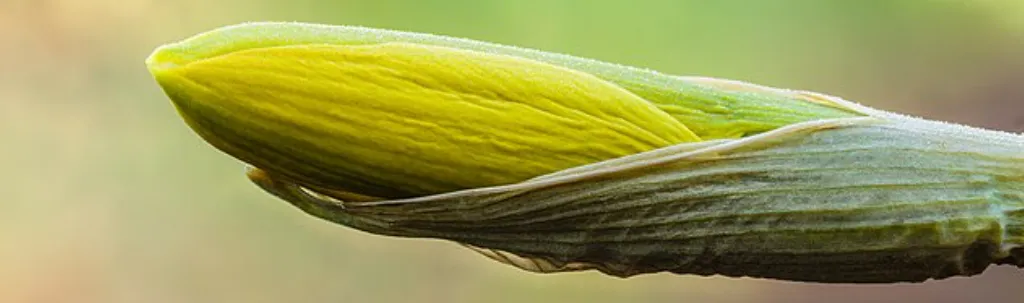
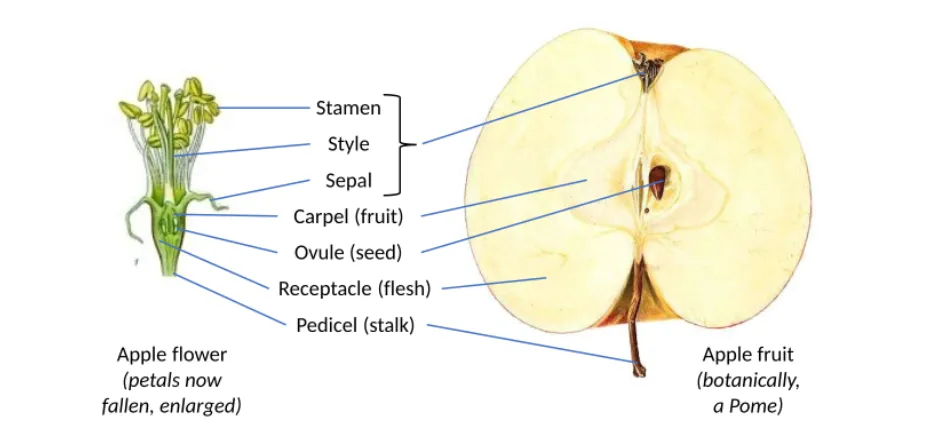
But not always. In some families the sepals are large and colourful, doing some of the visual work usually left to the petals. In others they persist and enlarge after the petals have fallen, becoming part of the fruit. The papery brown star-shape at the bottom of an apple for example, is the dried remains of the sepals. In roses, the sepals remain green and prominent even after the flower opens, giving the rose its characteristic leafy collar. The sepals in the picture below, of an Iris, are very showy and are pointing to the sides. The petals are the uniformly lavender and erect ones.
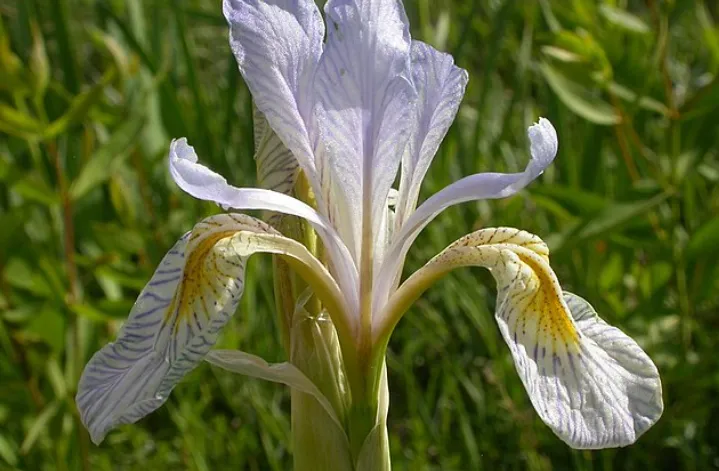
Pay attention to the sepals. They sometimes are easy to overlook, but they vary enough between families to be a useful clue for finding out what flower you're looking at.
Petals
Moving inward, you reach the petals, together called the corolla. This is usually what people mean when they say 'the flower'.
The corolla is where most of the visual communication happens. The colour, pattern, shape, and size of the petals, are all aimed at attracting potential pollinators, or in some cases, at deterring the wrong visitors.
Count the petals. This is the single most useful thing you can do when trying to place a flower in a family.
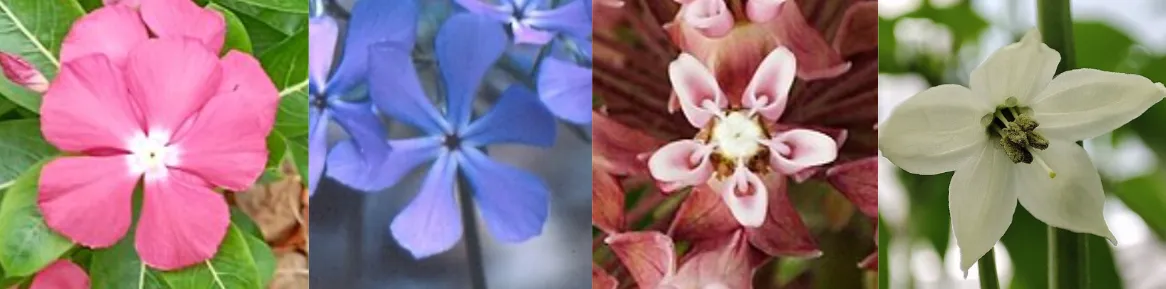
Three petals, or multiples of three, almost always means you're looking at a monocot. This is the name for the large group that includes grasses, lilies, irises, and orchids.
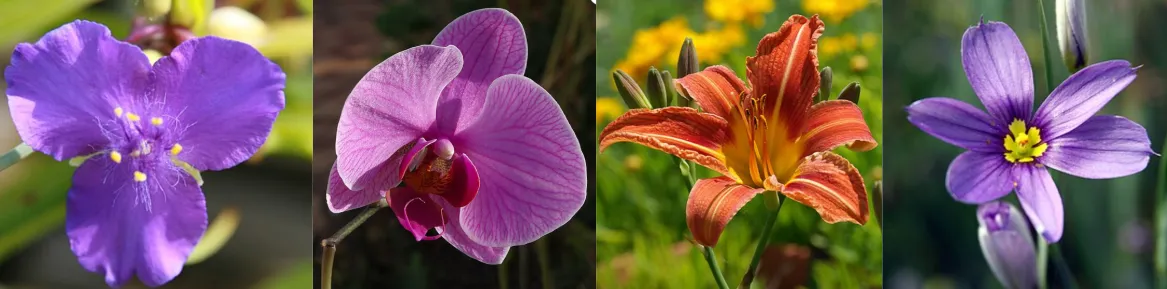
A monocot (monocotyledon) is a type of flowering plant characterized by seeds that contain only one embryonic leaf, typically featuring parallel-veined leaves and flower parts in multiples of three
If there aren't exactly three, six or nine petals, it means you're almost certainly looking at a dicot and not a monocot.
A dicot (dicotyledon) is a type of flowering plant characterized by having two embryonic leaves in its seed, which also typically features net-like leaf venation and flower parts in multiples of four or five.
Four petals points toward a small number of families, most notably the Brassicaceae, the mustard and cabbage family, which is so consistent about its four petals that the pattern becomes instantly recognisable once you've seen it a few times.
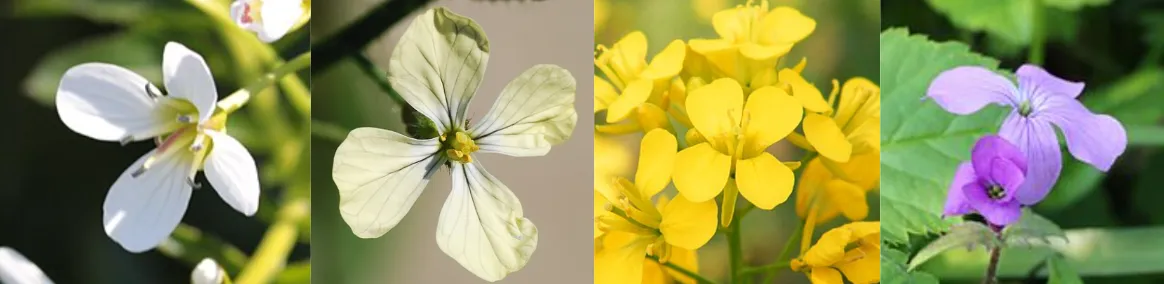
Five petals is the most common number in the dicots. This is the largest group of flowering plants, and it includes most of the plants you'll encounter in a temperate garden or meadow. While five petals alone doesn't tell you directly which family you're looking at, it narrows the field considerably.
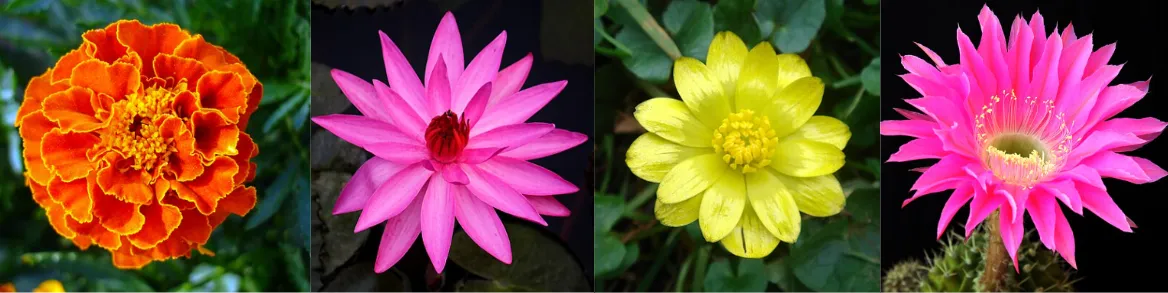
More than ten petals, all separate from each other, usually indicates a primitive flower from a family that hasn't yet specialised much.
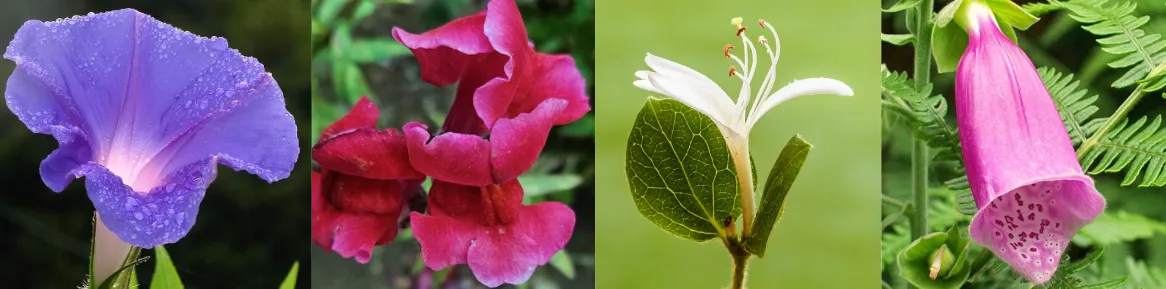
Petals that are fused together into a tube, a funnel, or a two-lipped structure indicate a more advanced evolutionary position. These plants have spent more evolutionary time engineering its relationship with specific pollinators.
Look again at your flower. Are the petals separate or fused?
Try to move one petal independently of the others.
If it comes away cleanly on its own, the petals are separate, botanists call this polypetalous.
If the petals are joined at the base or form a single tube or funnel shape, they are fused, what we call sympetalous.
This distinction is one of the most reliable family-level features you'll find.
Are all the petals the same shape and size?
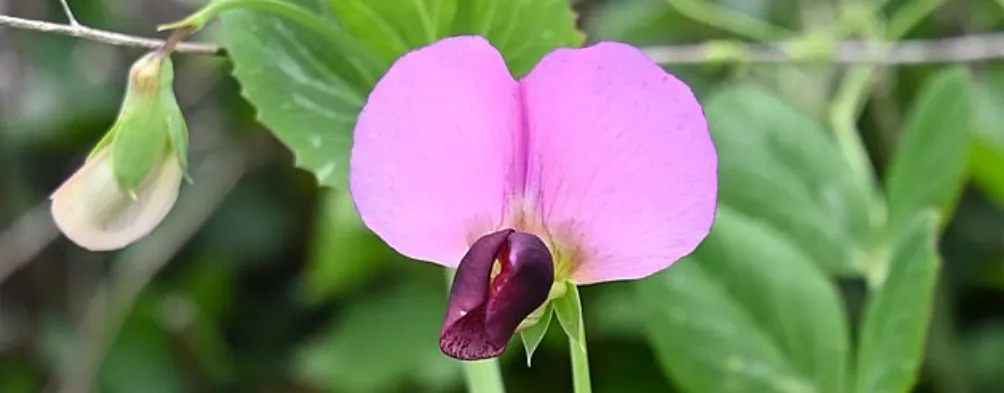
In most flowers they are, but in some families, particularly those with bilateral symmetry, which we'll come to shortly, the petals are different from each other. A pea flower, for instance, has one large upright petal at the back, two smaller wing petals at the sides, and two more petals fused together at the bottom forming a boat-shaped keel. Once you've seen this pattern once, you'll recognise it in every member of the pea family, from garden peas to clover to wisteria.
The Working Parts
Let's move further inward the flower, past the petals, and now we reach the functional heart of the flower; the parts directly involved in reproduction.
Stamens
The stamens are the male parts of the flower. Each stamen consists of a thin stalk called the filament and a small structure at the tip called the anther, which is where the pollen is produced and released.
In most flowers the anthers are visible as small yellow or orange structures dusting the centre of the flower. The yellow powder that comes off on your finger when you touch the inside of a lily is pollen from the anthers.
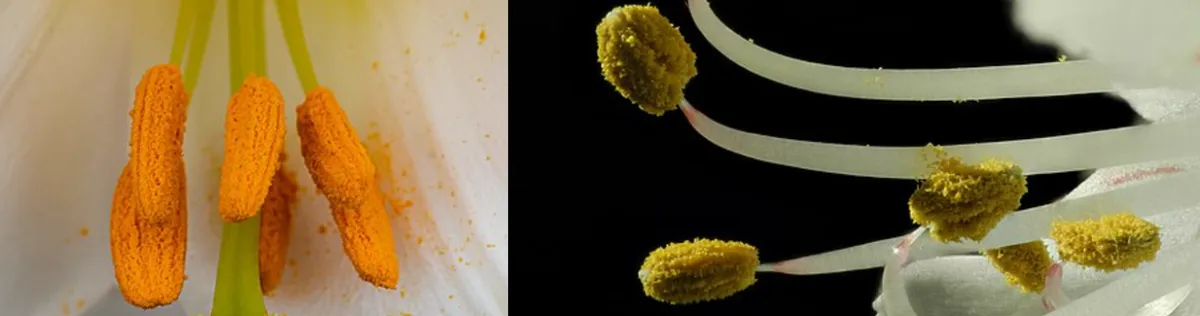
Pollen is the plant's equivalent of sperm. It's the genetic material that needs to reach the stigma of another flower of the same species to fertilise the ovules and produce seeds.
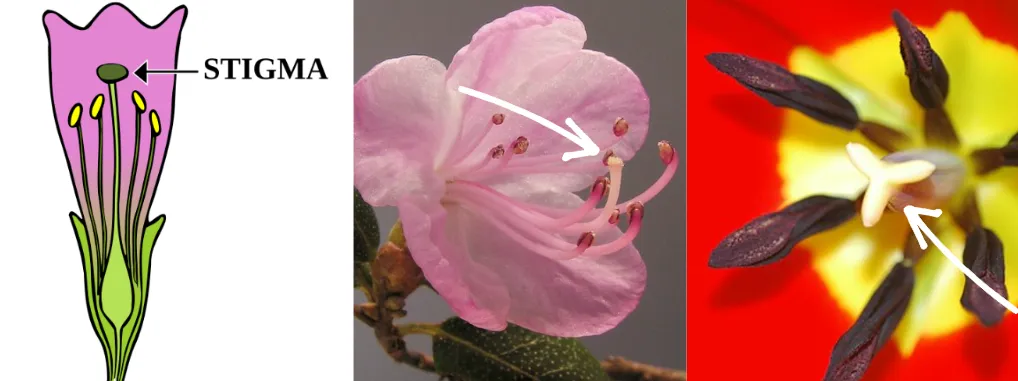
Getting the pollen from one flower to another is the entire purpose of everything the flower does. The colour, the scent, the nectar, the shape... all of it exists to attract a pollinator that will carry pollen from one plant to the next.
Count the stamens, or estimate them. Some families have a fixed, consistent number of stamens that becomes a reliable identification feature.
Brassicaceae almost always has exactly six stamens: four long ones and two short ones while Lamiaceae typically has four stamens, arranged in two pairs of different lengths.
Other families, particularly primitive ones, have numerous stamens, sometimes dozens, with no fixed number. As a rough rule, numerous stamens tend to indicate an older, less specialised flower.
A fixed small number of stamens tends to indicate a more derived, specialised flower with a more specific relationship with its pollinators.
Look at how the stamens are arranged. Are they all the same length, or are some longer than others? Are they clustered together or spread around the flower? In some families the stamens are fused together, like in the pea family we used as an example before, where nine of the ten stamens are fused into a tube around the pistil, with one remaining free. This is such a consistent feature that finding it is almost a guarantee you're looking at a Fabaceae.
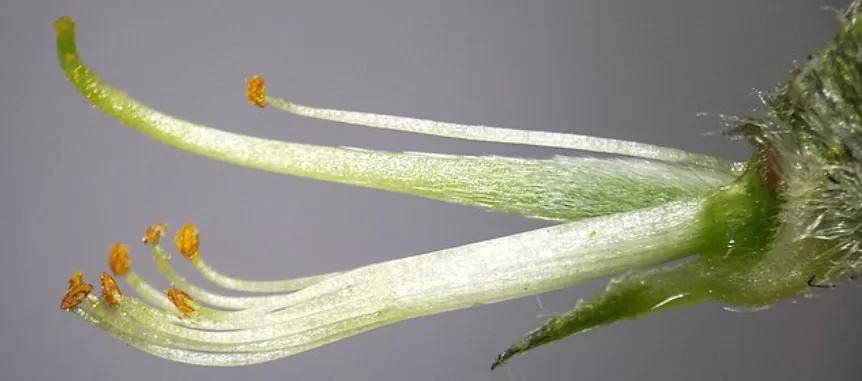
In other families the stamens are fused to the petals, so that if you would pull a petal away gently, stamen would come with it, attached at the base.
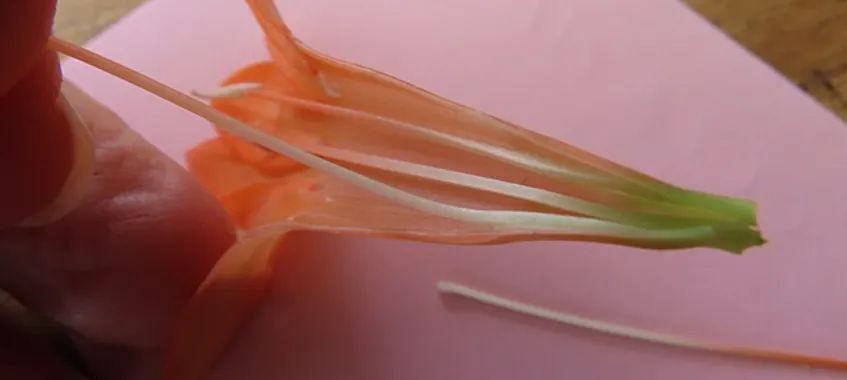
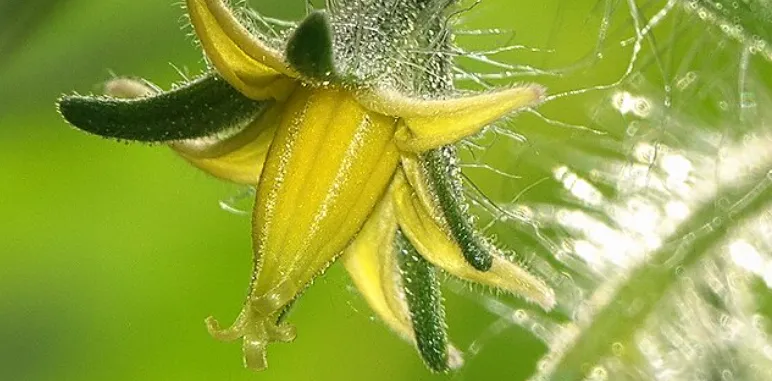
Look at the anthers. Most are small and unremarkable, but some families have anthers that open in unusual ways, like popping open lengthwise, or opening through small pores at the tip rather than splitting open along the side. The tomato flower, for instance, has anthers that release pollen only through small pores at the tip, which is why tomatoes require buzz pollination; a bee vibrating at the right frequency to shake the pollen out. Honeybees can't do this. Bumblebees can.
The Pistil
At the very centre of the flower is the pistil, the female part. Think of it as the destination everything else is working toward.
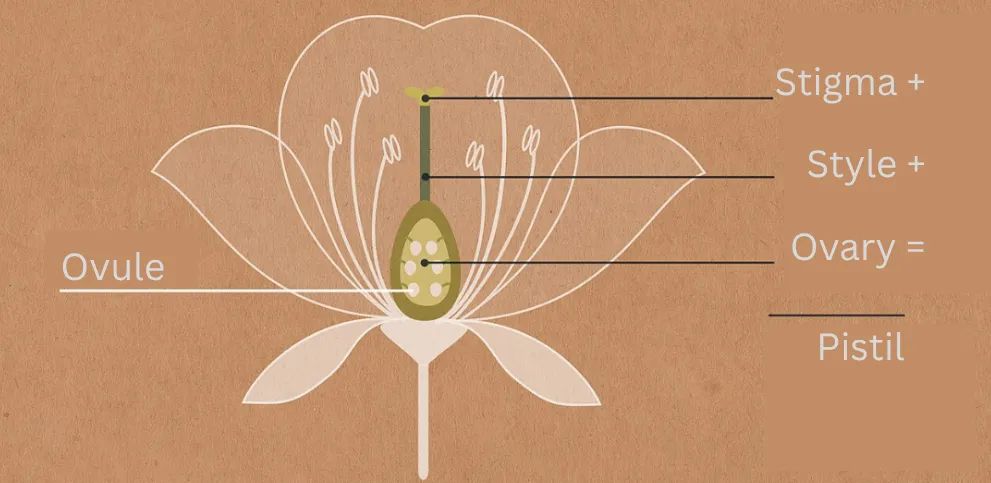
The pistil has three sections.
At the top is the stigma, the surface that receives pollen. The stigma is usually sticky or feathery, designed to trap pollen grains that arrive on visiting pollinators.
Below the stigma is the style, a stalk of varying length that connects the stigma to the ovary.
And at the base is the ovary, the protected chamber containing the ovules, the eggs that will become seeds if fertilised.
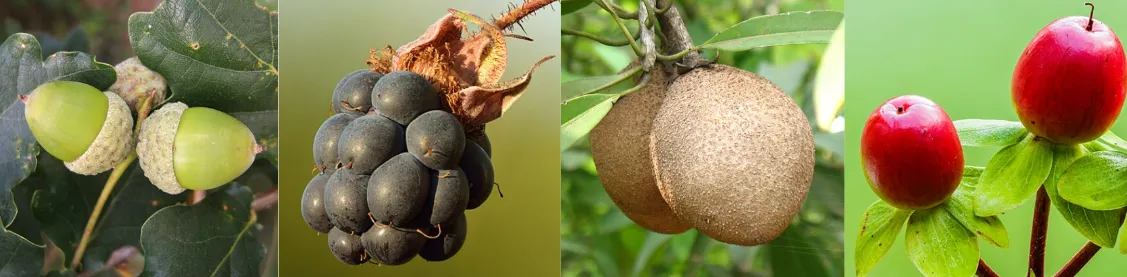
After fertilisation, the ovary develops into the fruit. In the botanical sense, a fruit is simply a mature ovary containing seeds. This means that tomatoes, cucumbers, pea pods, and acorns are all fruits, just as apples and cherries are. The fleshy, sweet fruits we eat are just the plant's way of persuading animals to carry the seeds away.
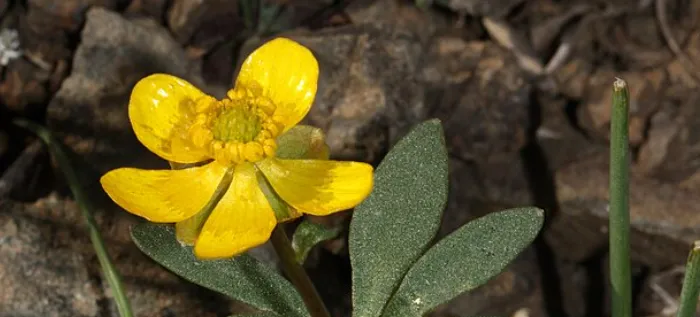
In most flowers there is just a single compound pistil made up of several fused carpels, which means, the individual units of the female reproductive structure. However, in primitive flowers, like buttercups, the carpels are separate, giving the centre of the flower a cluster of small individual pistils rather than one. This is one of the features that marks Ranunculaceae as an ancient, primitive family, and it becomes visually obvious once you know to look for it.

Superior and Inferior: A Small But Important Distinction
This is the concept that confuses beginners most often, but it is actually quite simple once you have a flower in your hand.
The question is: where is the ovary sitting relative to the other flower parts?
Superior Ovary
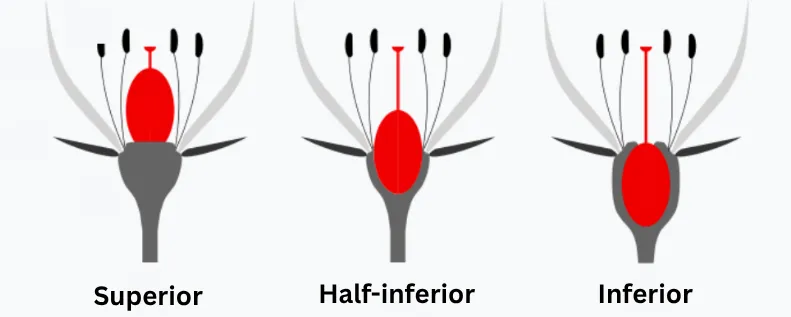
In many flowers, the sepals, petals, and stamens all attach to the stem below the ovary. The ovary sits above them all, at the top of the stem, clearly separate. This is called a superior ovary.
A buttercup is a good example. Pick one and look at the profile. The petals and sepals are clearly attached to the stem below a cluster of separate pistils sitting on top. The ovary is superior.
A superior ovary is the simpler, more primitive arrangement. The ovary is exposed and independent, which is why most primitive plant families have it.
Half-Inferior Ovary
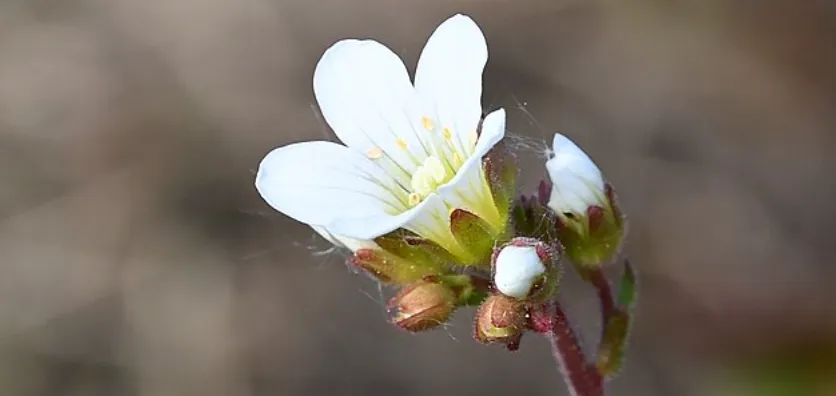
Between the superior ovary and the inferior ovary sits an arrangement that doesn't fit neatly into either category: the half-inferior ovary, sometimes called a semi-inferior ovary.
In a half-inferior flower, the receptacle partially encloses the ovary. It's growing up around the lower half of it, while the upper half remains exposed. The petals and sepals attach midway up the ovary rather than clearly above or below it.
The easiest way to see this is to cut the flower in half lengthwise. In a superior ovary, the seed-containing chamber sits cleanly above the attachment point of the petals. In an inferior ovary, it sits cleanly below. In a half-inferior ovary, the attachment point runs through the middle of the ovary wall. Half of the ovary is below the petals, half is above.
Saxifraga are perhaps the most commonly cited example of a genuinely half-inferior ovary because the two carpels are partially fused to the receptacle but their upper portions remain free, and if you cut the flower you can see exactly where the free and fused portions begin and end.
Inferior Ovary
In other flowers, the ovary is buried inside the receptacle, the fleshy base of the flower, and the sepals, petals, and stamens all attach above it. The ovary is below the other flower parts, which is why it's called inferior.
An apple is the easiest way to understand this. Cut an apple in half and you find the core, the true ovary, containing the seeds, surrounded by thick, sweet flesh. That flesh is not the ovary wall. It is the swollen receptacle, the base of the flower, which grew up around and over the ovary as the fruit developed. The ovary was inferior, buried in the receptacle, and what you're eating is mostly receptacle tissue, not ovary tissue. The small star-shaped papery remnant at the bottom of an apple (the end opposite the stalk) is the dried remains of the sepals. Because the ovary was inferior, the sepals were attached above it, which means their dried remains are sitting at the tip of the fruit, not at the base.
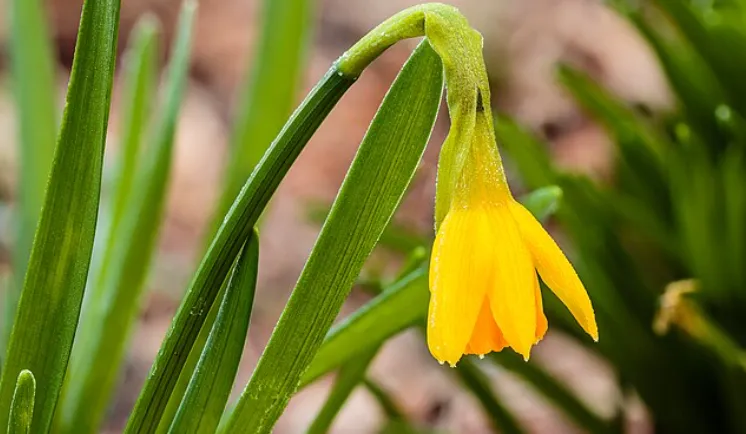
A daffodil is another clear example. Look at the base of a daffodil flower, where it connects to the stem. You'll notice a swollen green structure just below where the petals begin. That is the inferior ovary, sitting below the rest of the flower. After the petals fall, that swollen structure develops into the seed capsule.
Why Does It Matter?
Ovary position is one of the most reliable family-level features in botany, precisely because it doesn't change. A family with an inferior ovary has an inferior ovary across virtually all its members, and vice versa. Once you know that Asteraceae always has an inferior ovary, or that Ranunculaceae always has a superior one, you have a cross-check that works across thousands of species.
The half-inferior is less common than the other two, and you are unlikely to encounter it often in the families covered in this course. But knowing it exists means you won't be confused when a flower doesn't fit clearly into either category. If the petals seem to attach in the middle of the ovary rather than clearly above or below it, that's your answer, and it's still a useful identification clue, because the families that have it are consistent about it.
In practice, checking ovary position takes about thirty seconds with a flower in your hand and a sharp eye or a hand lens. Look at the profile first. If the swollen base of the pistil sits clearly above where the petals attach, it's superior. If there's a swollen structure clearly below where the petals attach, it's inferior. If the attachment seems to run through the middle of a swollen structure, it's half-inferior. If you're still unsure, cut the flower in half lengthwise and the position of the seed-containing chamber relative to the attachment point will be immediately clear.
Regular and Irregular: What the Shape Is Saying
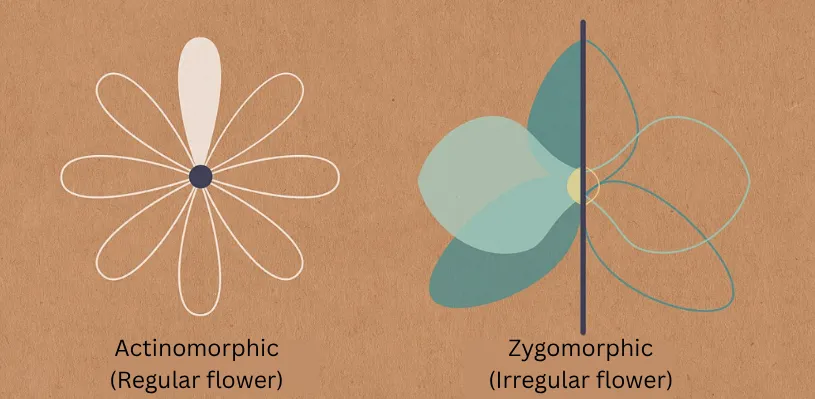
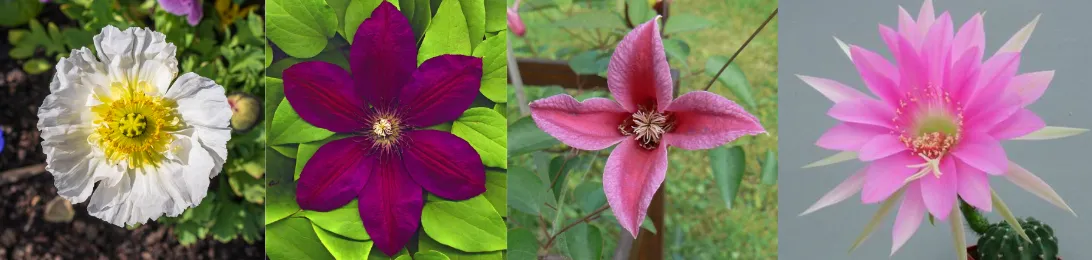
Regular Flowers
If a flower looks the same from every angle, meaning you could rotate it and it would look identical at every point, it has radial symmetry.
Botanists call this actinomorphic, though you don't need to memorise that word. A regular flower is one that is equally accessible from any direction.
Buttercups, roses, poppies, and most members of the Brassicaceae are regular flowers. Radial symmetry usually means the flower has a relatively open, generalised relationship with pollinators. It welcomes anyone who arrives, from any direction, and gives them access to the nectar and pollen without requiring a specific approach. These flowers tend to attract a wide range of visitors.
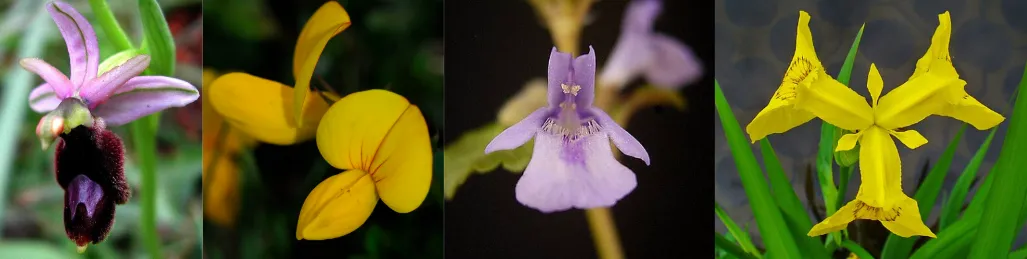
Irregular Flowers
If there is only one line along which the flower is symmetrical, like a left side and a right side that mirrors each other, but a top and bottom that are different, it has bilateral symmetry.
Botanists call this zygomorphic. An irregular flower has a specific orientation and a preferred direction of approach.
Pea flowers, foxgloves, snapdragons, and all members of the mint family have bilateral symmetry. This is almost always a sign that the flower has evolved a specific relationship with a specific type of pollinator. Bilateral symmetry creates a landing platform, usually by using the lower petals, and often a guide into the flower that steers the pollinator toward the pollen and nectar in a precise way.
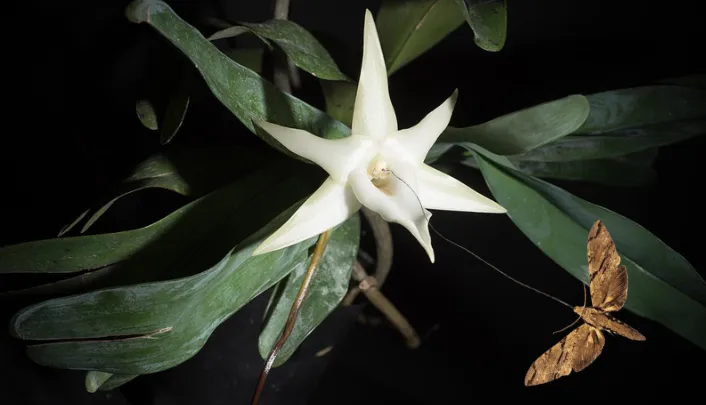
The advantage of this precision is efficiency. A regular flower that welcomes just everyone, will also get visits from insects that might carry its pollen to the wrong species. An irregular flower that is accessible only to long-tongued moths, or only to a bee of a specific size and shape, is more likely to have its pollen carried to another flower of the same species.
The disadvantage is dependency. A flower that has evolved to fit one specific pollinator perfectly is of course in big trouble if that pollinator would somehow disappear one day.
Looking at an irregular flower will often make you wonder 'What kind of visitor does this shape fit?' Is the opening wide enough for a bumblebee but too narrow for a larger beetle? Is there a tube that would require a long tongue to reach the nectar? Is there a landing platform that would support a bee but not a butterfly? The shape is a description of the intended visitor, and once you start reading it that way, irregular flowers will become remarkably legible.
Fusion: The Plant Engineering Its Message
In primitive flowers, all the parts are separate. Each petal is its own independent structure. Each stamen stands alone. You can pull them apart one by one.
As flowers evolved, parts began to fuse together. This fusion is not random. It is almost always meant to get more precise control over who gets access to the pollen and nectar, and from which direction.
Fused Petals
When petals fuse together, they form a tube, a funnel, a bell, or a two-lipped structure.
The shape of the fused corolla is one of the most instantly recognisable features of a plant family. Think of the bell-shaped, fused corolla of a foxglove that most people recognisable immediately. Or the trumpet of a daffodil, the rotating wheel of a potato flower, or the two-lipped tube of a mint flower.
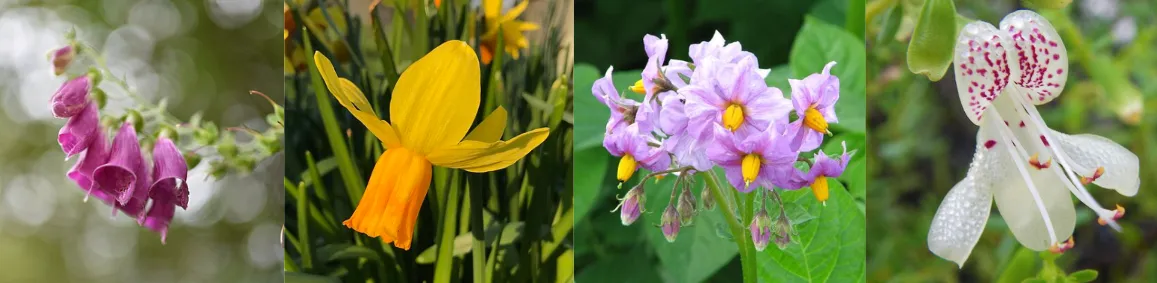
All these different shapes are not aesthetic choices. Each one is engineered for a specific type of visitor.
A long, narrow corolla tube is designed for a long-tongued pollinator like a moth, a hummingbird, or a bee with a particularly long proboscis.
A short, wide tube is accessible to almost anyone.
A two-lipped tube, the bilabiate corolla found in mints and foxgloves, creates an upper lip that acts as a roof and a lower lip that acts as a landing platform, with the stamens positioned just inside the upper lip so that a bee landing and pushing inward will brush against them.
Fused Stamens
In some families, the stamens themselves are fused together. In the pea family, nine of the ten stamens are fused into a tube around the pistil. In the daisy family, the stamens are fused into a ring around the style, forming a tube through which the pollen is pushed as the style elongates, making a mechanism so clever that it functions like a piston pushing pollen out to a waiting pollinator.
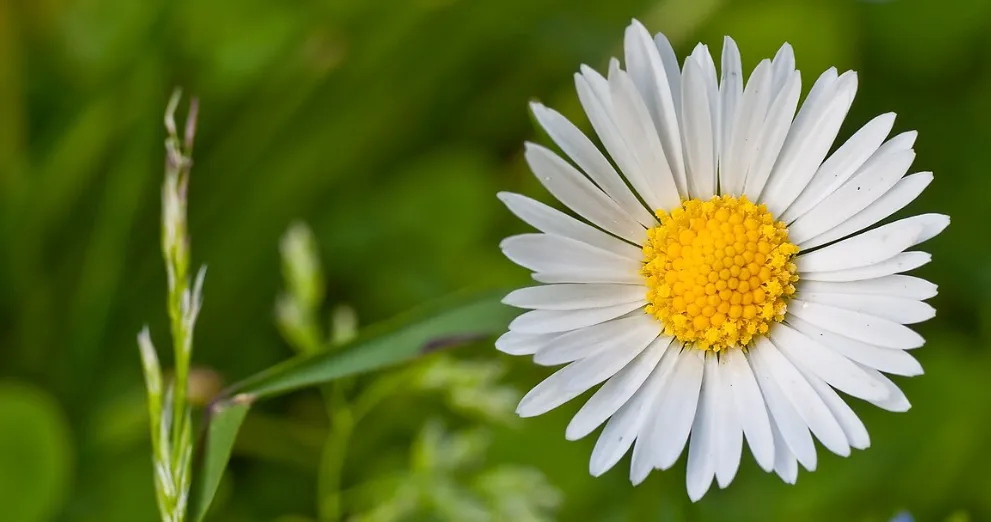
As a general rule: the more fused the parts, the more specialised the relationship between the flower and its pollinators, and the more recently evolved the family. Primitive families like Ranunculaceae have separate everything and the petals, stamens and carpels are all independent. Advanced families like Asteraceae have fused almost everything, and the result is one of the most sophisticated pollination mechanisms in the plant kingdom.
When you encounter a flower with obvious fusion, look for a moment at what the fusion is doing. What does the shape allow? What does it exclude? The answer to those questions is usually one of the keys to understanding what family you're looking at and why it looks the way it does.
Putting It Together
You now have the vocabulary to read most flowers at a basic level. Let's put it into a simple sequence we can use in the field:
Step one: Count the petals. Three, four, five, or numerous? Separate or fused?
Step two: Check the symmetry. Regular or irregular? If irregular, what shape is the landing platform?
Step three: Count or estimate the stamens. Fixed number or numerous? Any obvious fusion?
Step four: Find the pistil. Single or multiple? Any obvious features?
Step five: Check the ovary position. Is there a swollen structure above or below where the petals attach?
Step six: Look at the sepals. How many? Any unusual features?
This sequence takes about thirty seconds when you have a flower in your hand. You won't always be able to answer every question. Some features require a hand lens, or cutting the flower open, or looking at features that aren't visible from the outside. That's fine. Answer what you can, and you'll have enough information to start narrowing down the family. The goal is not to answer every question before moving on. The goal is to build the habit of asking them, of looking at a flower as something that can be read, rather than something that can only be admired.
A Note on Terminology
You'll notice that this lesson has introduced quite a number of botanical terms. You don't need to memorise all of them immediately, but you'll find that having the right word for something makes it easier to look up, easier to discuss, and easier to remember.
Don't worry if some of them don't stick right away. They will, gradually, as you encounter the same features repeatedly across different families. By the time you've worked through three or four families, the vocabulary will have become second nature, just because you kept seeing and using it.
The one thing worth memorising now, before moving on, is the basic sequence: sepals, petals, stamens, pistil, outside to inside. Everything else builds on that.
In the next part, we'll step back and look at the bigger picture; where flowers came from, how they evolved, and why understanding that history makes everything that follows considerably easier to read.
But for now, just go outside, with a hand lens if you have one, and find some flowers, as different from each other as possible and work through the six questions for each one: How many petals? Separate or fused? How many stamens? Superior or inferior ovary? Regular or irregular? Any obvious fusion?
You don't need to try to identify them to the exact species yet. Just read them, as carefully as you can, and notice what the flower is telling you.