The Fungus That Needs Two Plants
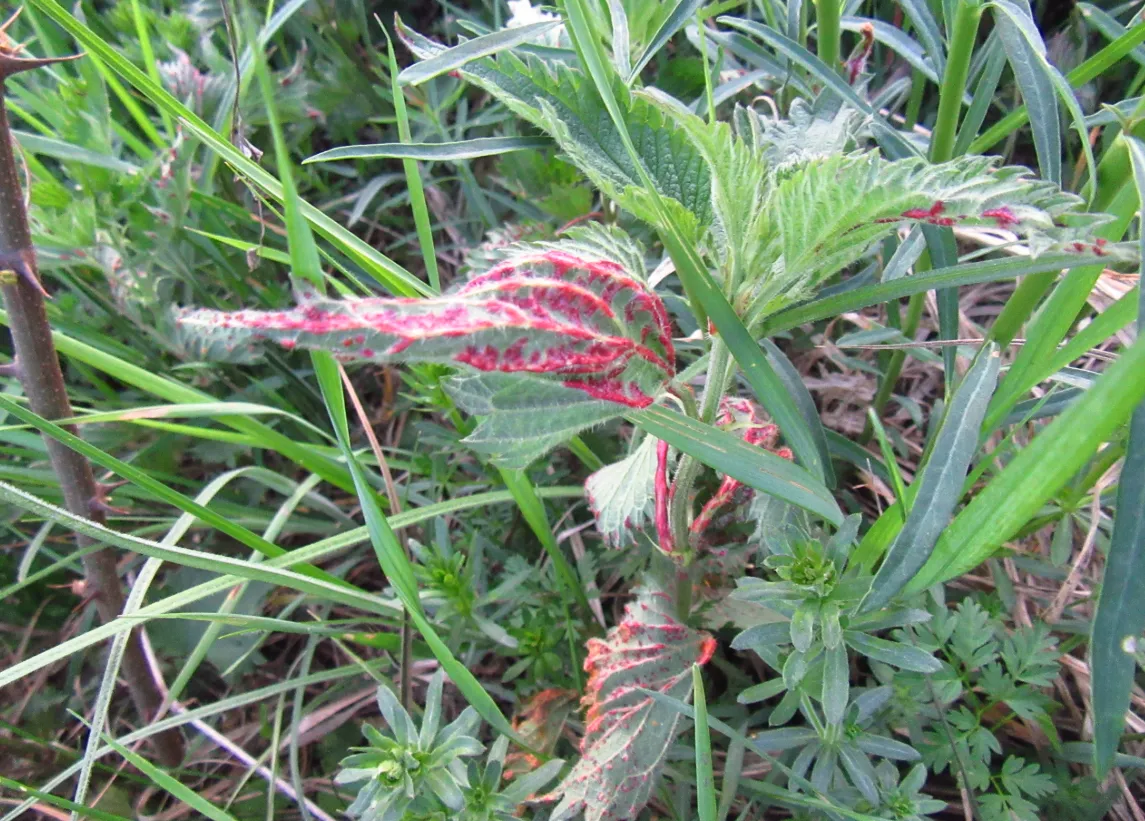
If you've been walking along the edges of a damp field or peering into a shady ditch, you have likely encountered the Common Nettle (Urtica dioica). Most of us give it a wide berth, wary of its sting. But pause for a moment, look closer and with a bit of luck, you might find some that are not quite looking like they should.
I stumbled upon this patch where the nettles aren't just growing; they are kind of transforming. The stems are swollen and twisting into grotesque, fleshy shapes and the leaves are dotted with vivid, blistering spots of deep red and fiery orange. That colour change is what made me notice them.
I really love finding plants like these. There is so much happening in just one plant. Let me explain.
It looks like a disease or perhaps a strange creature's work. It is one, and also something weirder. This is the work of Puccinia urticata, commonly called 'Nettle Rust', and it is one of the most fascinating examples of how a fungus can reshape the architecture of a plant.
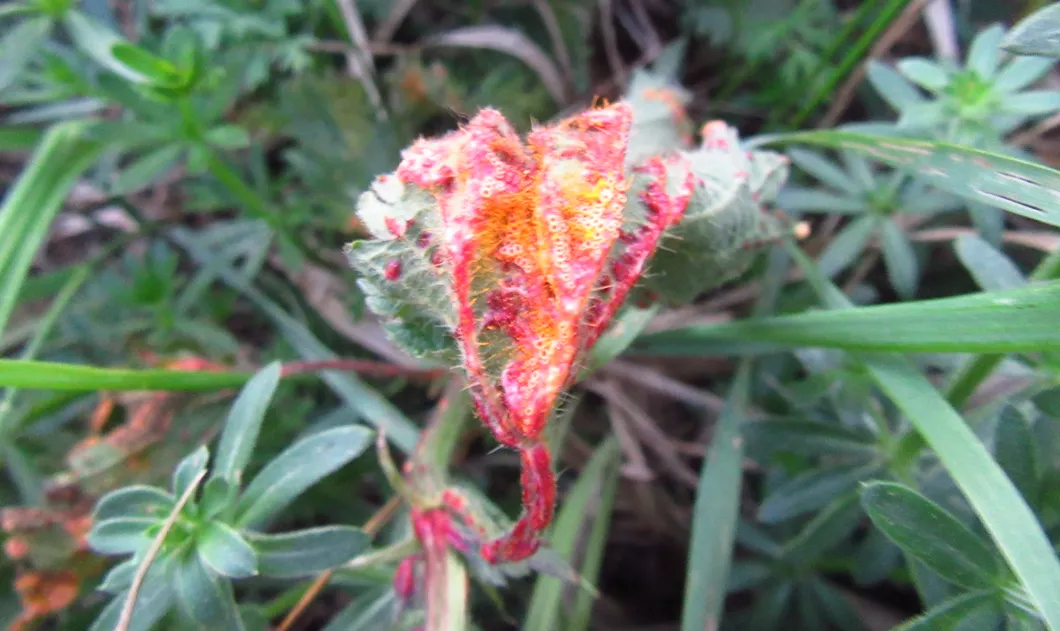
When we look at these distortions, we are in fact looking at a gall, though one built by a fungus rather than an insect, like the one on the peach tree, that I wrote about last week. While we often associate such structures with insects, like the tiny wasps that create 'oak apples', fungi too, can redirect plant development in remarkable ways.
The rust fungus isn't just sitting on the surface of the nettle. It grows within the plant’s tissues and alters the way it grows. Cells divide more rapidly and expand beyond their usual limits. This process, hypertrophy and hyperplasia, results in the thickened, distorted stems you see in the field. The fungus manipulated the plant in building a structure that serves the fungus.
If you look at the underside of a leaf or along a swollen stem, the true detail emerges. There are clusters of tiny, orange-yellow cups. They kinda look like miniature volcanic craters. These are aecia.
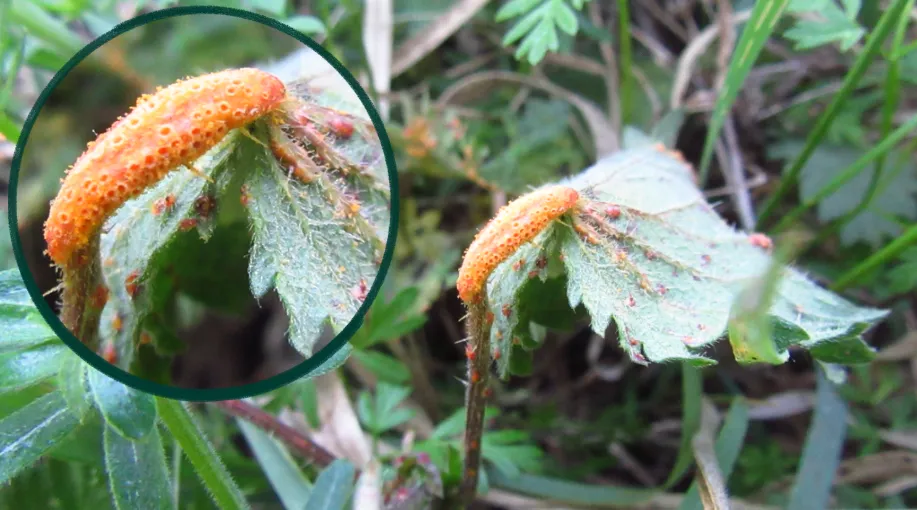
Each of these cups produces an immense amount of spores. When the pale, often beautiful fringed rim opens, it exposes the orange spores to the air to be carried away and spread themselves.
This is the reproductive phase of the fungus. The nettle is not just being altered, it is being used as a launch platform. From these structures, spores are released to continue the cycle elsewhere, leaving the nettle to recover from its temporary visitor. But these spores are not looking for another nettle. They are heading somewhere completely different, and that is where the story gets strange.
The nettle will survive. It will either grow now leaves that aren't affected, or come back next year. After all, it wouldn't do the fungus much good to destroy its hosts on which they rely for survival.
A Double Life
But here is the most poetic part of the Nettle Rust’s story: it cannot complete its life on the nettle. It is a heteroecious fungus, meaning it requires two completely different hosts to complete its life cycle.
The spores released from these orange cups are not looking for another nettle. They are searching for Sedges (Carex species). There, the fungus continues its life in a different form, producing darker, less conspicuous spore structures on the blades. I hope to be able to document that later this year.
On sedges, look for slightly discoloured or thickened patches on the leaf blades, sometimes with a darker, powdery coating. It's less dramatic than the orange aecia on nettles, but worth searching for.
The ecological consequence of this two-host dependency is worth sitting with for a moment. If you were to remove all the sedges from an area, the nettle rust would disappear too, even if the nettles remained completely untouched. The two plants are invisibly linked through the fungus that moves between them. From the outside, a nettle patch and a stand of sedge in a nearby ditch look like unrelated things, but underneath, they may be part of the same biological system.
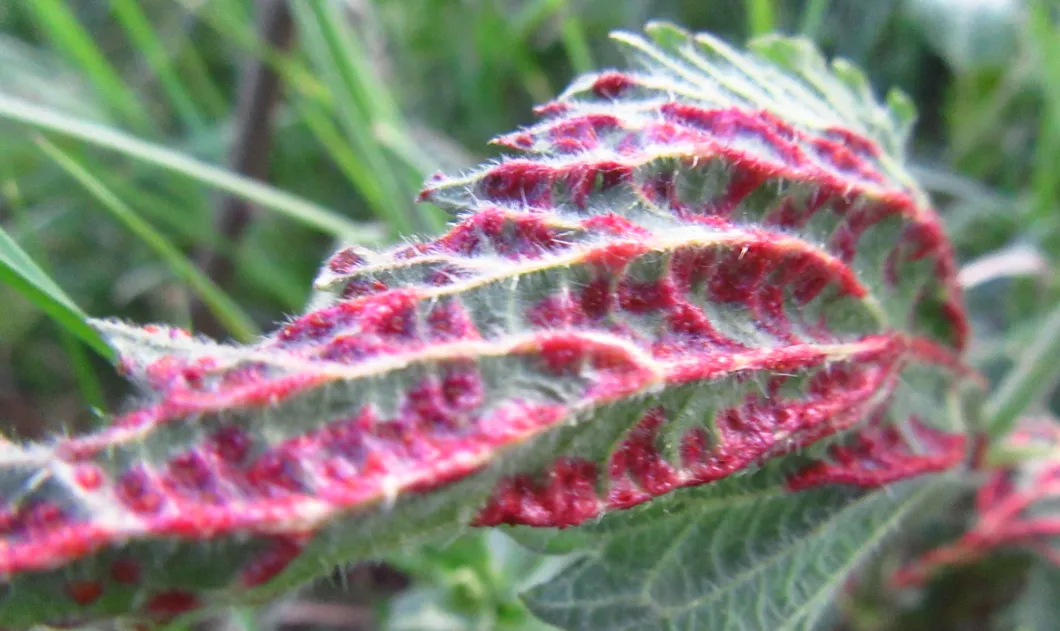
It would be easy to dismiss a 'rusted' nettle as a sick plant. But when we examine the intricate structure of those aecia, the picture changes.
We are not looking at damage alone, but at a long-evolved interaction, a relationship that reshapes growth, redirects energy, and links different habitats and species together.
Next time you are out walking, take a look around for the nettles that seem slightly off. Look for the orange swellings, the distorted stems, the unexpected colours.
You are not just looking at disease. You are looking at a fungus that has learned how to build with living tissue.
Sometimes, it is just a bright orange spot that draws the attention and reveals the invisible connections, between a nettle and a sedge, between two habitats, between things that looked completely unrelated until you looked closely enough.