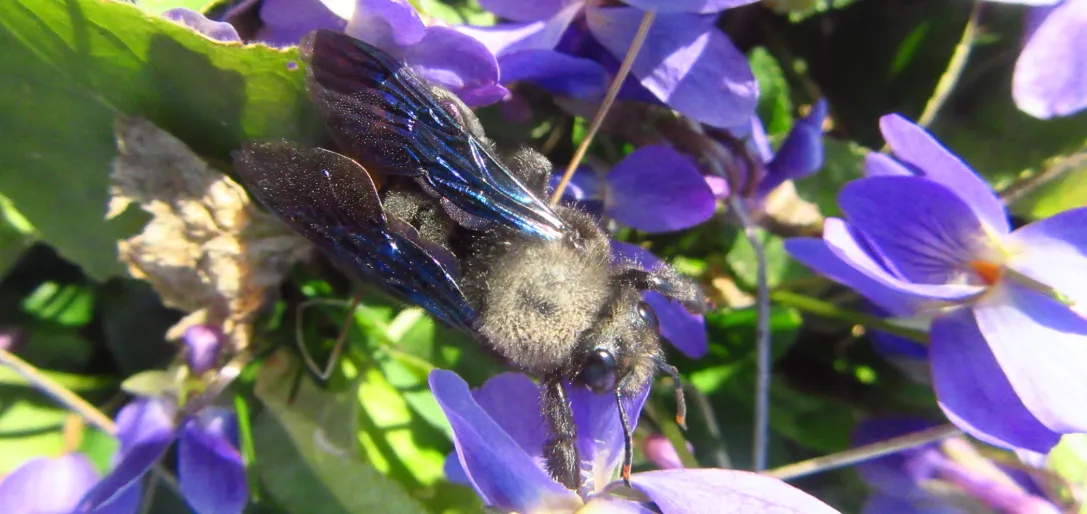
The Violet Carpenter Bee
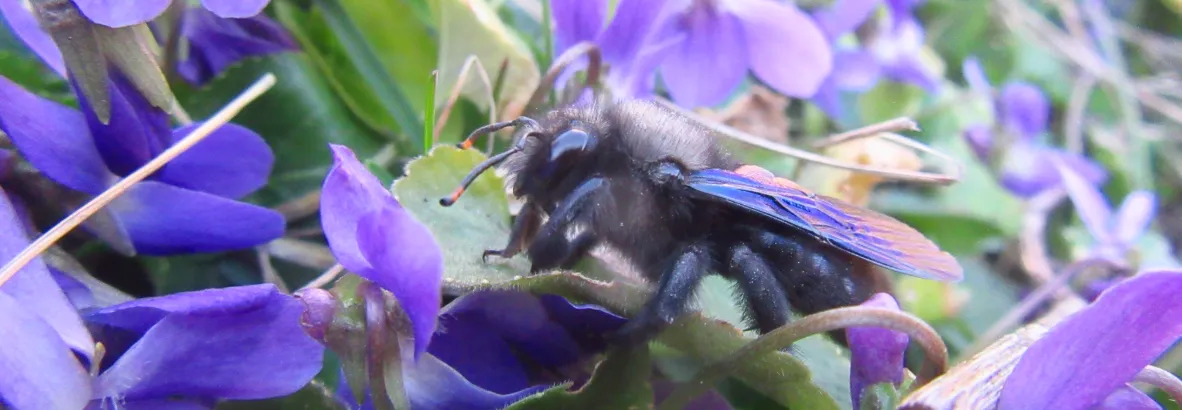
If the bumblebee is the 'panda' of the garden, the Violet Carpenter Bee (Xylocopa violacea) is something closer to a flying piece of jewelry.
I found one buzzing around the violets. From a distance it looks almost entirely black, just a heavy shadow moving through the spring air. But when the sunlight catches its wings at the right angle, they ignite deep violet-blue, more like stained glass than insect membrane.
The Solitary Heavyweight
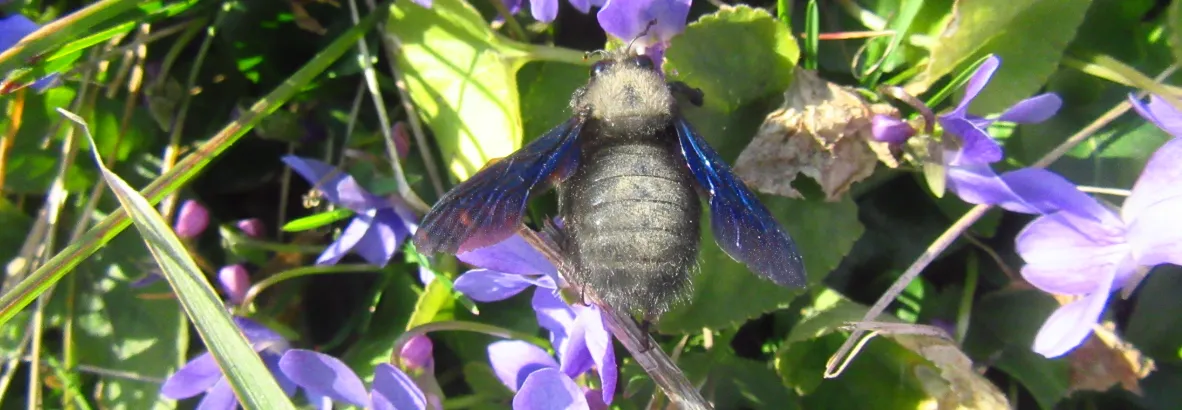
Carpenter bees are among the largest bees in Europe. When one lands on a small flower, the plant often dips under the weight before slowly springing back again. Despite the size, the bee moves with surprising precision from flower to flower.
The individual I photographed today was a male, recognizable by the orange tips on the antennae. He has an important role to play in spring, but it is not the one suggested by the bee’s name.
The Carpenter’s Trade
The carpentry belongs to the females.
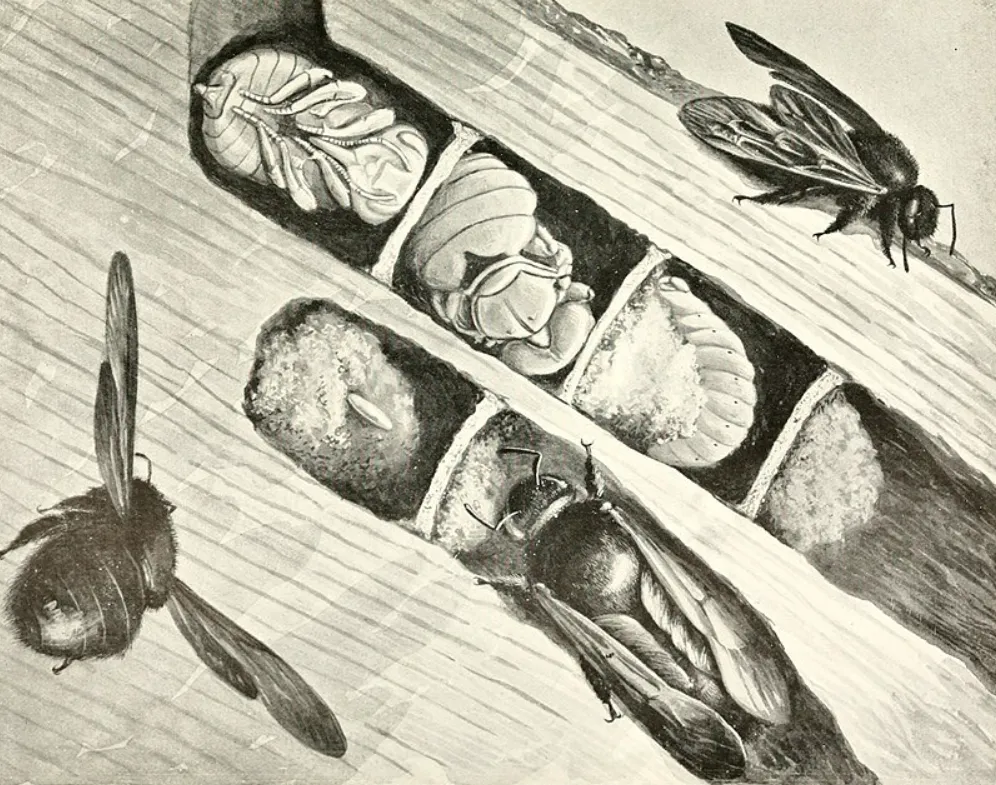
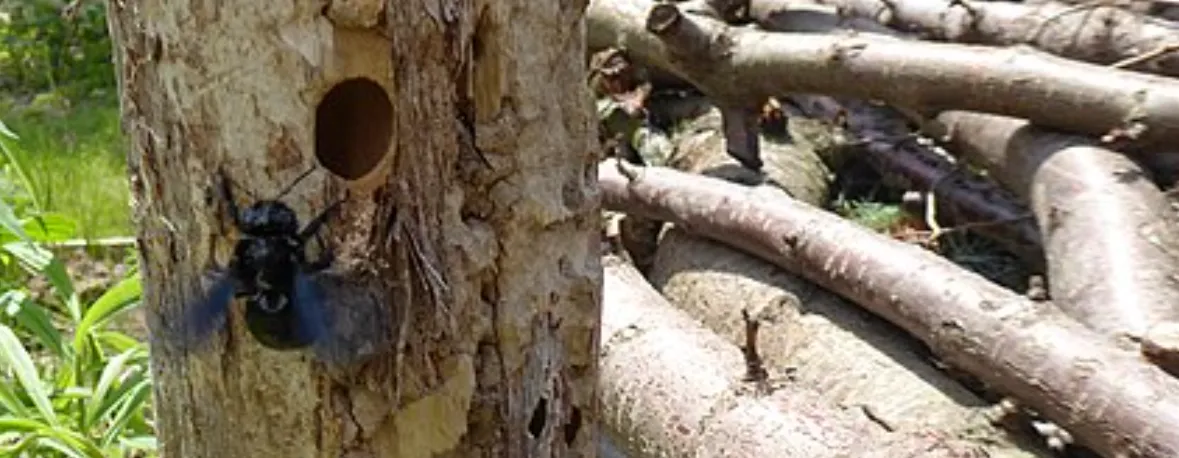
A female carpenter bee searches for suitable dead wood; old vine posts, fallen branches, or weathered beams. She doesn't want soggy, rotten wood; she needs it seasoned and firm. With powerful mandibles she drills a perfectly round hole and begins carving a tunnel inside the wood.
Along that tunnel she creates a row of chambers. Each chamber receives a single egg and a carefully packed supply of pollen. The developing larva will grow entirely within that wooden gallery.
The male I saw today will never drill such a tunnel. Instead, he spends his time patrolling sunny patches of ground and flower beds, waiting for females to appear.
The Value of the Mess
Seeing this bee is a direct consequence of the slower approach I take in my garden.
In a tidy garden, dead wood disappears quickly. Old posts are replaced, fallen branches are burned, and every rough corner is cleaned away. To a carpenter bee, that kind of neatness removes the very material needed to raise the next generation.
Carpenter bees depend on rotting, sun-warmed wood, the sort of thing that most people don't want in their gardens. But leave a few old posts standing, let a branch lie where it falls, and suddenly the garden becomes useful to creatures that would otherwise just pass it by.
The Sound of Spring
A carpenter bee has a distinctive sound. Not the nervous buzz of a honeybee, but a deeper, slower thrum that can almost feel as much as hear.
I heard the sound arriving before the insect itself. Then the dark shape appeared, and when the wings caught the sunlight they flashed violet against the purple flowers.
Somewhere nearby there must be a piece of old wood that a female will eventually consider worth drilling into.
Which means my yard is still messy enough to be alive.