What is a Naturalist? A Personal Introduction
Curiosity, observation, and a lifelong practice of paying attention
I have always admired people who can tell which bird is flying overhead, silhouetted against the sun. Or who can vividly talk about the false blister beetle sitting on a cornflower, and describe its life cycle in detail, from larva to adult beetle.
I have been striving almost my entire life to become such a person. I did not want to become a firefighter, a superhero, or a movie star when I was young. No, I wanted to become a biologist. I didn’t want to go play football on weekends; I preferred joining guided nature walks. One of my earliest memories is traveling for over two hours, just to catch a glimpse of a Golden Oriole, one of the rarest birds in Belgium, where I spent my childhood. A bright yellow streak in the sky, when flying from tree to tree. Another fond memory was the first time walking in a nature reserve after dark, and being surrounded by the smell of the honeysuckle flowers, which open at dusk, to attract nocturnal pollinators.
Eventually, this led to obtaining a degree in Forest Management, with a specialisation in Ecological Inventory and Conservation, followed by countless courses, ranging from Research Methods for Bats, where we went out with heterodyne bat detectors (a device that electronically converts ultrasonic sounds into sounds audible to us), to Ecology of Ditches and Canals, where we spent entire days lying on our stomachs with a dip net, catching minuscule insects from the water to then identify them.
But the more I learned, the more I also realised that there is so much more that I do not know. Even after all this time, I still cannot tell most birds flying overhead just by their silhouettes. To be honest, this frustrates me a little, after all the time I spent trying. But on the bright side, I can easily recognise dozens of species by their flight patterns, as well as by the songs they produce, and I know the life cycle of many insects down to the smallest detail.
Being a naturalist, then, is not about knowing everything. Instead, it’s a mindset, a way of seeing the world with curiosity and having a desire to understand. Whether it's watching birds in the backyard, identifying mushrooms on a forest trail, or simply noticing the changing seasons in the neighborhood, it's all practicing the art of naturalism.
At its core, being a naturalist means paying attention. It’s about slowing down and observing the details; seeing how a bee moves from flower to flower, how clouds gather before a storm, how a tree’s bark changes with age. It’s about asking questions and seeking answers, not necessarily through formal study, but through experience, observation, and reflection.
A naturalist is a student of the natural world, always curious and wanting to learn more and read about the habitats and landforms in which he makes observations, in order to understand the ecological patterns and processes in his ecosystem.
A naturalist shares the information he has gathered so that others can learn from it as well, and is always looking for the information that others share.
Naturalism is a lifelong journey. After all, there is always something new to learn and understand. But it is a journey that anyone can undertake. You can start anywhere; all you need is a good dose of curiosity, a book or two describing the local fauna and flora (so you can also find out what exactly you are looking at), some spare time and the desire to go outside. Just try it out. Even if you only learn the name of one plant, you will still know more than you did yesterday.
You can do it in your own yard, in a field, a forest, on the beach, even on your balcony if you plant some flowers or herbs in pots. It's one of the cheapest hobbies you can have, and it's a hobby that never gets boring, no matter how long you are doing it. I'm 45 now, and I've been a naturalist for pretty much all my life and still, I'm eager every day (maybe a bit less if it's really pouring down) to go outside and discover new things.
Charles Darwin was a naturalist, just like David Attenborough and Jane Goodall to just name a few, but so are a lot of foragers, backyard-birders, the people working in your local parks, the neighbor's kid who is collecting bugs, the lady down the street who is always planting new native flowers to attract butterflies... Naturalists are everywhere, and I encourage you to also become one, even if it's just for an afternoon, or during your holiday, or during your lunch break, when you're eating your sandwich on a bench next to some bushes.
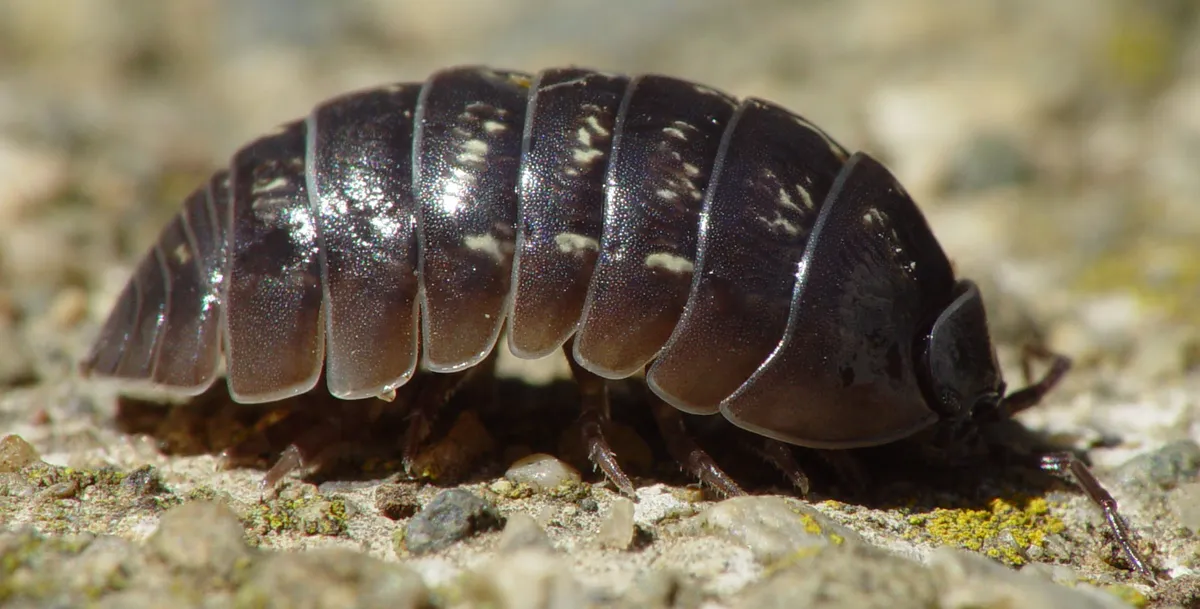
But beware, once you get a taste of it, it's hard to stop. The good news is that there isn't a single good reason why not to do it, so just give it a shot and enjoy all the discoveries you make! Yesterday I found the first isopod (you might know them as roly-polies, pillbugs or woodlice) of this year, and while they will be beneath every stone and log I turn upside down the rest of the year, seeing that first one after winter always makes my day.