Almost Spring Is Still Winter
Slow gardening at the edge of winter and spring
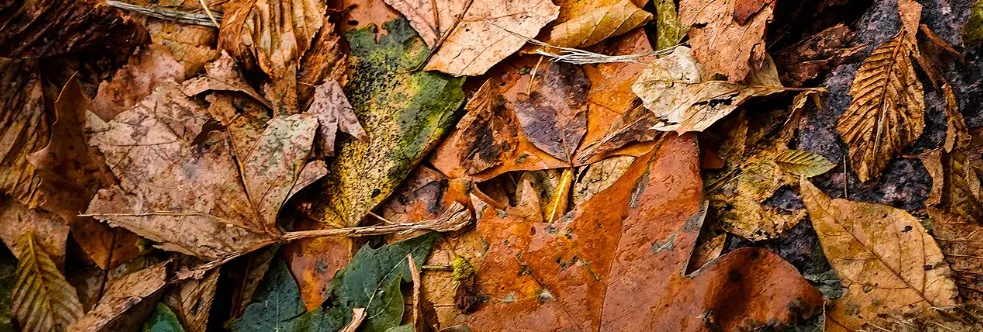
Today the sun is shining, after weeks of cold, mist, and rain. On those first sunny days after winter, it always feels as if the garden is calling me to dive into it. Not so much because so much is already happening, but precisely because it feels as if nothing is happening anymore. The sun is shining, the light is different, and you can smell spring in the air. Even the bare plants seem less 'dead' than they did a few weeks ago.
Yet this is exactly the moment when I still don’t do anything, apart from perhaps quietly sitting down with a cup of coffee in a sunny spot to look around a bit, which is exactly what I did today. A few days ago I wrote a short article about the concept of Slow Gardening, and this is a nice example of it.
The garden doesn’t need control. It needs time.
Mild days, interspersed with the occasional still chilly night. For us, that quickly feels like 'almost spring', but for many animals it is still simply winter. After all, there is a big difference between 'feeling like spring' and 'being spring'. In February and March, our perception and reality tend to get a little mixed up. During the day it is pleasant to be outside again, sometimes even warm in the sun. But in the morning there is occasionally still a layer of frost on the ground, and the soil also remains cold to the touch. You notice, especially in the spots that stay in the shade, that for weeks on end, nothing really changes yet.
That gap between what we experience and what is actually happening in nature is precisely where things often go wrong. I saw it happening again today. The neighbour had neatly left the fallen leaves under the trees all winter, but today, the first sunny day of the year, he was busily at work with his rake and wheelbarrow, cleaning everything up. It may also have been my imagination, but I think he was already staring longingly at his lawn mower as well…
I see my garden more as a kind of waiting room, in which not everything has to wake up, turn green, or start flowering at the same time. Not everything has to be neat or colourful. I even like a slightly wilder garden. By that I don’t mean completely overgrown—although that can certainly have its charm in a specially designated corner—but simply a bit wilder, with fallen branches on the ground, maybe even some rubble or a forgotten bucket that is half overgrown but much loved as a drinking place by the birds.
So for now, I simply leave everything where it is. Countless insects overwinter in dead plant stems, seed heads, and layers of leaves: ladybirds, lacewings, beetles, solitary wasps, butterflies, and moths. Some overwinter there as adults, others as larvae or pupae, relying on the layer of leaves for insulation and rest while they wait for spring to return.
What many people call 'tidying up' is therefore actually the removal of this protection at the very moment when the animals overwintering in it still desperately need it. Or, to put it a little less kindly but more realistically: it is mass murder for all the insects that are still sheltering in that layer of leaves.
Better to think about it as:
If something is still doing a job, it is not waste.
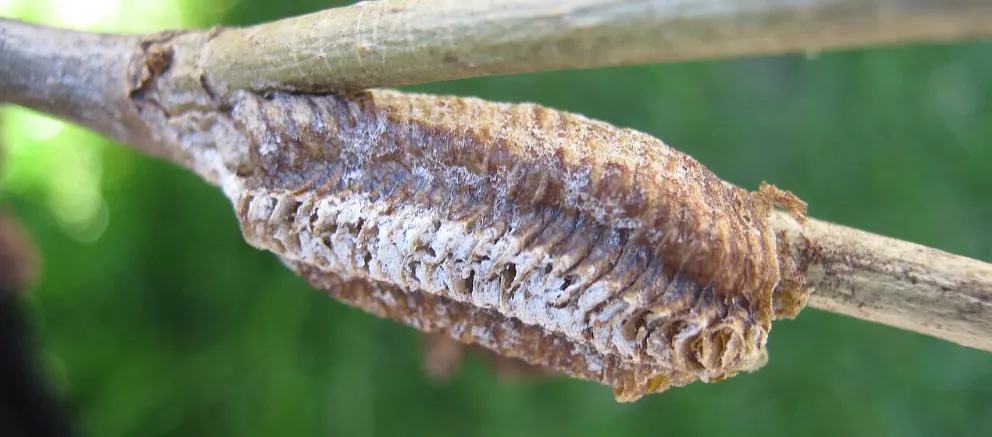
I leave dead plant stems standing for as long as possible. You would be surprised how many insects crawl into these hollow stems to survive the winter. Wild bees, beetle larvae, butterflies… They not only offer protection against cold and moisture, but also against predators that remain active during winter or wake up earlier in spring. These stems are not only a refuge for the insects that crawl inside them, but also for everything that attaches itself to them, such as, for example, oothecae (which is just a fancy name for the egg case of a praying mantis).
Only when temperatures really stabilise does life return. What surprises me every year is how late that moment sometimes comes. Not always in mid-March, sometimes only in April, and how suddenly everything then speeds up.
I also simply leave the leaves under shrubs where they are. And not only for the insects hiding among them; they also prevent the soil from drying out, plants get off to a faster start, and I simply have much more soil life, because the rotting leaves also feed fungi and soil organisms. And it’s free as well. In slow gardening, leaves are not mess, but a useful addition.
Healthy gardens grow from the ground up.
Not everything that depends on a winter rest makes itself easily visible. Amphibians, such as frogs, toads, and salamanders, overwinter and are masters of hiding. Compost heaps, wood piles, damp leaf layers, and pond edges are favourite hiding places. Moving a single thick branch or stone can be enough to force such an animal out of its shelter. Most of the time this happens without us realising it, simply because we project our own pace onto the garden and want to spring into action too quickly when spring seems to arrive.

I love hedgehogs. Hedgehogs have become something of a symbol of slow gardening for me. Hedgehogs don’t really fit into the idea of a finished garden. They need mess, irregularity, and transition zones. Hedgehogs are among the last animals to wake up in spring. When they do wake up, they are hungry, and to satisfy that hunger there need to be enough insects. So when the first insects start to reappear, the hedgehogs often turn over once more in their nests. They calmly wait until most of their food is once again happily and busily active and the last cold days have all but certainly passed. Only when I regularly see the hedgehogs shuffling around again do I myself spring into action, and can I start working in the garden without worrying too much.
Wildlife doesn’t need tidy gardens. It needs forgiving ones.
Slow gardening sometimes feels like a counter-movement in a world where everything has to go fast, where gardens have to be sleek and 'spring-ready' precisely when everything is still so vulnerable. It asks for a bit of trust. Trust that the garden knows when the time is right.
So when do I start?
I don’t wait for an exact date, but look for the following things:
- Several days in a row with temperatures above 10 °C
- Nights that remain fairly mild
- Soil that no longer feels cold and wet
- Insect activity, also outside sunny afternoons
- Hedgehogs once again cheerfully shuffling through the garden at dusk
And even then I start carefully. Never everything at once, and never everything removed. I cut stems spread out over weeks. I move leaves if necessary, but I don’t remove them. Pruning waste is used for the dead hedge… There is always overlap between the seasons. By consciously waiting a little longer and slowing down in early spring, a garden emerges that not only becomes more beautiful, but also quieter, richer, and more resilient.
And perhaps that is the most important principle of all:
A garden that allows time, allows life.