The Oak Leaf That Wasn’t Supposed to Look Like This
Today was an exciting day. I found a new gall species on the oak tree! Yes, that's something that excites me, and yes, I know how strange that might sound to many people. I can't help it, it's just something that fascinates me.
Here's a picture of the galls, just so you know what I'm talking about:
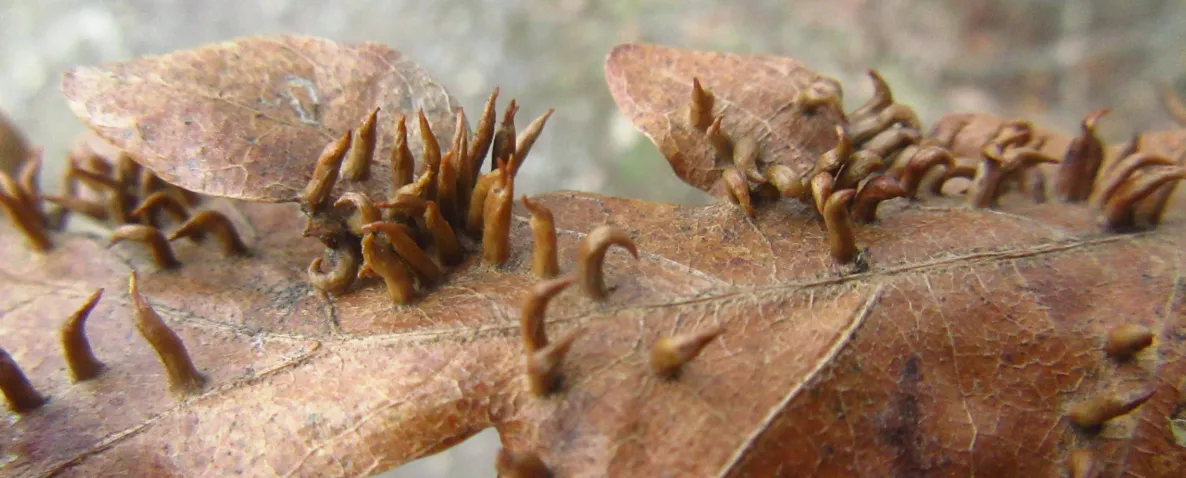
And an image of a different leaf where you can see just how tiny these galls are:
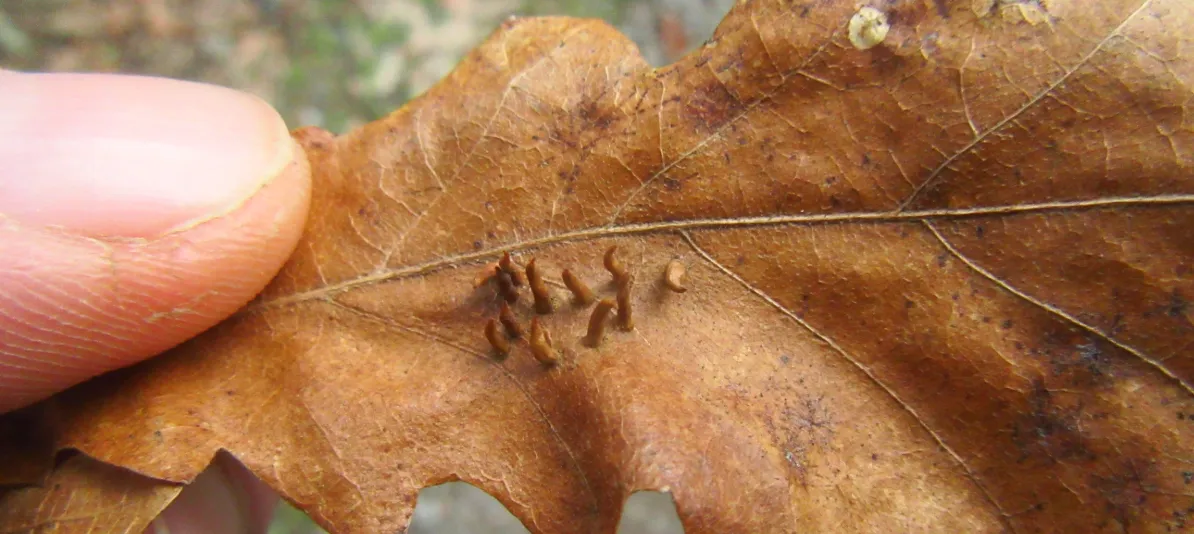
And the lower leaf surface where the galls are attached on the upper side of the leaf:
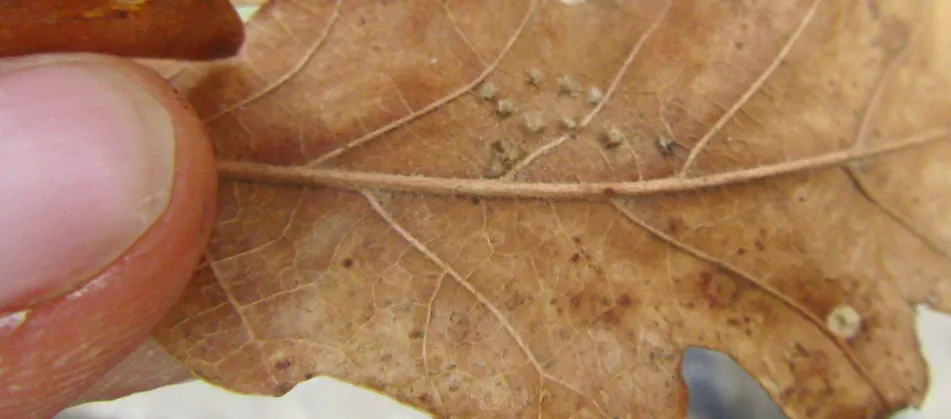
So the search for the species that is responsible for these galls could begin.
Let me walk you through how I narrowed it down.
The first clue is of course the host plant. I've found these on a Quercus cerris, commonly known as the Turkey oak. That knowledge alone eliminated a lot of possibilities from the start.
After some searching, I was down to two suspects; Contarinia subulifex and Cynips cornifex. the first one is a midge, the second one is a wasp. These two species are frequently confused with each other, because their names are almost identical in meaning (cornifex means 'horn-maker' and subulifex means 'awl-maker'), and they both produce 'horn-like' galls on this oak species.
The biggest clue to differentiate between these two species, is the placement of the galls. The galls of Contarinia subulifex always grow from the upper surface of the leaf, while the galls of Cynips cornifex grow from the underside of the leaf and are typically attached directly to the veins.
An additional clue is the density of the galls. With Contarinia subulifex you will often see a 'brush' of 50 to 100+ galls covering large sections of a single leaf, like in my first picture. Cynips cornifex galls can be found in groups, but there's often just a few per leaf and they are generally larger.
So after an hour or two of looking at scientific journals, since not much info is to be found on this, I came to the conclusion that these are most likely galls from Contarinia subulifex. I've submitted the pictures to iNaturalist in the hope some specialist will confirm my determination efforts, but seeing there are only 31 observations worldwide for these galls, I might never know for sure.
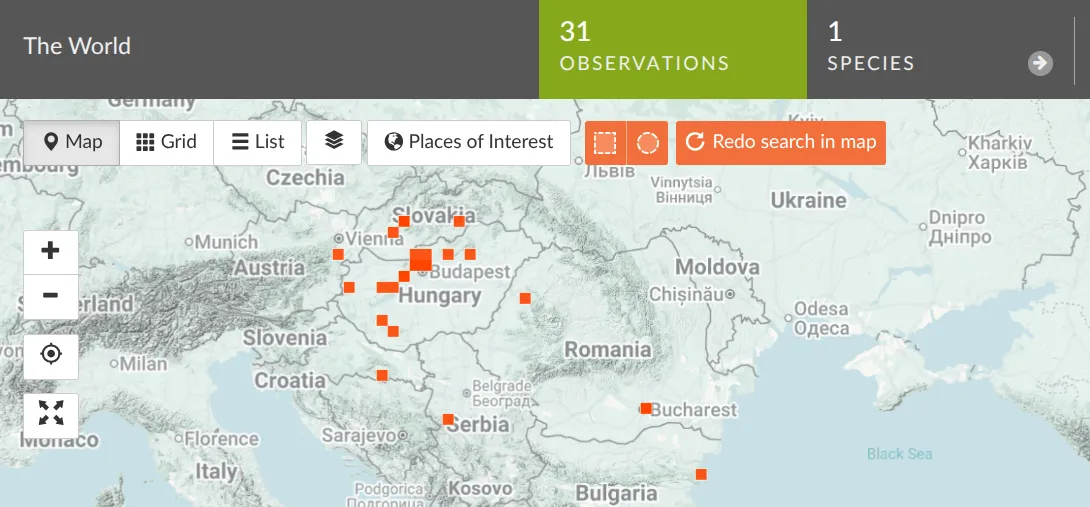
In any case, here is a bit of the info I've found on this species:
Identification Features
- Morphology: These are distinctly horn-shaped or spindle-like galls. They are usually slender (about 1 mm thick) and can reach lengths of 5–10 mm.
- Arrangement: They are 'gregarious', meaning they typically appear in dense clusters on the upper surface of the leaf, sometimes looking like a small 'brush' or group of spikes.
- Color: In my photos, the galls are brown because the leaves have dried out. When the leaf is fresh and green, these galls are typically pale green, yellowish, or sometimes tinged with red at the tips.
Life Cycle and Impact
- The Cause: The galls are induced by the larvae of a tiny fly (a midge). The female midge lays eggs on the developing leaves in spring, and the plant grows this abnormal tissue in response to chemicals secreted by the larvae.
- The Larvae: Each 'horn' contains a single larva. In late summer or autumn, the larvae exit the galls to pupate in the soil, which is likely why you see the galls remaining on the fallen, dry leaves.
- Health: While they can look quite dramatic when a leaf is covered in dozens of them, they are harmless to the overall health of the tree. They are a natural part of the oak's ecosystem.
In the world of galls, the 'architect' varies depending on the insect, but for Contarinia subulifex, the credit goes almost entirely to the larvae. Unlike some other insects, like the gall wasps, the female midge doesn't have the tools to start the construction herself. The female midge simply places her eggs on the surface of the leaf in the spring. At this stage, the leaf looks completely normal.
The gall only begins to grow once the larva hatches and begins to feed. As the larva feeds, it excretes specific chemicals (salivary secretions) that mimic plant growth hormones. These chemicals 'hijack' the oak leaf's natural development, forcing its cells to grow into that specific horn-like protective chamber instead of a flat leaf surface.
If a female lays an egg but the egg is damaged or fails to hatch, no gall will form. The plant is responding to the active, living stimulus of the larva. If the larva dies early, the gall usually stops growing or becomes stunted.
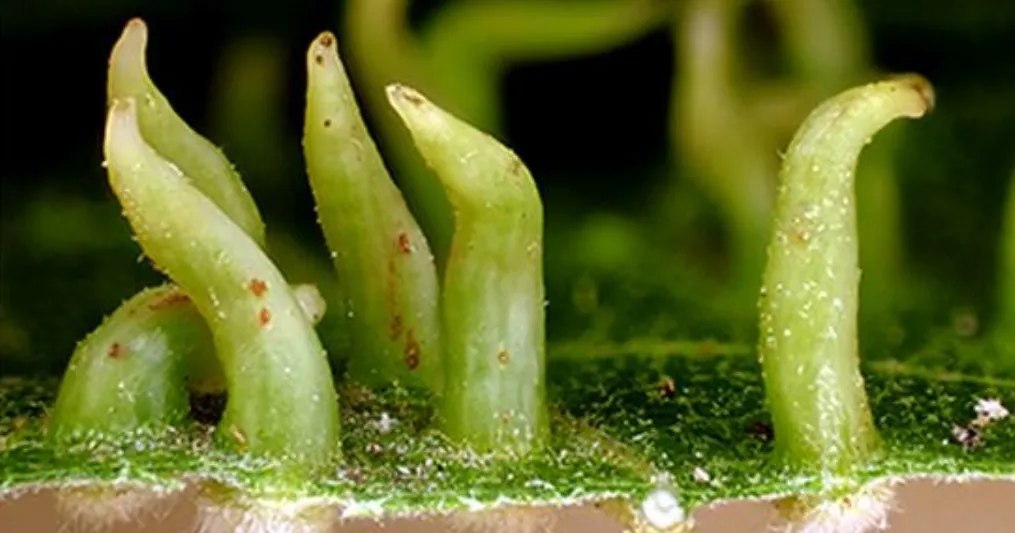
The Contarinia subulifex gall is technically a 'unilocular', a single-chambered pouch gall. If you were to slice one open lengthwise, you would see:
- The Hollow Chamber: The entire 'horn' is actually a hollow tube.
- The Walls: The walls of the tube are made of thickened plant tissue (epidermis and parenchyma). In these specific galls, the walls are quite thin—usually less than 0.5 mm thick.
- The Occupant: Inside the hollow, usually tucked near the base or middle, sits a single larva. It is a tiny, legless maggot, typically pale white or translucent when young, turning a more distinct yellowish or orange as it matures.
The larva stays protected inside this 'chimney' for the entire summer. It feeds on the nutrient-rich cells lining the inner wall of the gall. Because the gall is open to the air at the very tip (a tiny, almost invisible pore), the larva is protected from the elements but still has access to oxygen.
When the larva is ready to pupate (usually in late summer or autumn), it crawls out through that tip or the gall splits, and it drops to the soil below to spend the winter.
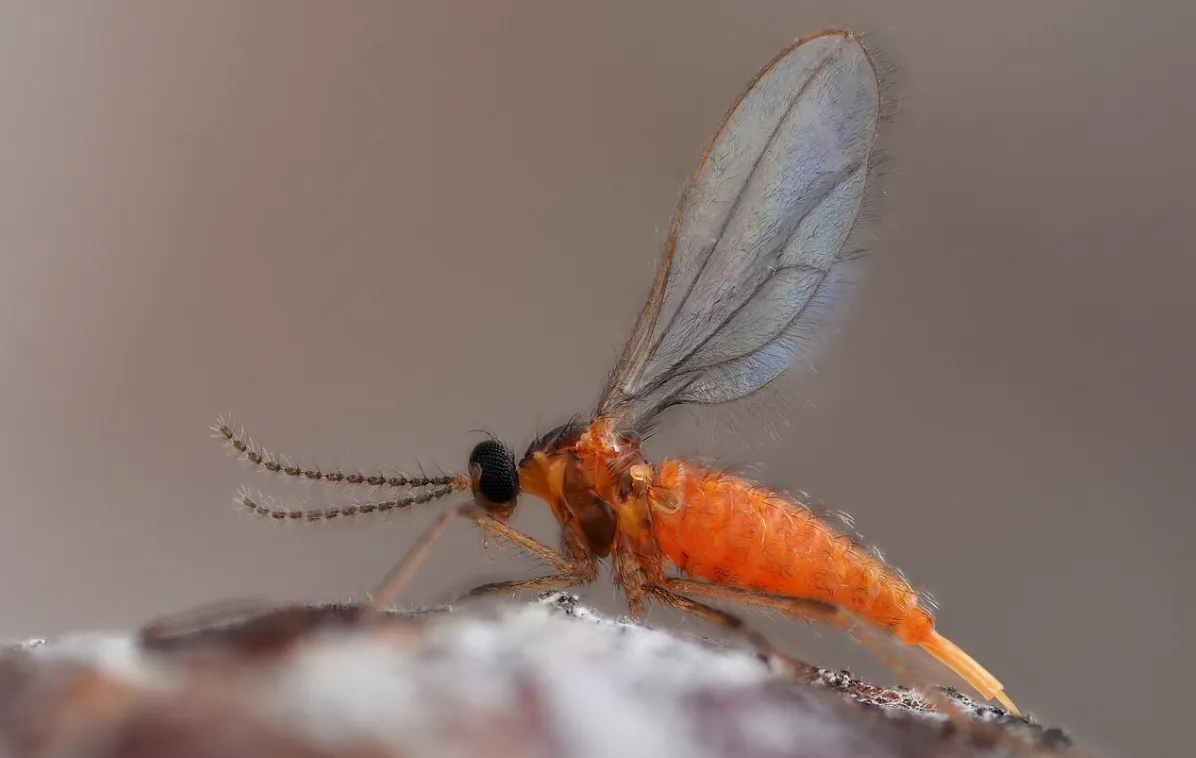
So, now you're probably wondering what an adult species looks like. So did I. Unfortunately, after scouring the internet for another hour, I wasn't able to find a single picture of the adult form of Contarinia subulifex. The closest I could find was a picture of Contarinia pseudotsugae, a different species in the same genus, on Wikipedia. But to the naked eye, the adults of both species would be virtually indistinguishable, so I'm sharing this photo, so you have an idea of what an adult looks like.
Maybe you're thinking now; 'Oké, so why do they exist? What's their purpose in the grand scheme of life?'
That's a fair question. From a strictly human perspective, we often look for a 'job' or a 'utility' (like pollination) to justify a species' existence. Evolution, however, doesn't always aim for utility. It aims for survival and niche occupation.
Here is why Contarinia subulifex exists and what it contributes to the world:
The evolutionary 'goal' of this midge is to convert high-quality oak nutrients into more midges while avoiding being eaten. By inducing a gall, the midge creates its own micro-environment. The 'horn' is a climate-controlled, predator-resistant bunker made of the tree's own tissue. The Advantage of this is that while other insects have to crawl around the leaf and risk being seen and eaten by birds and other predators, the midge larva sits in a locked room with an all-you-can-eat buffet.
They are vital cogs in the forest ecosystem. Their 'contribution' to the ecosystem, is primarily being a critical food source for other specialized creatures. Think of them as 'nutrient concentrators'. They take the energy from the oak tree and pack it into tiny, protein-rich larval bodies. When the larvae drop to the ground in autumn, they become a massive 'protein rain' for ground-dwelling beetles, spiders, and shrews. They also support a massive hidden population of parasitoid wasps. These tiny wasps have long ovipositors (like needles) that they use to drill into the 'horn' and lay eggs on the midge larva. Without the midge, these wasps, which help control other forest pests, would go extinct.
They are biodiversity drivers. In ecology, we call these insects 'ecosystem engineers'. By creating galls, they create physical structures on the leaves that wouldn't exist otherwise and once empty, these galls can become a home for fungi, bacteria, or even other tiny insects that move into the empty shell.
So why do they exist? They exist because they found a 'loophole' in the Turkey Oak's defenses. In the grand battle of nature, the Turkey Oak produces tannins and toxins to stop things from eating it. Contarinia subulifex evolved a chemical 'key' (those larval secretions) that tricks the tree into protecting the insect rather than poisoning it.
They are a perfect example of how complex life can become, where a tiny fly can 'hack' the DNA of a giant oak tree to build a house.
And to think that all of this started because today I looked closely at the leaves of a tree that I've always ignored until today. And as if that wasn’t enough, the same walk revealed three completely different galls, each with its own story. I’ll be diving into those next.