More Leaves That Weren’t Supposed to Look Like This
Yesterday I found the galls of Contarinia subulifex, a small midge (fly).
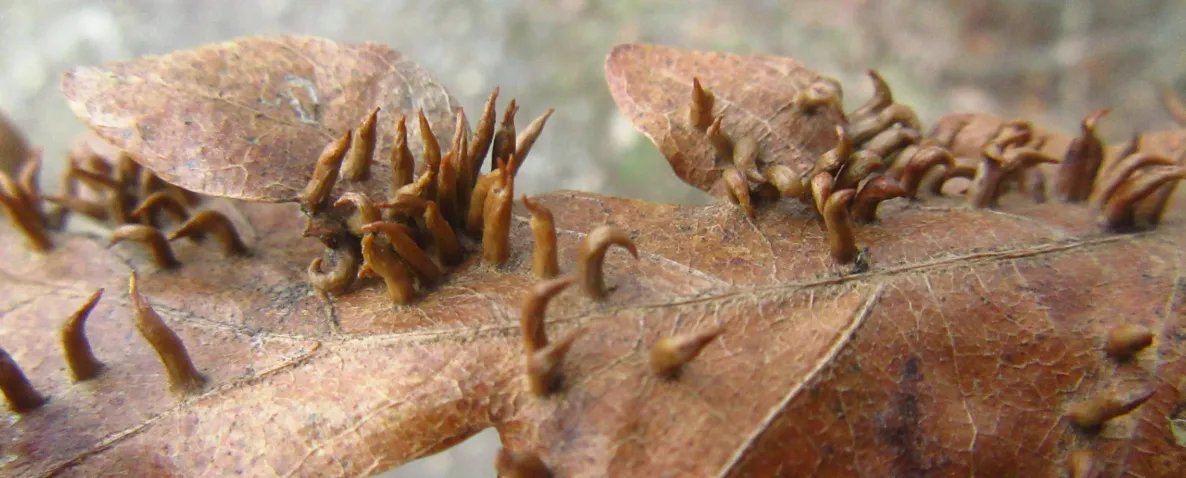
Today, I'll show you the other three species I've found. All of these were found in an area of about 20 square meters. You don't have to look hard to find galls, once you start noticing them, you'll see that they are everywhere.
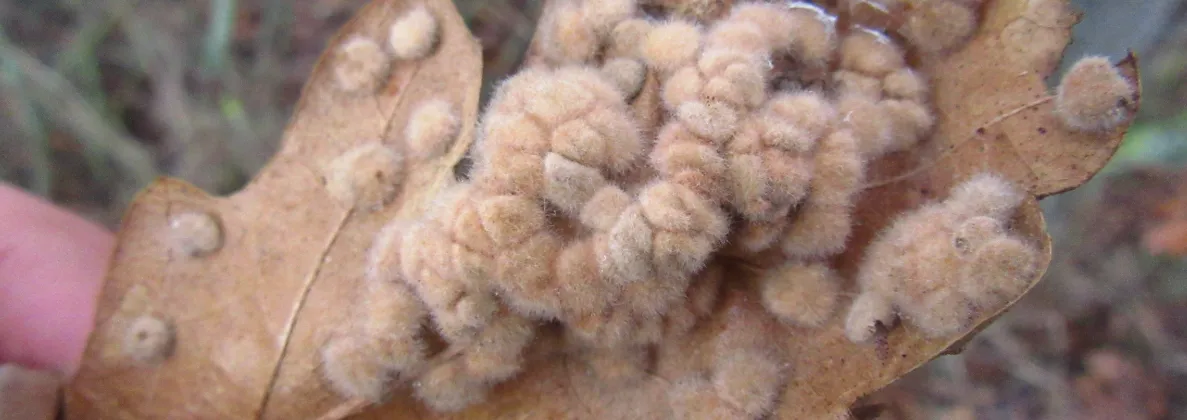
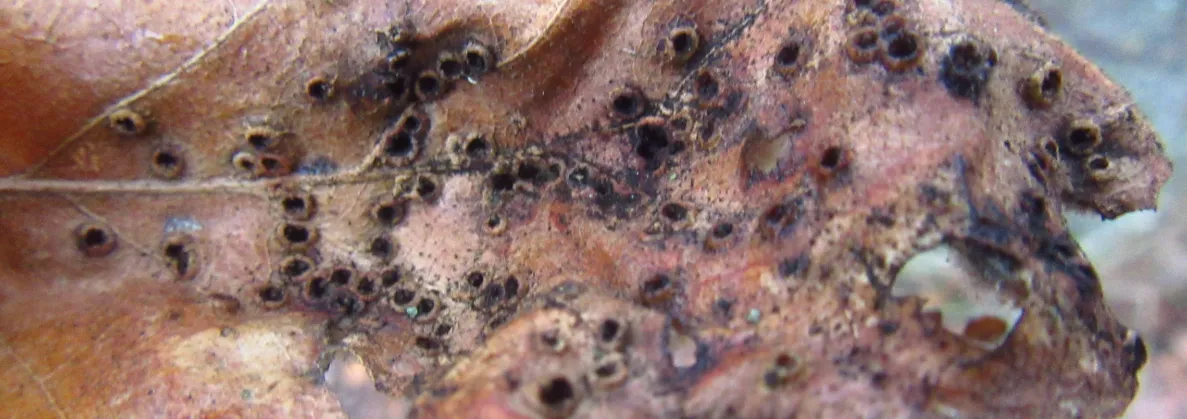
On the same Turkey oak (Quercus cerris), I also saw the galls of Neuroterus lanuginosus (the Turkey oak gall wasp). These galls are densely hairy and woolly. They form compact, felt-like balls that can sometimes completely cover the underside of the leaf. The upper side of the leaf has numerous small, dark, circular rings, like crater-like pits. This 'ring' or 'pit' appearance is the diagnostic feature of Neuroterus lanuginosus. The fuzzy part on the bottom is the main body of the gall, and the ring on top marks where it is attached. Same leaf, bottom and upper side:
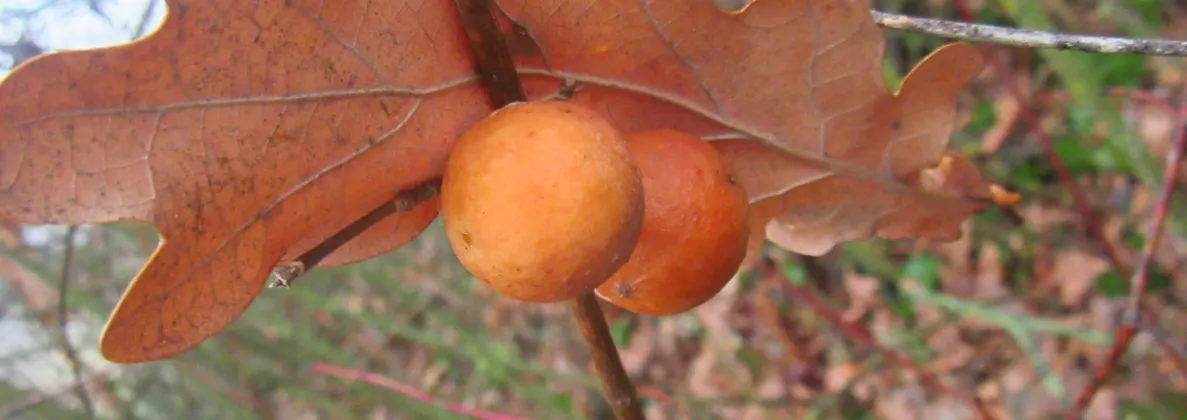
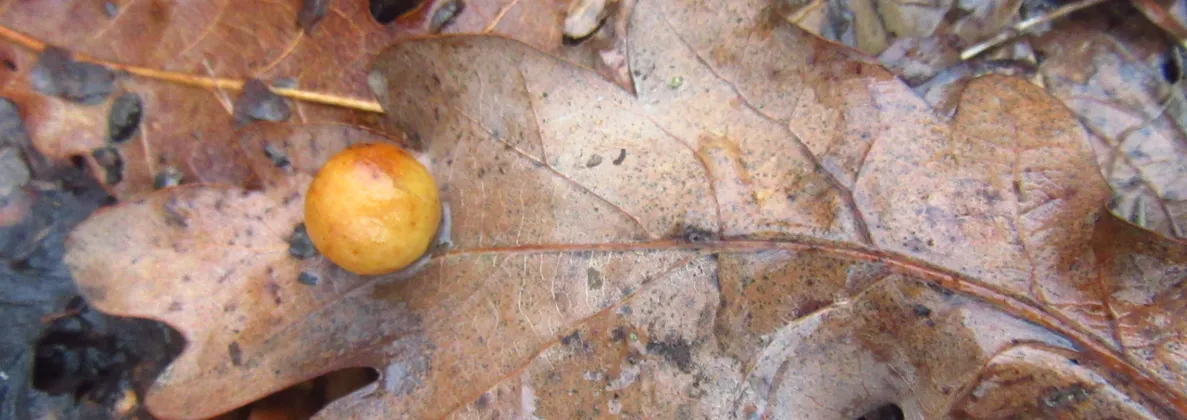
A bit further on, I saw large, spherical, orange-toned galls on a Quercus robur (English oak), which are almost certainly Oak Cherry Galls, caused by the wasp Cynips quercusfolii. These are smooth, fleshy, and can grow up to 20 mm in diameter. They start off yellowish-green and often turn a vibrant red or orange as they mature. Unlike marble galls, which grow on twigs, these are always attached to the underside of the leaf. While they look like fruit, they are purely plant tissue induced by a single wasp larva living in a small central chamber. Despite their fruit-like appearance, they are not edible.
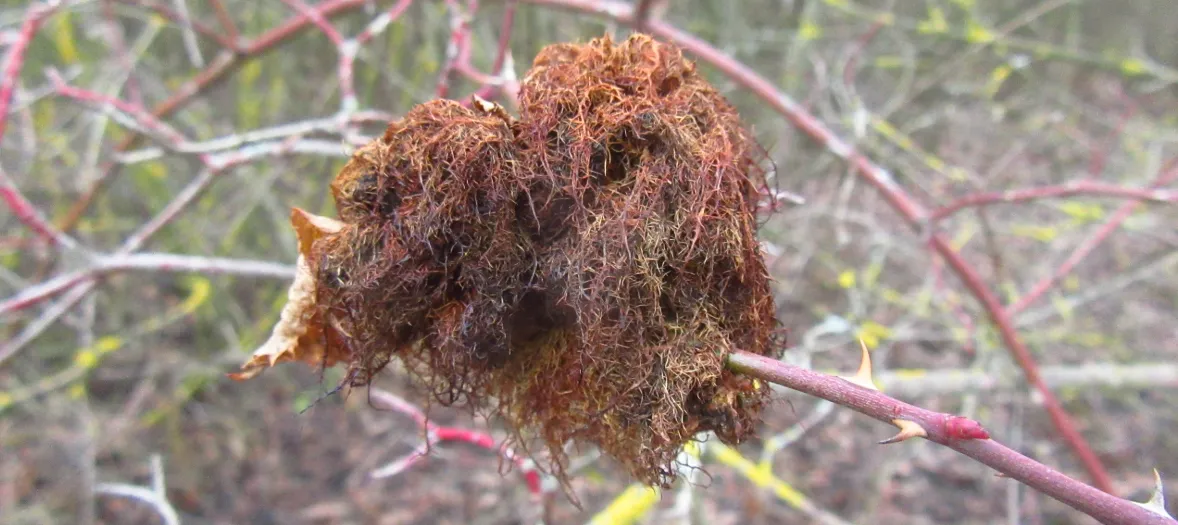
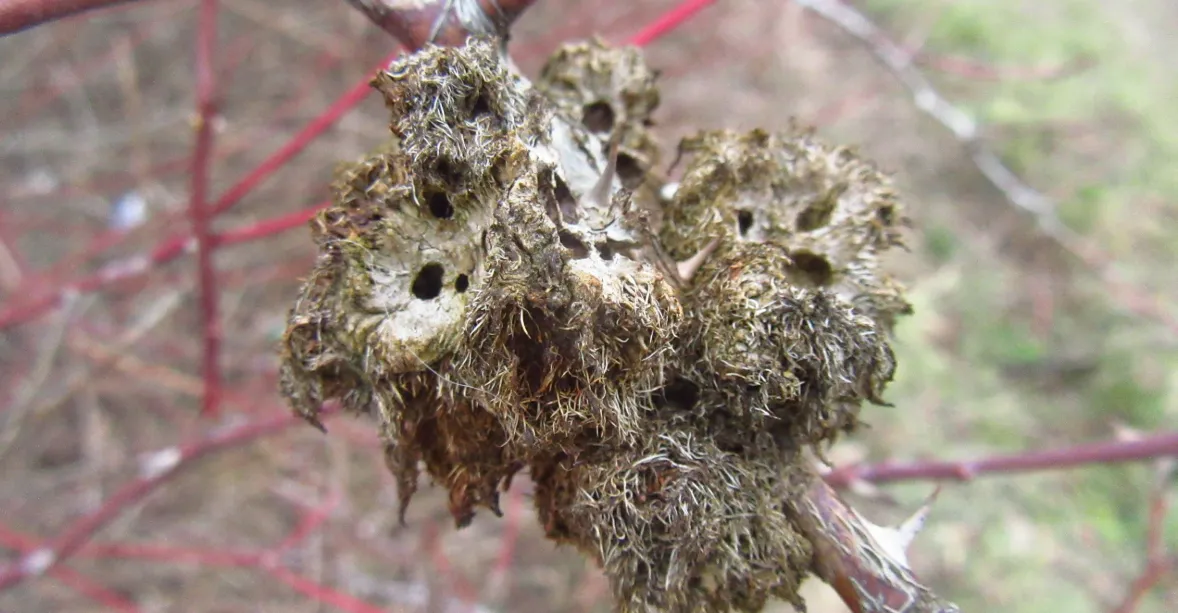
I've moved from the oak trees to a wild rose bush next, to find these massive, mossy-looking tangles of Robin’s Pin-cushion galls (also known as Bedeguar galls), caused by the tiny gall wasp Diplolepis rosae. The “hair” or “moss” you see is actually a mass of distorted, chemically altered rose leaves. If you were to look inside the structure shown in the second photo (where the holes are visible), you would see a woody core containing many small chambers. Each chamber once held a single wasp larva. The holes in the second photo are exit holes. They tell us that the adult wasps (or perhaps their parasites) have already matured and chewed their way out of the gall.
The Bedeguar gall is a perfect example of an ecological hub:
- The Primary Resident: The Diplolepis rosae wasp created the gall for its own children.
- The 'Squatters' (Inquilines): Other species of wasps, known as Periclistus, often sneak their own eggs into the gall. They don't kill the original larvae; they just move in and share the space.
- The Predators: Dozens of species of parasitoid wasps (like Torymus bedeguaris) hunt these galls to lay eggs inside the larvae living there.
- The Winter Shelter: Even after everyone has hatched, the woody, hairy mass remains on the rose bush through the winter, providing a sturdy shelter for other tiny overwintering insects and spiders.
There are dozens more gall species waiting to be noticed, and now that I’ve started looking, I can’t stop seeing them.