The Moth That Looks Like Lichen
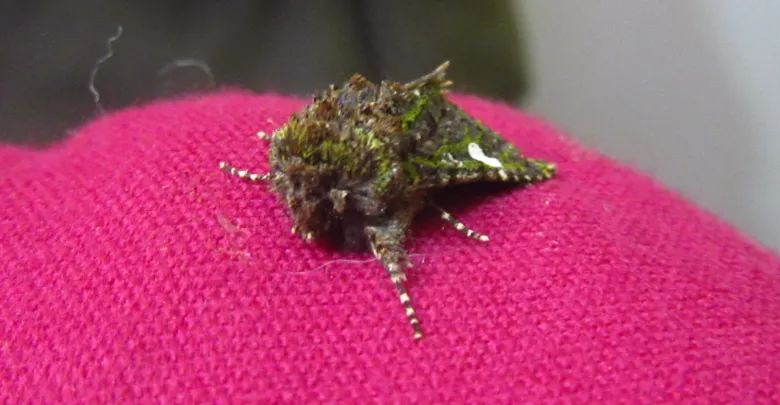
It was sitting on a piece of fabric that was lying around.
I nearly brushed it off without looking. Something grey and green and roughly the size of a thumbnail, clinging to the fabric. But something made me stop and look more carefully, and when I did, I was glad I did.
It was a Green-brindled Dot (Valeria oleagina). A moth I had never seen before.
What You're Actually Looking At
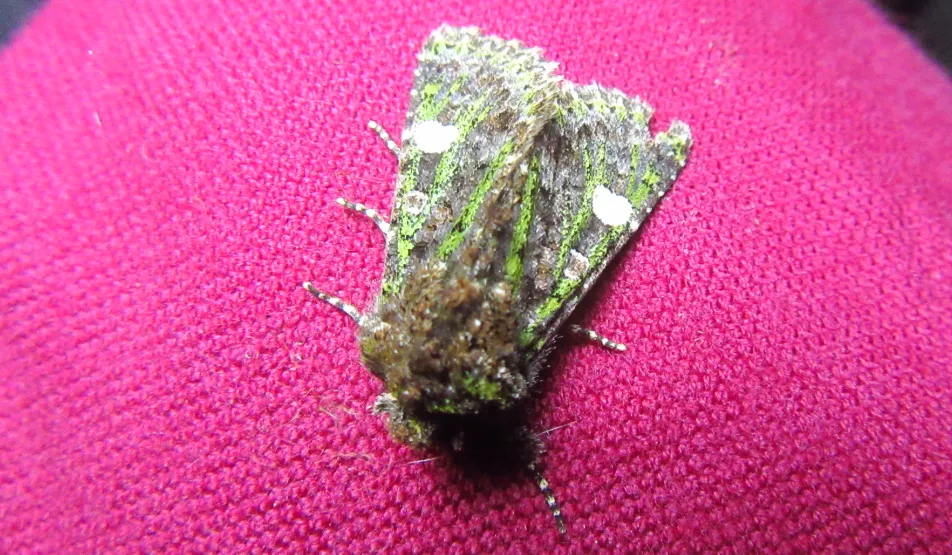
The photographs don't fully do it justice, but they give you the idea. The wings are a complex mix of grey, brown and vivid green. Not the flat green of a painted surface, but the irregular, patchy green of lichen growing on bark. There are pale dots, dark streaks, and a texture that makes the whole animal look less like an insect and more like a piece of mossy wood that's been out in the rain for too long.
This is not accidental. The Green-brindled Dot overwinters as an adult, spending the coldest months pressed against tree bark, and that camouflage is the reason it survives. A bird scanning a trunk for food would need to look very carefully to separate this moth from the lichen and bark around it. Most of the time, it probably doesn't bother. Finding one on pink fabric removes all of that context instantly. Against the fabric it looks extraordinary, with the kind of pattern you might expect on a tropical species, not something living through a Hungarian winter in a hedgerow.
A Moth That Flies in March
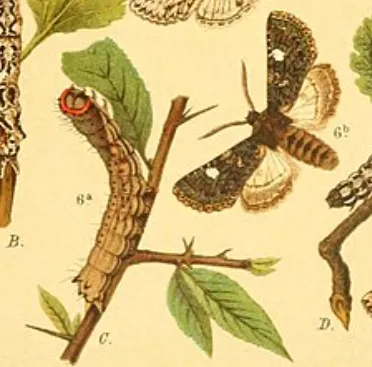
The Green-brindled Dot emerges early, flying mostly between March and April. This is rather unusual. Most moths emerge later in spring, when temperatures are warmer and food sources are more abundant. Flying in March means tolerating cold nights and unpredictable weather, but it also means getting a head start.
It favours warm, dry shrub communities, like grazed hillsides, scrubby slopes, places where blackthorn and hawthorn grow in the heat. Our sheep meadow fits that description reasonably well. The south-facing slope, the old vine posts, the patches of blackthorn in the hedgerow... for this moth, that combination is close to ideal.
The larvae feed on blackthorn and hawthorn, which start putting out new growth in April. The timing of the adult flight makes sense: emerge early, find a mate, and have eggs ready to hatch just as the food supply appears.
The Dot
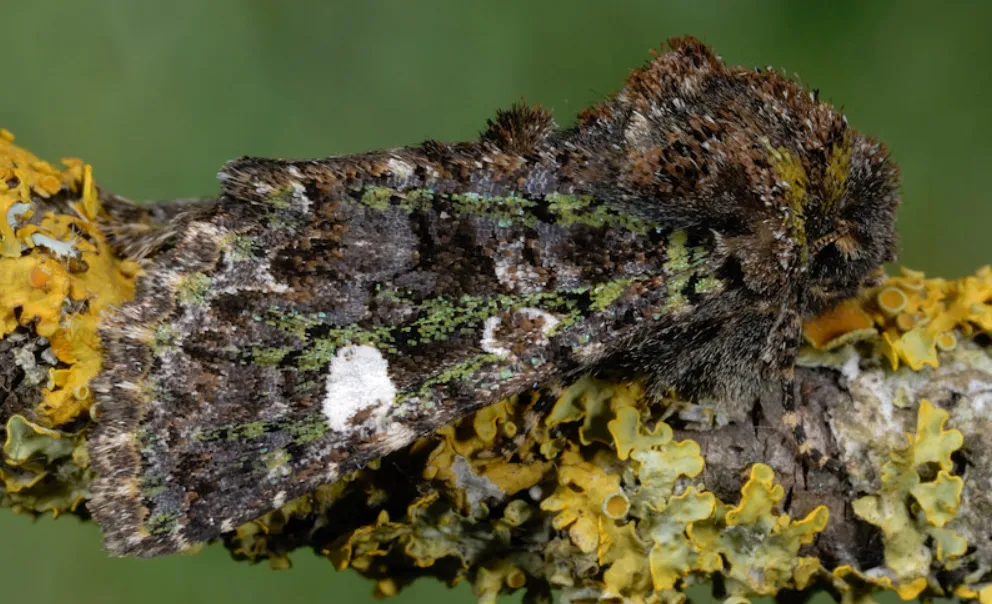
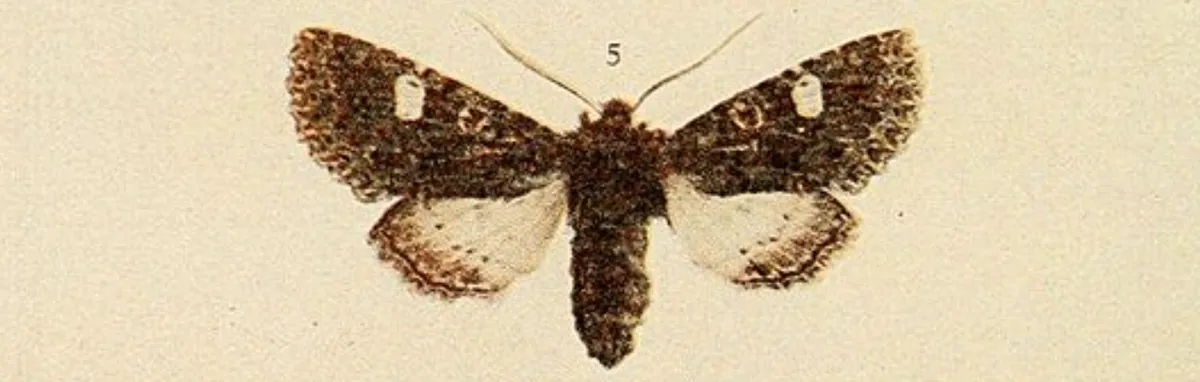
The name comes from the white reniform spot on the forewing, the kidney-shaped mark that appears on many moths in the Noctuidae family. In this species it is bright white and relatively large, which seems like a strange thing for an animal whose entire strategy is to be invisible. Up close it stands out clearly. From a distance, surrounded by all that green and grey texture, it disappears into the noise of the pattern.
It is the kind of design detail that only makes sense when you see the whole animal in its natural context, pressed flat against lichen-covered bark, wings folded, doing its best impression of nothing at all.
A Narrow Range
Here in southwestern Hungary, the habitat they need still exists in patches. Finding one here is not a surprise exactly, but it isn't common either. It's a sign that the habitat they need is disappearing, and that the patches where it still exists are worth paying attention to.
The dead hedge I built from the old grapevines. The blackthorn in the hedgerow that I haven't touched. The patch of scrub on the slope that the sheep graze around but not through.
Small things. But apparently the right things.