The Small Orchids in the Grass
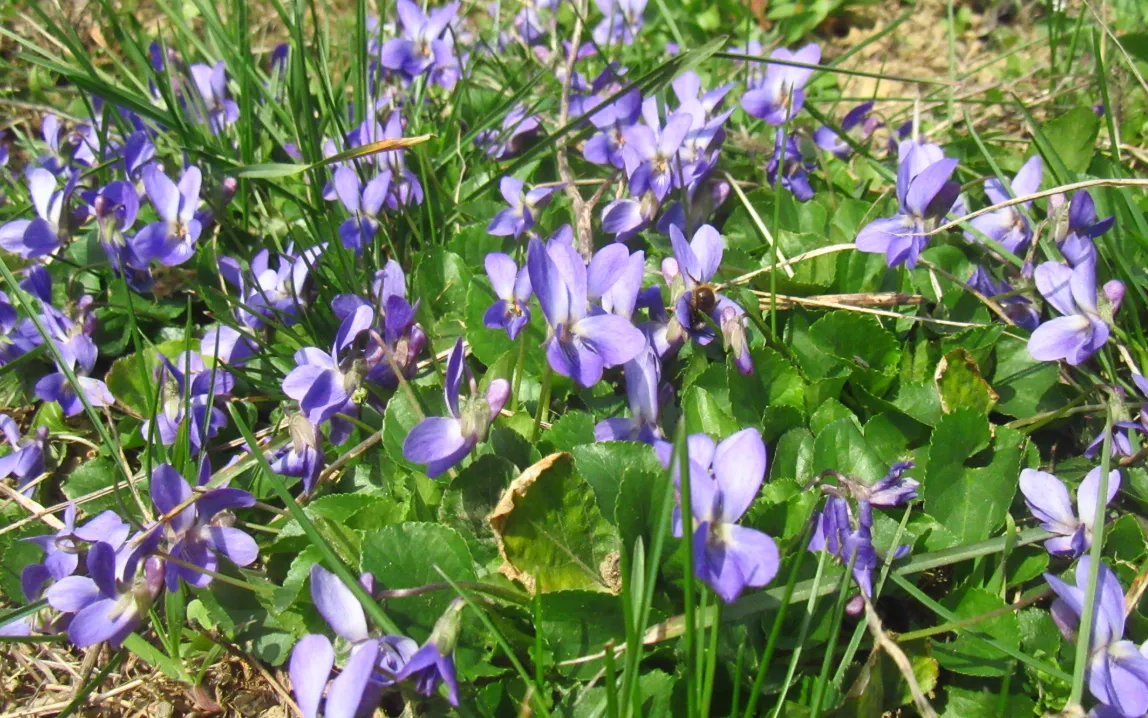
Spring does not arrive all at once. It arrives in small signals. A bee warming itself on a stone. The first ants moving across the path. And, almost quietly, the first violets opening among the grass. In the garden they appear every year without any effort from me. No planting, no watering, no careful positioning in the flower beds. They simply return, spreading slowly through the lawn and along the edges of the paths. This week they began to open.
Three Colours of Spring
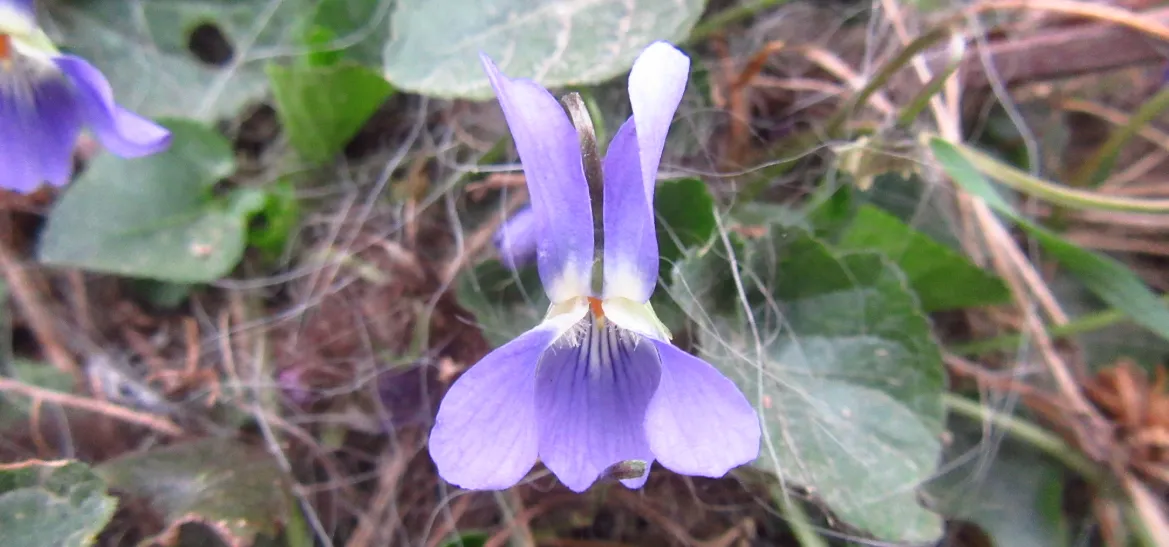
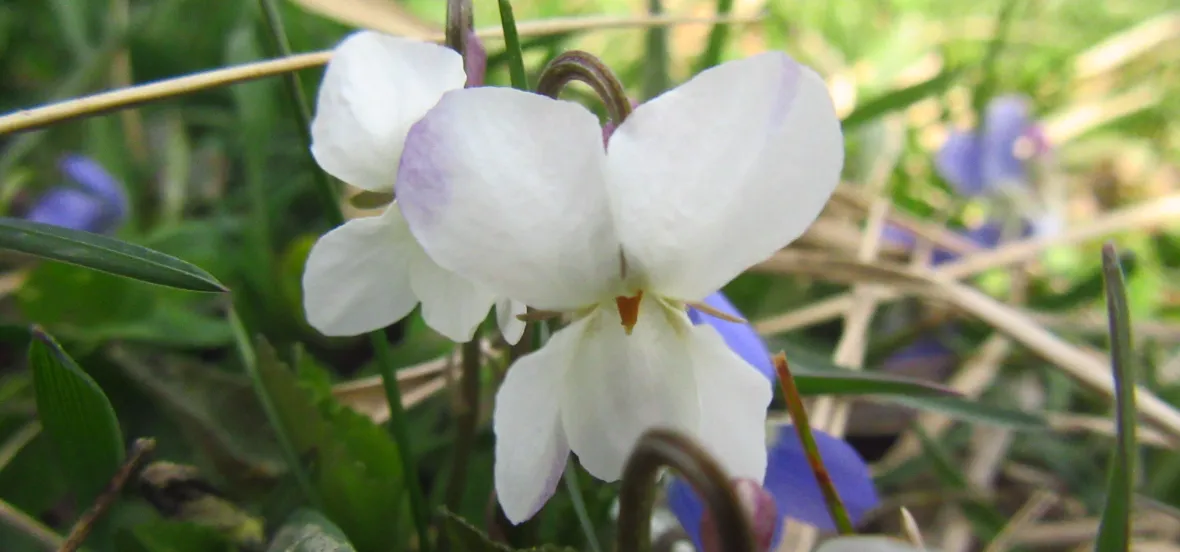
The one most people know is the deep purple violet. Rich, almost royal, standing out against the pale greens of early spring. But violets don't always stay within that palette. Some lean toward blue, softer and cooler, especially in the morning light. And occasionally there are white ones. Finding a white violet always feels like discovering a rare edition of a familiar book. The same shape, the same structure, but suddenly everything looks different. The colours change. The design doesn't.
A Flower Built for Visitors
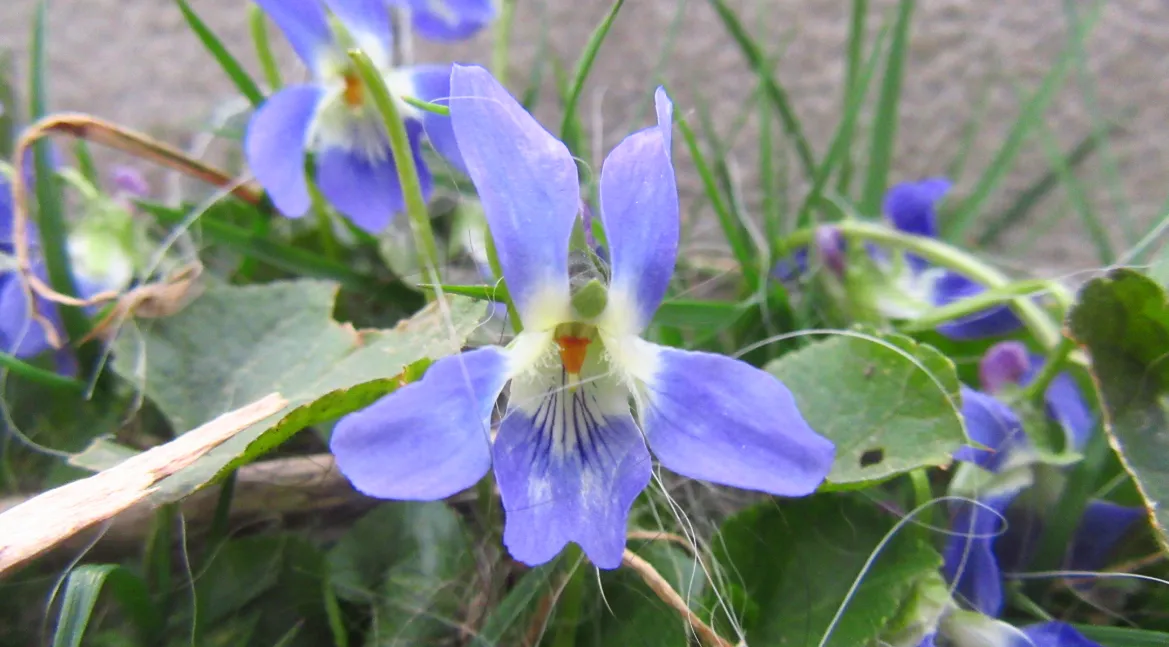
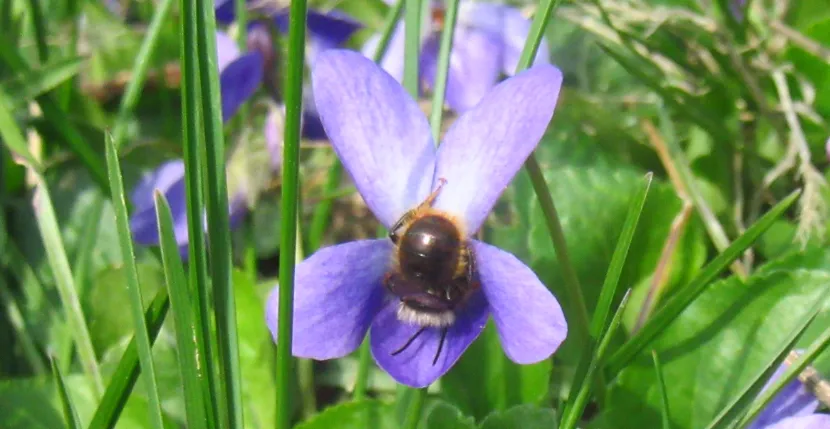
Look closely at the structure of a violet flower and something starts to become clear. The lower petal forms a broad landing platform. Delicate dark lines run along the petals toward the centre, like markings on a runway. At the back of the flower there is a small spur, a narrow tube where nectar is stored.
The message is simple: land here, follow the lines, reach the reward. None of this is decoration. It is the result of millions of years of small adjustments, the flower and its visitors shaping each other over time.
Orchids of the Lawn
The same design principles appear in some of the most admired flowers on Earth.
Orchids are famous for their intricate shapes, their carefully engineered landing platforms, their elaborate relationships with specific pollinators. People travel across continents to see them. Violets use many of the same tricks. The same bilateral symmetry. The same guiding patterns. The same idea of directing an insect toward a hidden reward.
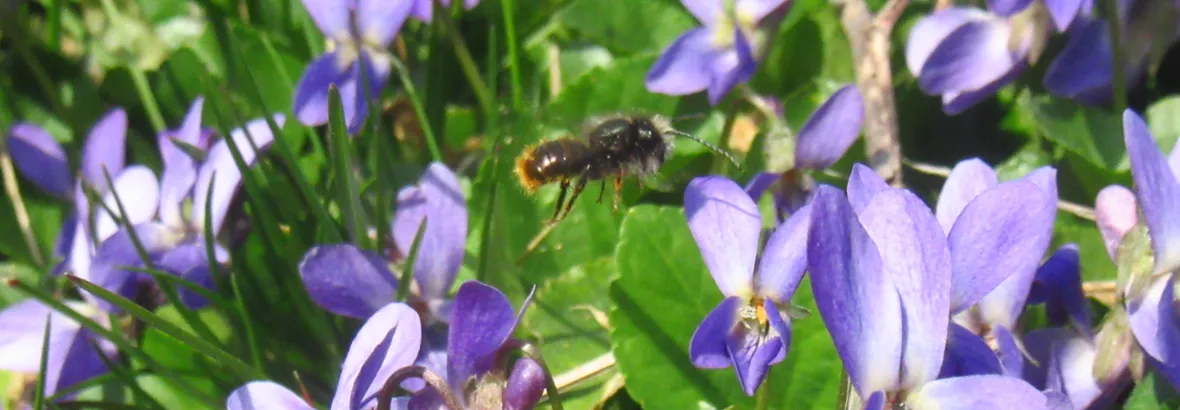
The difference is not complexity. It's scale. Orchids are elaborate sculptures. Violets are the miniature version, quietly doing the same thing in the grass.
Beauty Without an Audience
The colours and patterns of a violet did not evolve to please us. Bees and other pollinators see these flowers very differently than we do, detecting ultraviolet patterns invisible to human eyes. To them, the violet is not subtle at all. It is a brightly marked signal announcing food.
When we stop to admire one, we are appreciating a design that evolved for a completely different audience.
That, to me, makes it more interesting. Not less.
There is more to say about violets. Quite a lot more, as it turns out. But that belongs to tomorrow.