Reading Plants - Part 4: Rosaceae - The Roses
Let's tackle a second family. And this one is so common, that there is a pretty good chance that you already ate a member of this family today.
We're talking about the Rosaceae, the Rose family.
If you had an apple, a pear, a plum, a cherry, a peach, an apricot, an almond, a strawberry, a raspberry, or a blackberry or jam made from any of them, or a drink fermented from any of them, you ate a Rosaceae. If you walked past a hawthorn hedge, a blackthorn thicket, a rowan tree, or a rose scrambling over a fence, you passed a Rosaceae. If you have any of these plants in your garden, or in the landscape around your house, you are almost certainly living alongside more members of this family than any other.
Rosaceae is one of the most economically important plant families on earth. It feeds more people, in more ways, than almost any other family of flowering plants. It achieved this extraordinary diversity, from the apple on your desk to the rose in your garden to the hawthorn in the hedgerow, from a single, remarkably consistent flower plan that has remained essentially unchanged for tens of millions of years.
That plan is the subject of this part.
The Basic Deal
The Rosaceae flower is, at first glance, not so different from the Ranunculaceae flowers we looked at in the previous chapter. Five petals, arranged in a ring. Numerous stamens, all separate, radiating from the centre. A superior or partially inferior ovary. Radial symmetry. Open, accessible from any direction, welcoming to a broad range of pollinators.
But in many ways, Rosaceae does represent a modest step forward from the Ranunculaceae starting point. Not because of a drastic specialisation or a complex deal with a specific pollinator, but more like a refinement of the existing open-market strategy. A Rosaceae flower is slightly more structured, slightly more engineered, but still fundamentally generalist in its approach.
The innovation that defines the family and unlocked its extraordinary diversity is not immediately visible in the flower. It is structural. It is the hypanthium.
The Hypanthium — The Key to Everything
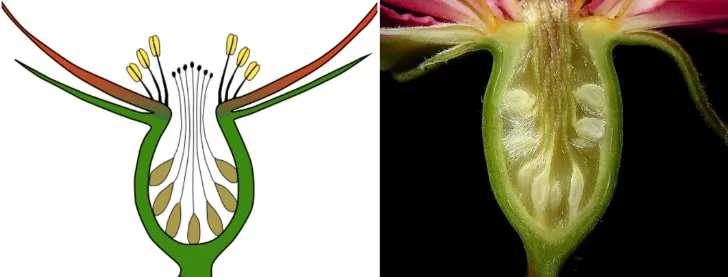
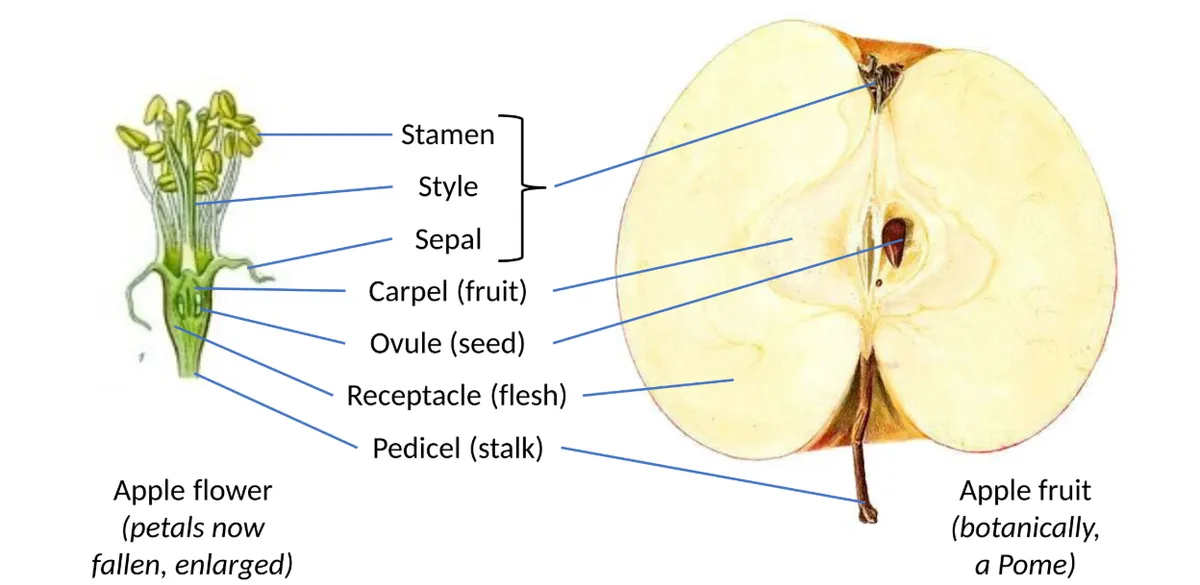
The hypanthium is a cup or tube of tissue formed by the fusion of the bases of the sepals, petals, and stamens.
In most flowers, these structures arise independently from the receptacle, the base of the flower. In Rosaceae, they are fused at their bases into a single structure that surrounds and partially or fully encloses the ovary.
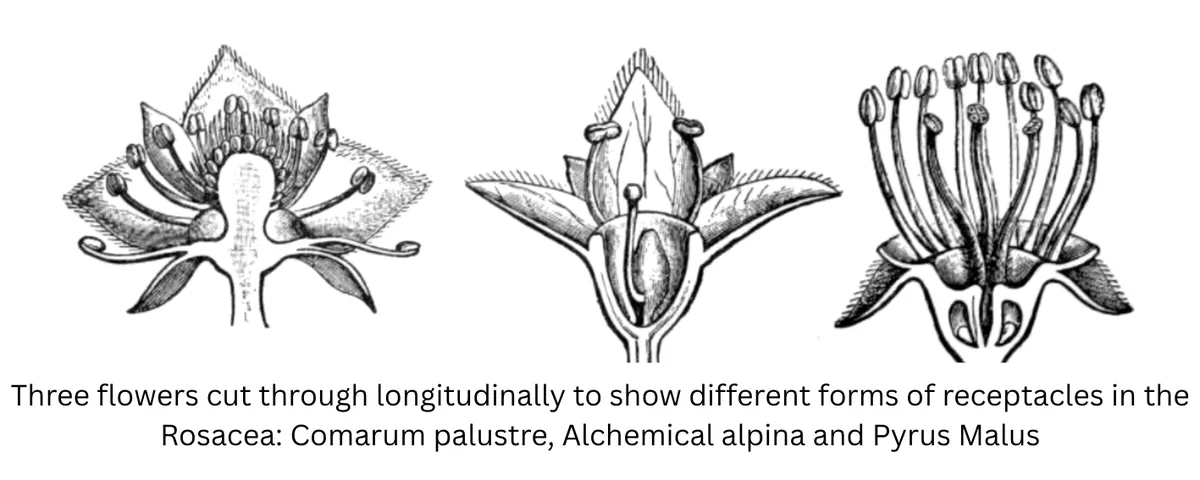
In some members of the family the hypanthium is shallow and open, barely a ring of tissue at the base of the stamens, as in some cinquefoils. In others it is a deep cup that completely encloses the ovary, as in roses, where the hypanthium becomes the fleshy red structure we call the rose hip after fertilisation. In apples and pears, the hypanthium is enormous. It's the fleshy part of the fruit you eat, which is almost entirely hypanthium tissue, with the true ovary (the core, containing the seeds) buried at the centre.
This is the same inferior ovary story we encountered in part one, but taken to an extreme: the hypanthium has grown up and over the ovary so completely that the ovary is invisible from the outside, buried in tissue that will eventually become fruit flesh.
The hypanthium is the clinching feature of the Rosaceae. When you find a flower with five petals, numerous stamens, and a cup or tube of tissue at the base from which the petals and stamens arise, you know it is a Rosaceae. You can confirm it by looking at the base of the flower: if the sepals, petals, and stamens all arise from the rim of a cup rather than from a flat receptacle, you are in the right family.
The Pattern - What to Look For
In the field, Rosaceae identification starts with the five petals. This is usually the first thing you notice, and in combination with the other features it narrows the options considerably.
Five petals, free from each other, rounded at the tip.
Rosaceae petals are typically broad, rounded, and separate. They are not fused into a tube, nor elongated into spurs.
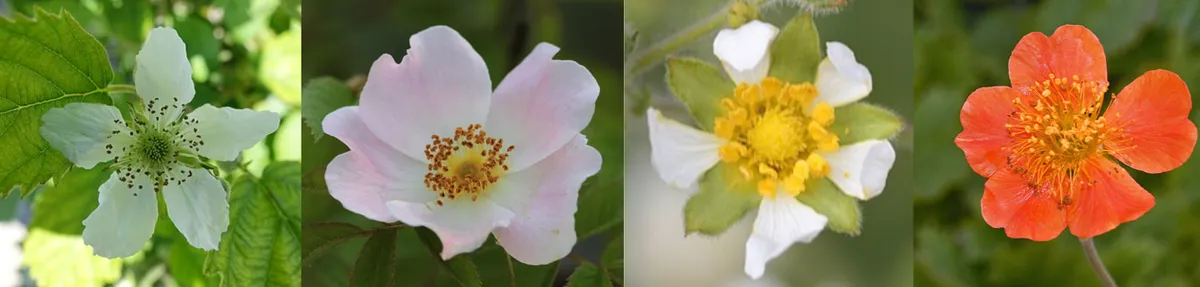
Numerous stamens.
Like Ranunculaceae, Rosaceae retains the primitive characteristic of numerous stamens, usually more than ten and often many more. In an apple blossom you can count twenty or more. This is one of the features that places the family closer to the primitive end of the spectrum despite the hypanthium innovation.
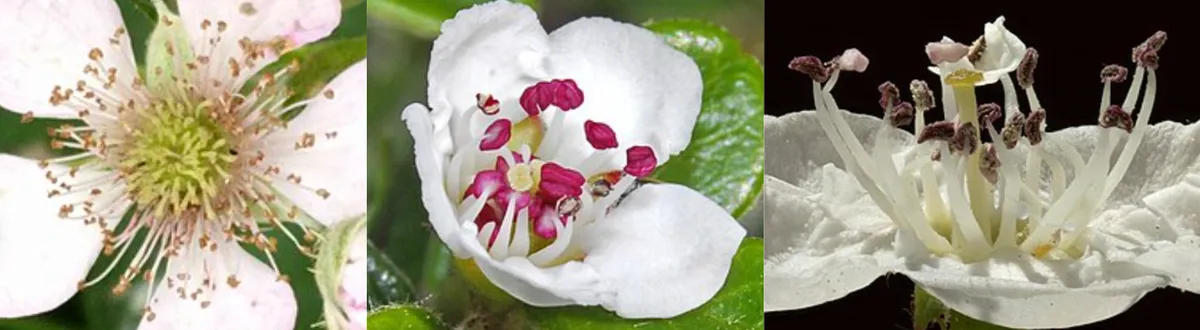
The hypanthium.
Look at the base of the flower. Is there a cup or tube of tissue from which the sepals, petals, and stamens all arise? In some species this is obvious. The rose hip structure is visible even in flower. In others it is subtle, more of a shallow dish of tissue that you might miss if you're not looking for it. This is where a hand lens comes in handy.
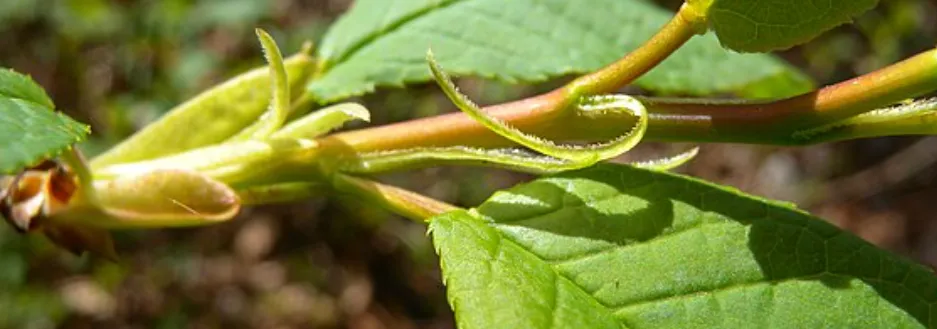
Stipules on the leaves.
Many Rosaceae have small leaf-like or scale-like appendages at the base of each leaf stalk, named stipules. In roses they are large and distinctive, partially fused to the leaf stalk. In strawberries they are papery and brown. In many other members they are small but present. Stipules are not unique to Rosaceae. Several other families have them, but their presence is a useful supporting feature when the flower alone is ambiguous.
Alternate leaves.
Almost all Rosaceae have alternately arranged leaves. What that means is that the leaves are arising singly from the stem, alternating sides as they go up, rather than in opposite pairs. This is a quick check that takes about two seconds.
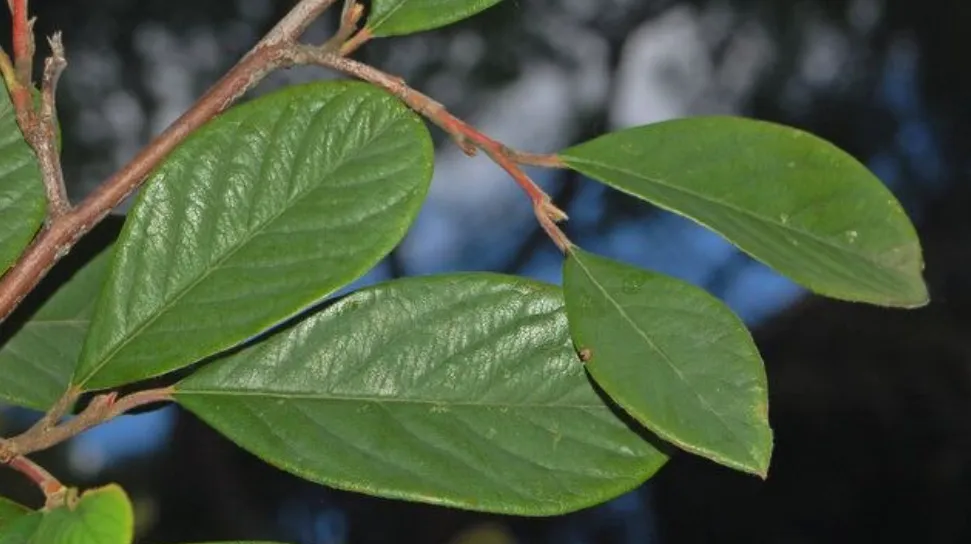
The smell of bitter almonds.
Crush a leaf or a twig of a cherry, plum, or hawthorn and smell it. The distinctive smell of marzipan (bitter almonds) is the smell of hydrogen cyanide being released from cyanogenic glycosides in the plant tissue. We'll discuss this in the chemistry section, but it is one of the most useful field identification clues the family offers: if crushing a leaf produces that characteristic almond smell, you are almost certainly in Rosaceae.
One Flower, Many Fruits
The real story behind the success of the Rosaceae family is not the flower. It is what happens after the flower.
The hypanthium, that cup of fused tissue, is the raw material from which the family has managed to produce an extraordinary range of fruit types, each one a different solution to the same problem of seed dispersal.
Understanding the different fruit types not only explains the diversity of the family but gives you additional identification tools, because the fruit is often easier to examine than the flower.
Pomes
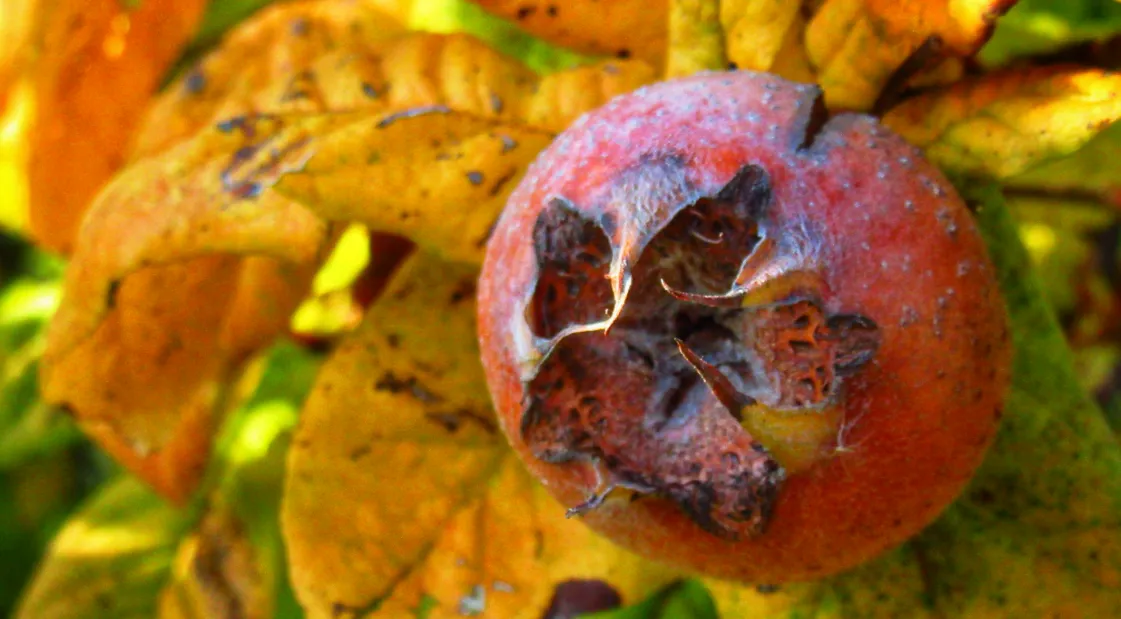
A pome is the fruit type characteristic of apples, pears, quinces, rowans, hawthorns, and medlars.
It is formed when the hypanthium grows up and over the ovary, completely enclosing it, and then swells into a fleshy structure after fertilisation. The true fruit, the ovary containing the seeds, is hidden at the centre. Everything you eat when you eat an apple is hypanthium tissue.
Cut an apple in half transversely and look at the cross-section. At the centre you'll see the core, which is the true ovary, divided into five chambers each containing seeds. Around it is the flesh, the hypanthium. At the very bottom of the apple, opposite the stalk, is the dried remains of the sepals, still sitting at the top of where the hypanthium ends. The five points of the star-shaped remnant correspond to the five sepals of the original flower.
The pome is an excellent dispersal mechanism for a specific type of animal: large mammals and birds that swallow or bite into the fruit, carry it away from the parent plant, and deposit the seeds elsewhere in their droppings or by dropping uneaten portions. The fleshy, nutritious hypanthium is both there to attract and to reward the animals. The hard seed coat of the seeds inside is protection against digestion.
Drupes
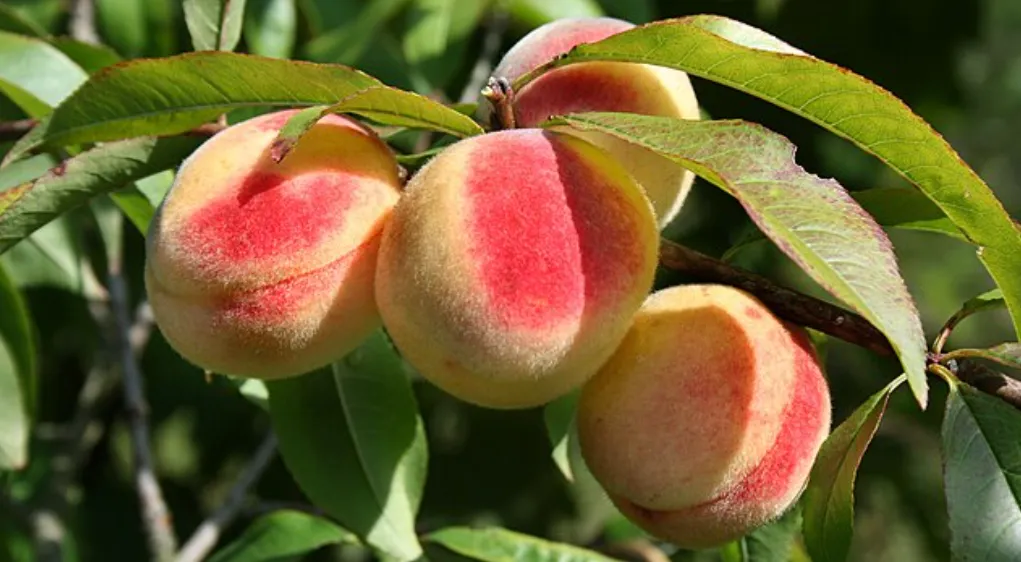
A drupe is the fruit type of cherries, plums, peaches, apricots, almonds, and sloes.
In a drupe, the ovary wall, the pericarp, develops into three distinct layers: a thin outer skin, a fleshy middle layer (the part you eat), and a hard, stony inner layer, the endocarp or stone, that surrounds and protects the seed.
The stone of a cherry or a plum is not the seed. It is the innermost layer of the ovary wall, hardened to protect the seed inside. Crack a cherry stone open and you'll find the actual seed, the kernel, inside. In almonds, the entire drupe dries out rather than becoming fleshy, and what we eat as an almond is the seed itself, extracted from inside the stone that is inside the dried outer layers of the fruit.
This matters because it explains the cyanogenic glycoside chemistry. The bitter almond smell, hydrogen cyanide, is concentrated in the seeds and kernels of Rosaceae drupes precisely because the seed is the structure being protected. The stony endocarp provides physical protection; the cyanide provides chemical protection against any animal determined enough to crack the stone and eat what's inside.
** Aggregate Fruits**
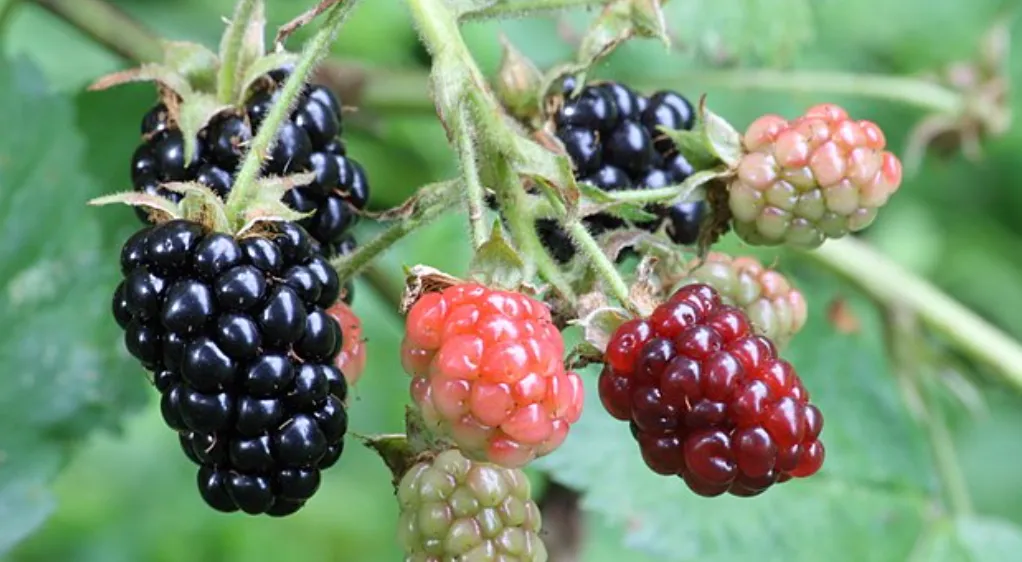
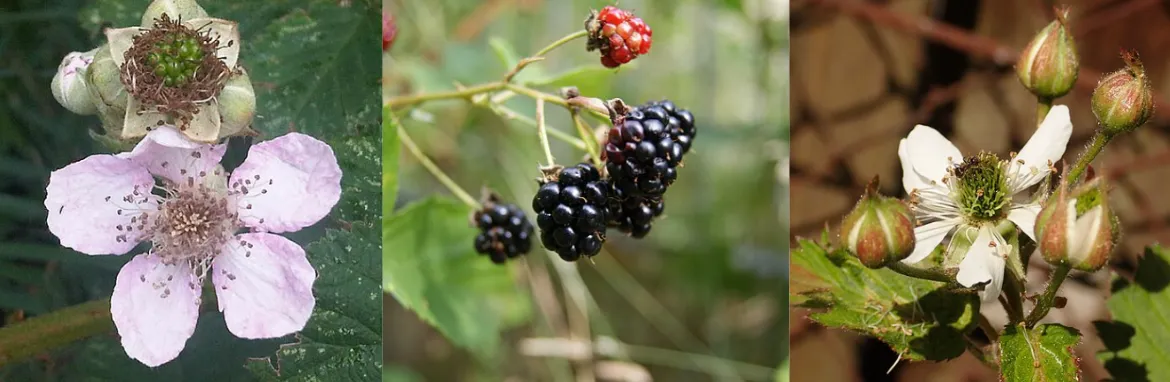
Fruits like raspberries and blackberries are not single fruits. They are collections of small drupes, drupelets, each one formed from a separate pistil, all clustered together on a single receptacle, which we call 'aggregates'.
Look at a raspberry closely and count the individual segments, each one is a complete small drupe, with its own skin, flesh, and seed inside. The raspberry is essentially a cluster of miniature cherries, all fused together into a single structure.
This is important for identification because it reflects the ancestral condition of the Rosaceae pistil. Remember from part three that Ranunculaceae has numerous separate pistils? The raspberry and blackberry have retained this characteristic of numerous pistils, but each one develops into a small drupe rather than the dry achene of a buttercup. The aggregate fruit is a direct echo of the primitive numerous-pistil condition.
The difference between a raspberry and a blackberry is worth knowing: when you pick a ripe raspberry, it pulls away from the receptacle cleanly, leaving a hollow cone of drupelets. When you pick a blackberry, the receptacle comes with it and the drupelets do not separate from the receptacle core. This is a consistent, reliable difference between the two genera (Rubus idaeus for raspberry, Rubus fruticosus aggregate for blackberry) that you can confirm every time you pick fruit.
Accessory Fruits
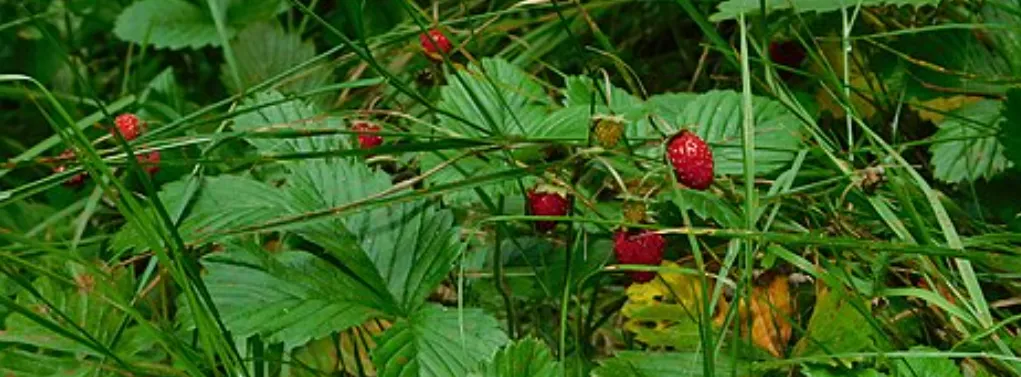
The strawberry is one of the most unexpected fruits in botany. What you eat when you eat a strawberry is not the fruit. The red, fleshy, sweet part of a strawberry is the enlarged receptacle, the base of the flower, swollen and softened after fertilisation. The actual fruits are the small, hard, pale structures embedded in the surface of the red flesh. Most people call these the seeds, but they are actually the true fruits, each one a tiny dry achene containing a single seed inside.
This makes the strawberry an accessory fruit or false fruit: a structure in which the fleshy part is not derived from the ovary at all but from the receptacle.
The plant has essentially tricked fruit-eating animals into dispersing its true fruits (the achenes) by wrapping them in an attractive, edible, but botanically irrelevant fleshy structure.
It is a beautifully elegant piece of deception, and it has been extraordinarily successful. Wild strawberries (Fragaria vesca) are found across the temperate northern hemisphere, and the cultivated strawberry (Fragaria × ananassa) is one of the most widely grown fruit crops on earth.
Hips and Achenes
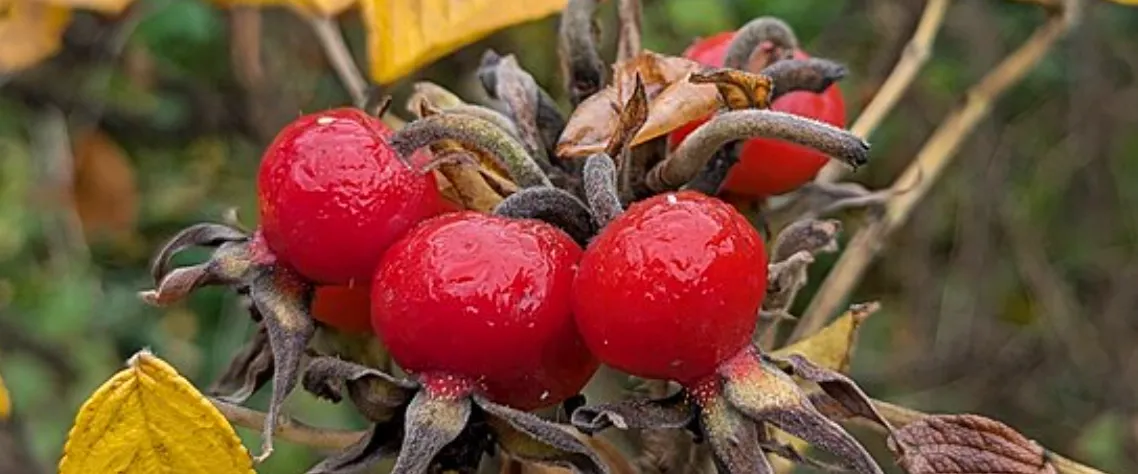
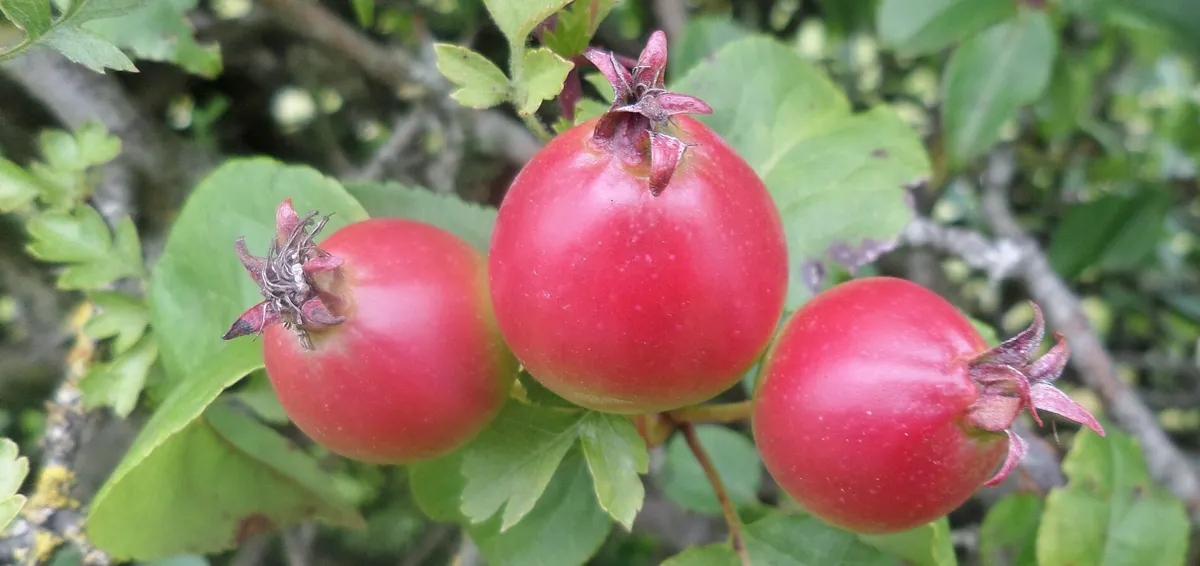
The rose hip is the hypanthium again, the same cup structure as the apple and the pear, but in this case it encloses not a fused ovary but a collection of separate achenes.
Inside a rose hip are numerous small, hard, hairy achenes, each one a separate fruit containing a single seed. The fleshy red hip is the hypanthium, swollen and coloured to attract birds, which eat the hip and pass the achenes through their digestive systems.
This means that a rose hip is structurally intermediate between a pome (where the hypanthium encloses a fused ovary) and an aggregate fruit (where numerous pistils develop separately). It reflects the family's retention of the numerous-pistil condition. Roses have multiple separate pistils inside the hypanthium, each developing into a separate achene, while also showing the hypanthium innovation that defines the family.
The Chemistry and the Defence
Rosaceae has a bit of a split personality when it comes to chemistry. On one hand, it has given us some of the most delicious fruits in the temperate world; apples, pears, cherries, strawberries... all with flavours so attractive to mammals and birds that the plants have shaped entire ecosystems around the animals that eat them.
On the other hand, much of the family is chemically defended in ways that range from mildly deterrent to genuinely dangerous.
Cyanogenic Glycosides
The most consistent chemical feature of the family is the presence of cyanogenic glycosides. These are compounds that release hydrogen cyanide when plant tissue is damaged.
In cherries, plums, apples, pears, and almonds, these compounds are concentrated primarily in the seeds and leaves, with lower levels in other tissues. The distinctive bitter almond smell released when you crush a cherry leaf or crack open a cherry stone is this hydrogen cyanide that is being released from amygdalin, the most common cyanogenic glycoside in the family.
The concentrations in most fruit flesh are too low to cause harm. You would need to eat an implausible quantity of apple seeds to approach a toxic dose, despite persistent internet claims to the contrary. But bitter almonds, the wild form of the almond, before selective breeding removed most of the amygdalin, are actually pretty dangerous, and the kernels of some Rosaceae fruits (particularly bitter apricot kernels, sold in some health food contexts as 'vitamin B17') contain enough amygdalin to cause serious toxicity if consumed in quantity.
The evolutionary logic is the same as the Ranunculaceae protoanemonin story which I mentioned in the previous part. The seed is the structure that is being protected, and cyanide is the protection. Crack the stone, eat the kernel and release the cyanide. It's a clear and effective deterrent against animals determined to destroy the seed rather than disperse it.
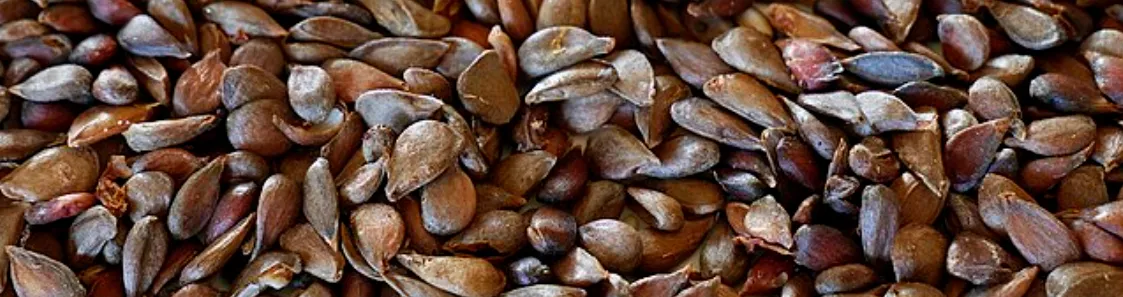
Tannins
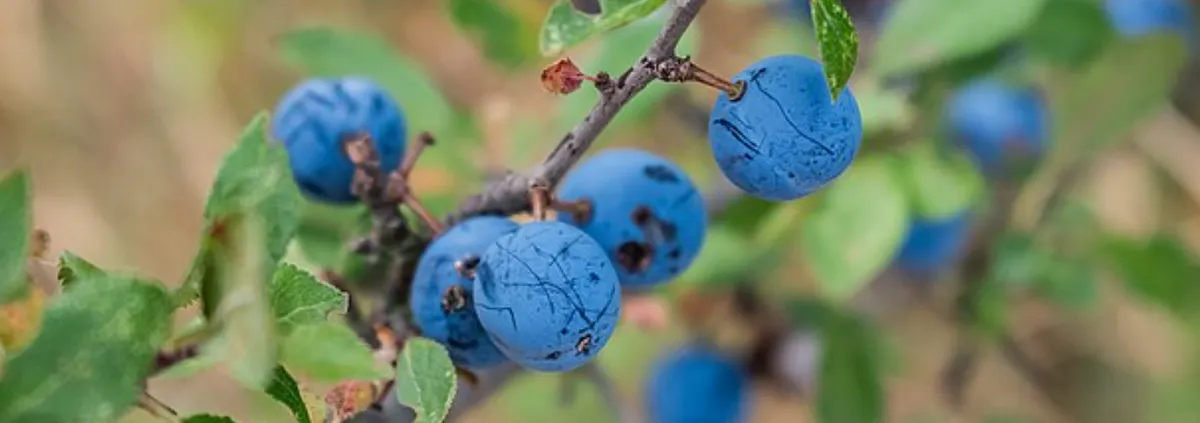
Rosaceae fruits are often astringent when unripe. Think of the mouth-puckering sensation of eating a crab apple or an unripe sloe. This is caused by tannins, the same compounds that defend many plant tissues against herbivores by binding to proteins and making tissue less digestible.
As the fruit ripens, tannin concentrations fall and sugar concentrations rise. It's a deliberate transition from deterrence to advertisement. The unripe fruit says 'not yet', while the ripe fruit says 'now is the time'. This timing is calibrated to ensure that the seeds inside are fully developed and ready for dispersal before the fruit becomes attractive to the animals that will disperse them.
Sloes (Prunus spinosa, blackthorn) are so tannic when picked directly from the bush that they are almost inedible raw. After the first frost, which breaks down some of the tannins, they become slightly more palatable, and after being steeped in alcohol for several months (sloe gin) they become genuinely enjoyable. The frost-ripening of sloes is a real ecological phenomenon: in the wild, the fruits become fully attractive to birds and mammals in late autumn, after the first frosts have begun the chemical transition.
Physical Defences
Rosaceae is also one of the most thoroughly physically defended plant families in the temperate flora.
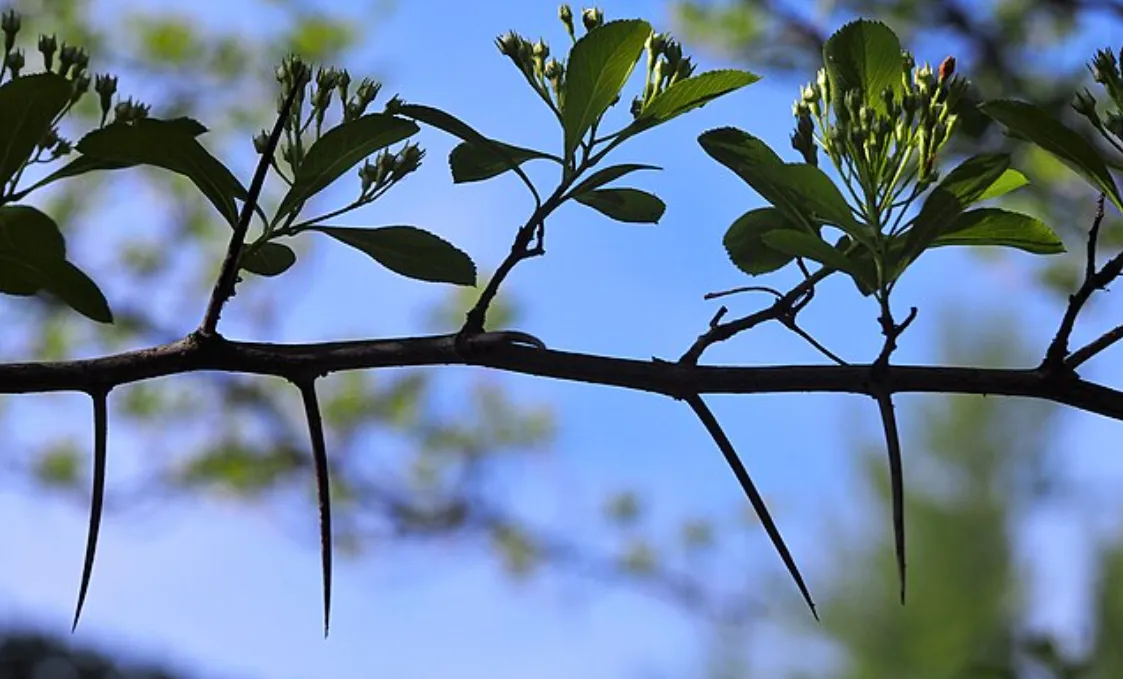
Hawthorn (Crataegus) has true thorns, which means the thorns are in fact modified branches, connected to the vascular system, that are among the most formidable in the European flora. A hawthorn hedge maintained properly is virtually impenetrable to livestock and humans alike. For that reason, hawthorn has been used as a field boundary hedging across Europe for thousands of years.
Blackthorn (Prunus spinosa) has similar thorns, and adds an additional complication: the thorns can cause a condition called blackthorn disease. This is a persistent, sometimes serious infection caused by bacteria introduced into the skin when a blackthorn thorn breaks off inside a puncture wound. The thorns are brittle and designed to break at the tip, leaving a fragment in the wound. This is not accidental: embedded thorn fragments deter large mammals from pushing through the bush far more effectively than thorns that simply scratch the surface. Never ignore a blackthorn puncture. Clean it thoroughly and watch it carefully.
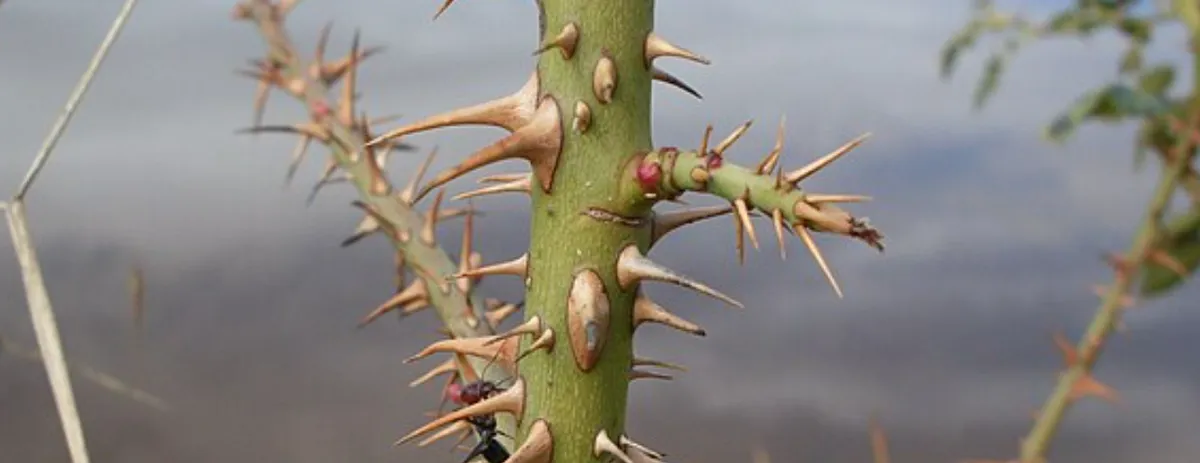
Roses (Rosa) have prickles rather than true thorns. Prickles are not the same as thorns. They are outgrowths of the epidermis, not connected to the vascular tissue, but they are numerous, recurved, and effective enough to deter most large herbivores from grazing the stems. The recurved shape of rose prickles means they hook into skin or clothing as the animal pulls away, causing increasing damage the more the animal struggles. It is a passive trap rather than a simple deterrent.
The Pollinators
Rosaceae flowers, like Ranunculaceae, are fundamentally generalist in their pollinator relationships.
The open, five-petalled flower with numerous accessible stamens and a well-developed nectary at the base of the hypanthium attracts a wide range of visitors. Bees of many species, hoverflies, beetles, flies and butterflies. The family does not, in general, have the highly specialised pollinator relationships of some more 'advanced' families. It has retained the open-market strategy of its Ranunculaceae-like ancestors.
For the Rosaceae, this generalism has been proven enormously successful. Apple blossom, for instance, is visited by dozens of bee species, and research has consistently shown that diverse wild pollinator communities produce better fruit set in apple orchards than honeybee monocultures alone. The solitary mining bees, bumblebees, and mason bees that visit apple blossom on cold spring mornings, when honeybees are still inactive, are often responsible for a disproportionate share of pollination in early-flowering Rosaceae.
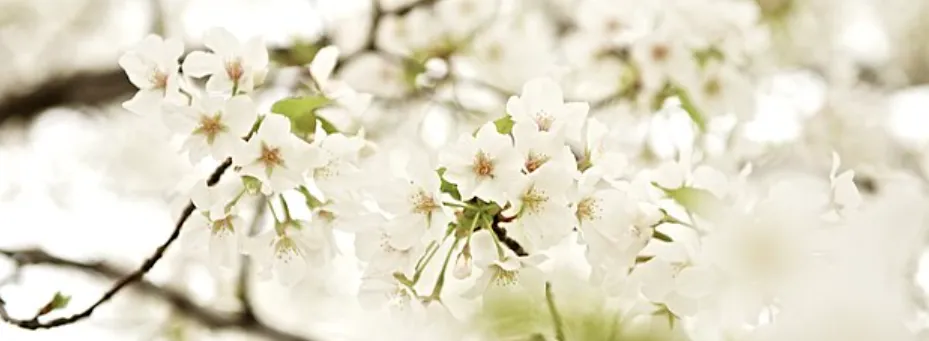
Cherry blossom in Japan has become one of the most celebrated natural phenomena in the world, just think of the the annual hanami (flower viewing) tradition and all the flowers that are visited by an extraordinary diversity of pollinators in a brief window of a week or two. The short flowering period of many Rosaceae species creates a concentrated pulse of resources that is particularly important for queen bumblebees and early solitary bees emerging from winter dormancy.
Hawthorn flowers have a distinctive smell, by some described as sweet, by others as slightly unpleasant, that is caused by trimethylamine, a compound also produced by rotting fish. This smell is particularly attractive to flies and beetles, which are among the primary pollinators of hawthorn. The association between the hawthorn smell and decomposition is no coincidence, as many flies seek out decaying organic matter for egg-laying and feeding. Flowers that mimic this smell attract these visitors without actually being decomposing. It is a mild form of deception, though hawthorn does provide genuine nectar and pollen rewards unlike the pure-deception orchids we'll encounter later.
The Members
The Rosaceae family is large. It counts around 4,800 species in roughly 90 genera, and its members are familiar enough that almost everyone has encountered dozens of them without necessarily knowing they were related.
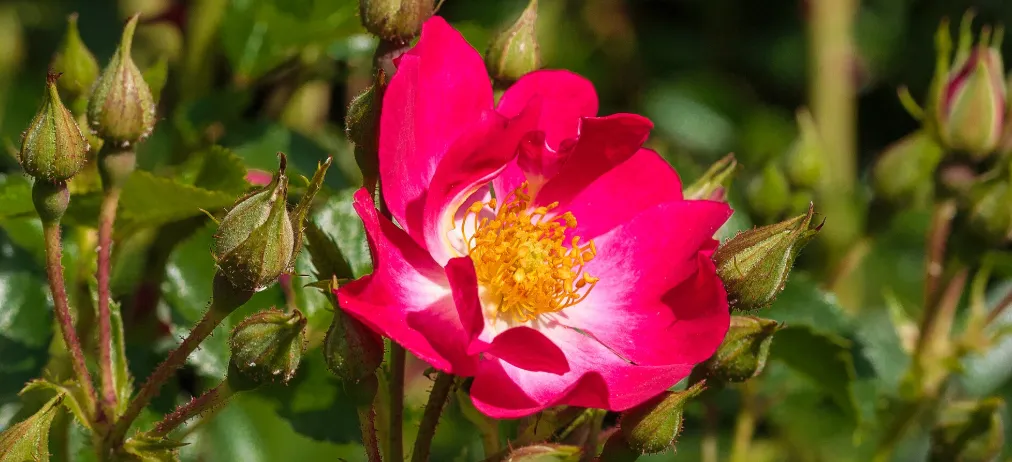
The Wild rose (Rosa canina and relatives) is the reference plant for the family in the same way that the Buttercup is the reference plant for Ranunculaceae. The five-petalled pink flower, the numerous stamens, the prominent hypanthium that becomes the red hip. In this species all the diagnostic features are clearly visible. Wild roses scramble over hedgerows and woodland edges across the temperate northern hemisphere, and their hips are among the most important autumn food sources for thrushes, blackbirds, and waxwings.
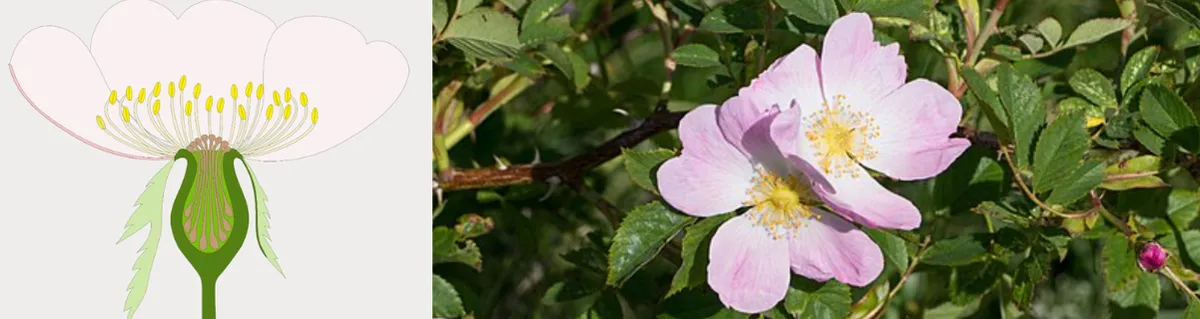
Hawthorn (Crataegus monogyna) is perhaps the most ecologically important woody plant in the European landscape. Its dense, thorny structure provides nesting habitat for dozens of bird species. Its early flowers are a critical food source for early pollinators. Its berries, the 'haws', are eaten by enormous numbers of birds in autumn and winter. And its thorny branches have defined the agricultural landscape of much of Europe for thousands of years, forming the living boundaries of fields and commons that still persist in old hedgerow systems. A hawthorn hedge of sufficient age, by which we mean several hundred years old, is a record of the landscape it has defined, and ancient hawthorns can be identified by the number of woody species growing alongside them (the Hooper's Rule method of hedgerow dating, which estimates one century of age for each additional woody species in a 30-metre stretch of hedge).
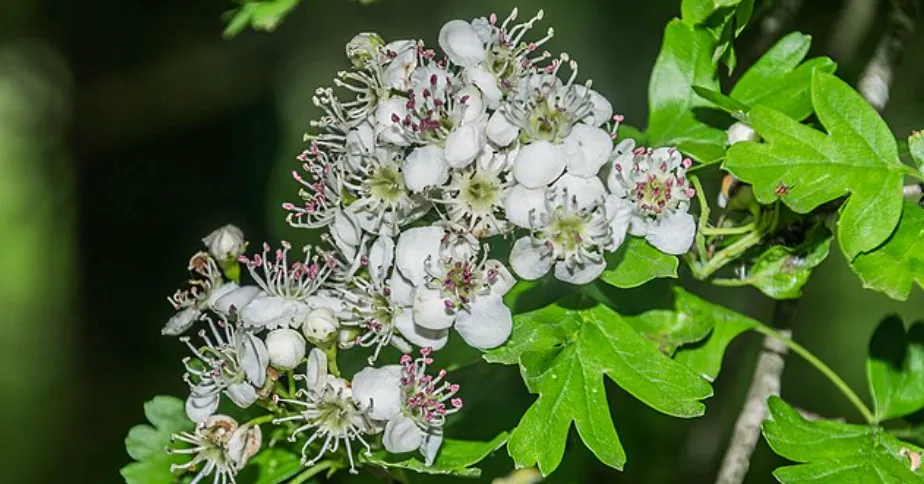
Blackthorn (Prunus spinosa) is the earliest flowering woody plant in most European hedgerows. Its white blossom appearing in March, often before any leaves have opened, creating the characteristic 'white before leaf' appearance that distinguishes it from hawthorn (which leafs before it flowers). Blackthorn is the parent of the cultivated plum, and its sloe berries have been used to flavour alcohol since at least the Iron Age.
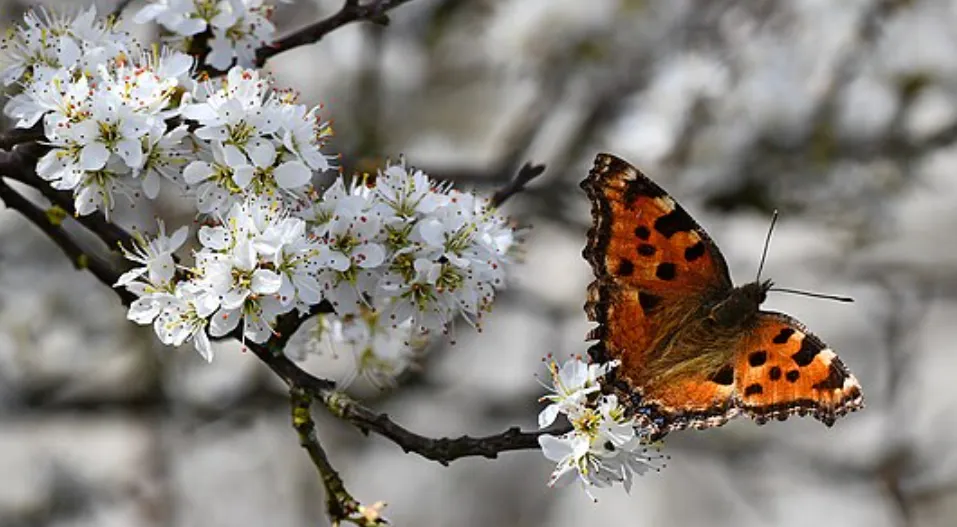
Rowan (Sorbus aucuparia) is the mountain ash. A small tree of upland woodland, moorland edges, and mountain slopes, with pinnate leaves (divided into leaflets along a central stalk, unlike the simple leaves of most Rosaceae), white flower clusters in spring, and brilliant orange-red berries in autumn that are among the most important food sources for migratory thrushes passing through in September and October. Despite the common name, it is not an ash. If you look close, you'll notice that the resemblance of the leaves to ash is superficial, and the flowers and berries are unmistakably Rosaceae.
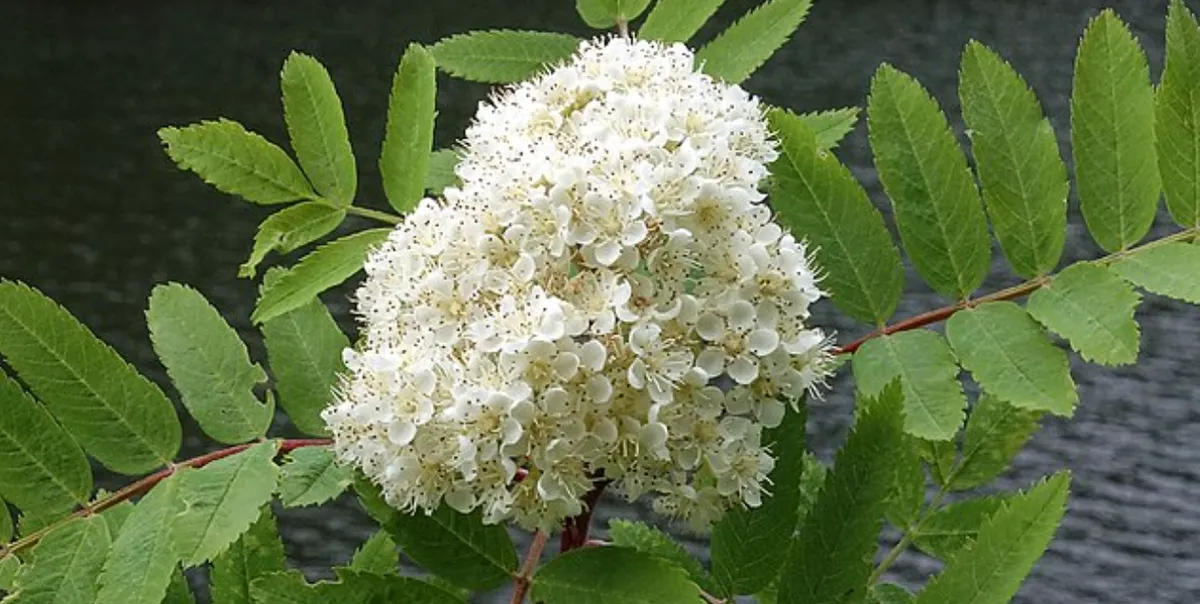
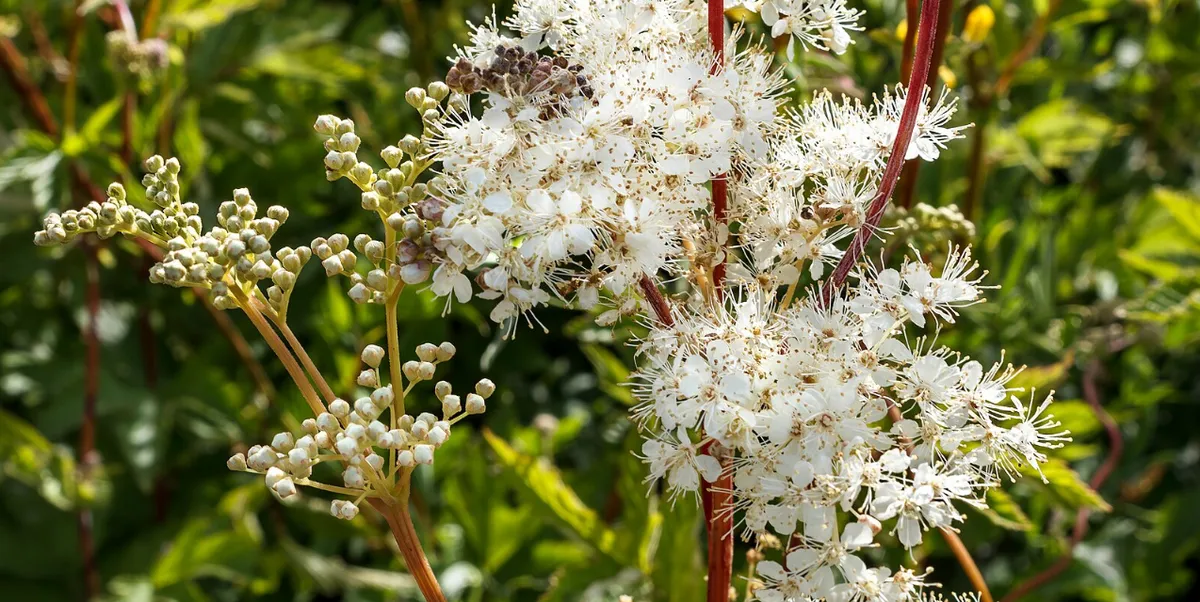
Meadowsweet (Filipendula ulmaria) is a tall plant of wet meadows, stream banks, and ditches, with dense clusters of tiny cream-coloured flowers that have an extraordinarily strong, sweet scent, one of the characteristic smells of damp meadows in summer. Meadowsweet was the original source of salicylic acid, the compound from which aspirin was synthesised and the name 'aspirin' derives from the old genus name for meadowsweet, Spiraea. The plant was used medicinally for centuries before the chemistry was understood, and it was one of the most important strewing herbs of the medieval period, scattered on floors to perfume rooms.
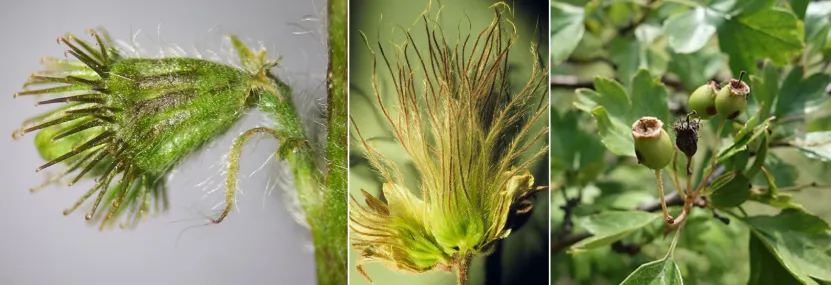
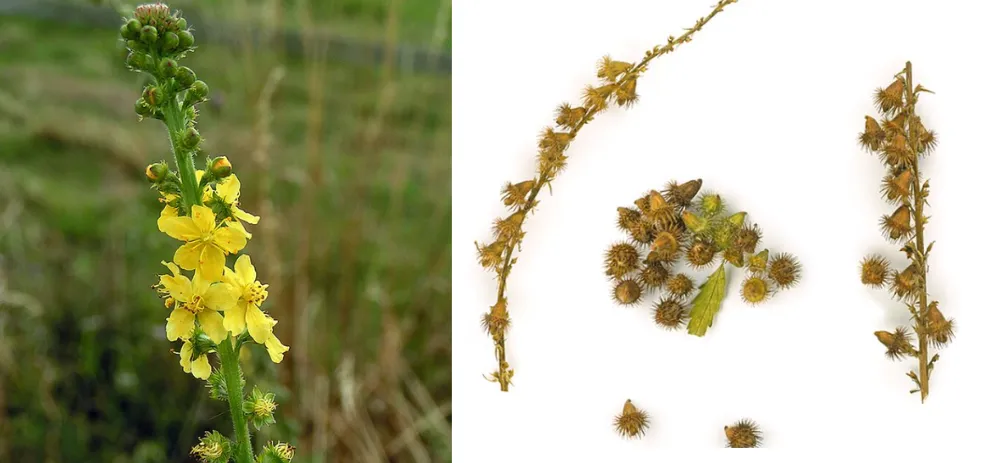
Agrimony (Agrimonia eupatoria) is a tall, elegant plant most often found in dry grassland and hedgerow edges, with pinnate leaves and spikes of small yellow flowers that are easy to overlook but worth examining closely. The fruit is one of the most distinctive in the family; a small hooked bur that catches in fur and clothing, a mechanical seed dispersal mechanism that is immediately recognisable once you know it. Agrimony is one of the clearest examples of external animal dispersal in the Rosaceae.
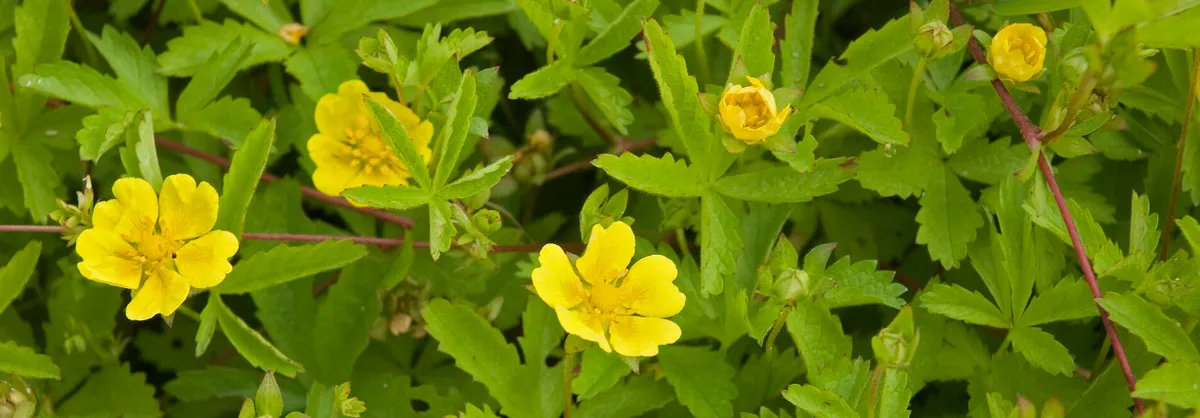
Cinquefoils (Potentilla) are a large genus of mostly low-growing plants with yellow five-petalled flowers. The name means 'five fingers', referring to the five-leaflet compound leaves of the most common species. Creeping cinquefoil (Potentilla reptans) is a common lawn and path weed with a running stem that roots at the nodes, and it is worth comparing to creeping buttercup, which it superficially resembles, but the five-petalled yellow flower of cinquefoil is clearly distinguishable from the five-petalled yellow flower of buttercup by the presence of the hypanthium and the different leaf shape.
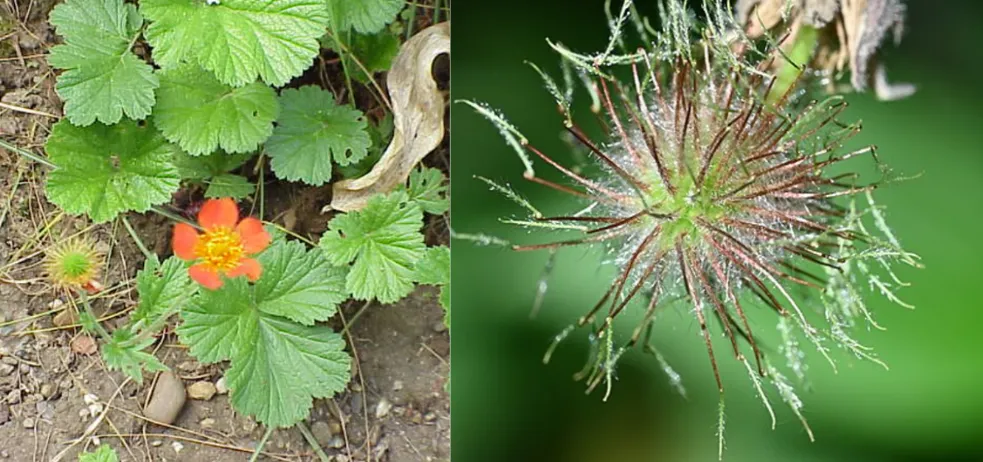
Avens (Geum) are woodland and hedgerow plants with nodding flowers in yellow or orange, and fruit heads that develop into hooked burs similar to agrimony, making it another example of the family's recurring hook-and-bur dispersal strategy.
Spiraea, cotoneaster, pyracantha (firethorn), amelanchier (juneberry), and kerria are common garden Rosaceae that are worth recognising in cultivation before looking for their relatives in the wild.

The Weird Ones
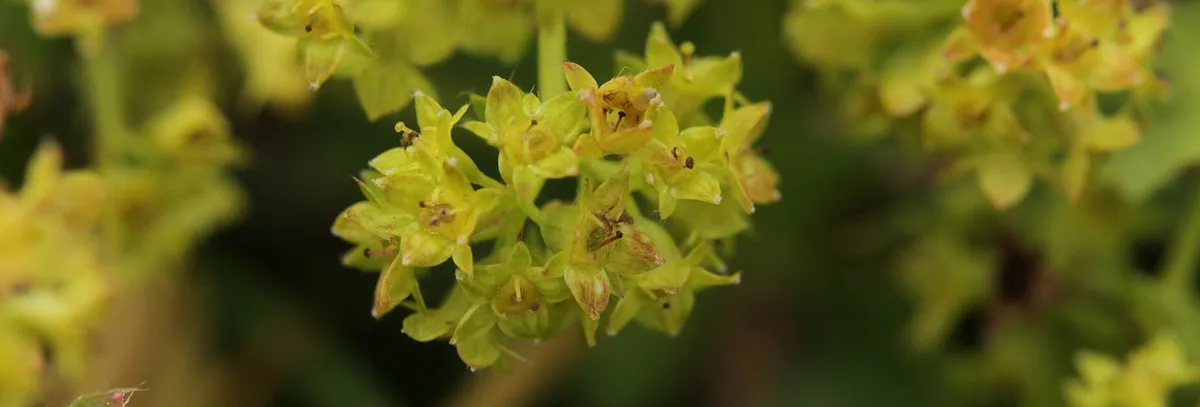
Lady's mantle (Alchemilla vulgaris aggregate) is one of the most structurally unusual members of the family. It has no petals at all. The apparent flower consists entirely of four small green sepals surrounding a few stamens and pistils, with no colourful display of any kind. The plant is largely apomictic, meaning it reproduces without fertilisation, and produces seeds that are clones of the parent, in the same way as many dandelions do. This means that most lady's mantle plants are effectively identical to each other, and identifying to species within the genus requires microscopic examination of features that vary only subtly between clones.
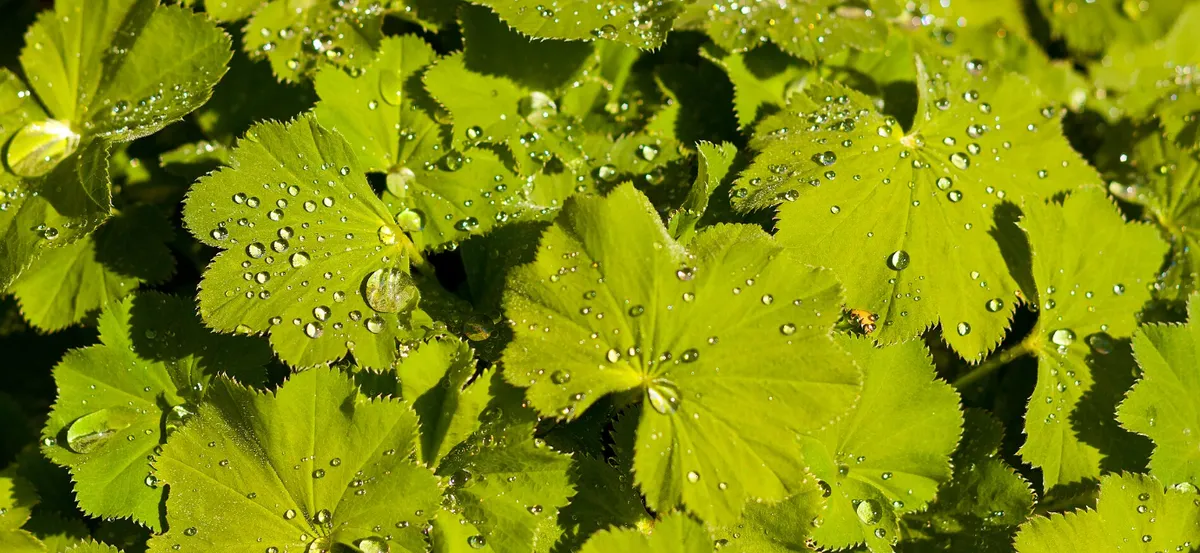
What lady's mantle is famous for is its leaves. The large, pleated, fan-shaped leaves collect and hold water droplets in a way that has fascinated botanists and naturalists for centuries. The water sits in perfect spheres on the leaf surface, moving with any breath of wind, gathering at the centre of the leaf. Medieval alchemists believed this water had magical properties, hence the genus name, and eagerly collected it for use in experiments. The water-repellent property of the leaf surface is caused by microscopic hairs that trap air between them and the water droplet, preventing contact with the leaf surface. It's the same principle used in modern water-repellent fabrics, and another example of plant engineering that humans have only recently understood well enough to replicate.
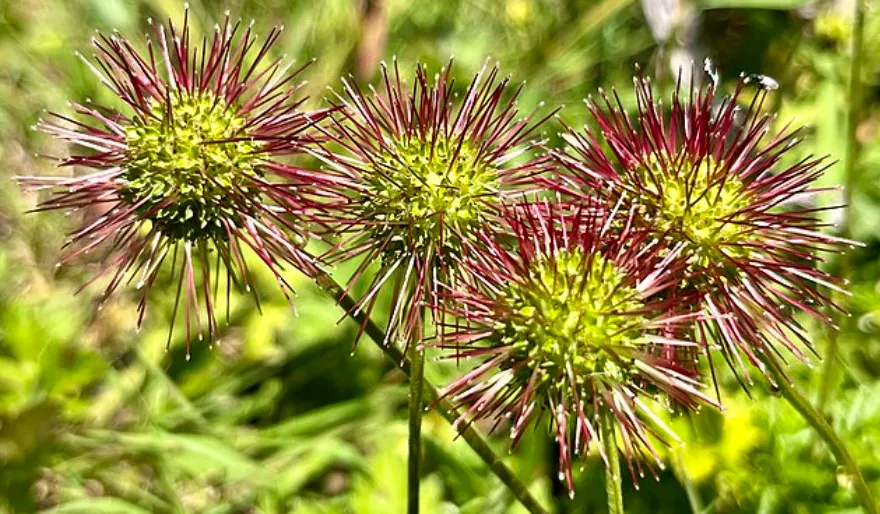
Acaena is a genus of mostly southern hemisphere Rosaceae that are small, mat-forming plants with bur fruits armed with barbed spines. They can be found from South America to New Zealand to sub-Antarctic islands. Several species have been introduced to Europe and North America as garden plants (or accidentally in wool), and some have become invasive. Acaena shows us that the Rosaceae is a global family, not just a temperate northern hemisphere one, and that its dispersal strategies, particularly bur fruits hitching rides on animals, are effective enough to have spread members of the genus across the entire southern hemisphere.
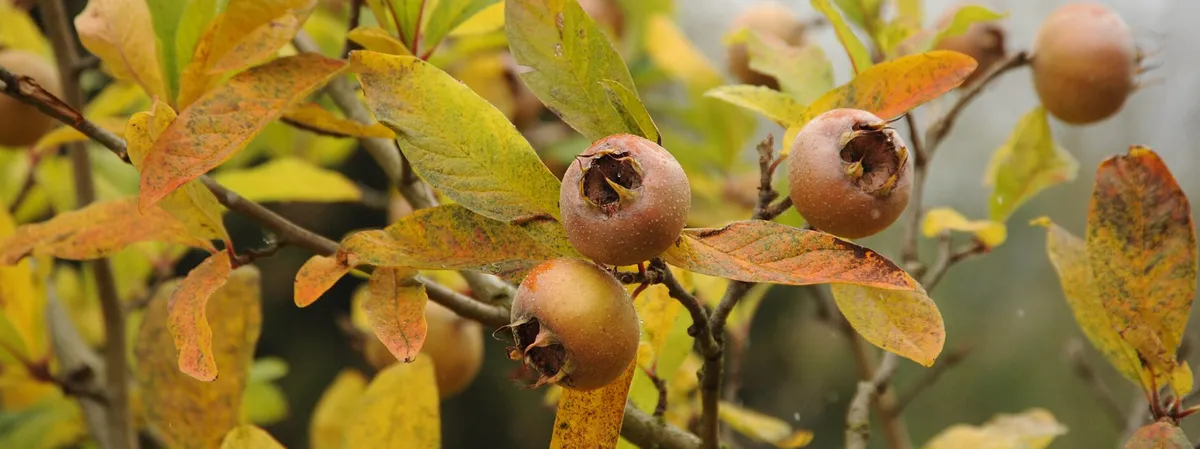
Medlar (Mespilus germanica) is one of the strangest (and most delicious, if you'd ask me) fruits in European food history. The medlar is a pome, just like an apple or a pear, but it is inedible when it first ripens. It must go through a process called bletting (which is essentially controlled rotting) in which the flesh softens, darkens, and ferments slightly, developing a sweet, complex flavour somewhere between apple pie and wine. Bletted medlars were widely eaten across Europe until the sixteenth century, when imported tropical fruits began to displace them. They are rarely cultivated today but remain a fascinating ecological and historical curiosity. It's a fruit that the plant designed to be eaten after it has begun to decompose, presumably by winter animals (bears, in the plant's original range) that could exploit food sources unavailable to other species.
Side note: I'm absolutely fascinated by this genus and I started collecting medlar varieties in my garden. If you have one in your garden, feel free to send me some seeds.
Bramble (Rubus fruticosus aggregate) is not one species but a complex of hundreds of microspecies, apomictic clones, each slightly different from the others, each occupying a slightly different range and ecological niche, each reproductively isolated from the others by their clonal reproduction. The number of recognised bramble microspecies in Britain alone exceeds 300. Bramble taxonomy is considered by most botanists to be one of the most difficult puzzles in the European flora; a rabbit hole that has consumed careers and produced little consensus. For practical purposes, everything with the scrambling stems, recurved prickles, white or pink five-petalled flowers, and aggregate black fruit is a bramble and belongs to Rubus fruticosus in the broad sense. Going further requires a specialist.
A Family That Fed the World
Rosaceae is not just ecologically important. It is one of the foundations of human civilisation.
The domestication of apples, pears, plums, cherries, and almonds happened independently in different parts of the world over thousands of years, another clear sign of how universally useful the family's fruits are. The apple alone has been cultivated for at least 4,000 years, and the genetic diversity of cultivated apple varieties, of which thousands exist or existed, represents one of the most extraordinary selective breeding projects in human history, carried out without any understanding of genetics by farmers who simply chose to propagate the trees that produced the most useful fruit.
The wild ancestors of all these cultivated fruits still exist today, but usually in reduced, fragmented populations that are now recognised as important genetic resources for future breeding. Wild apple (Malus sylvestris) still grows in European woodlands, producing small, sour fruit that most people would not recognise as an apple. Wild plum, wild pear, wild cherry... all still can be found. All are Rosaceae and all carry the genetic heritage of the family's millions of years of fruit evolution.
When you bite into an apple, you are participating in a dispersal relationship that is millions of years old. The plant invented the fruit. You are the vector. And somewhere, if you would throw the core into a hedgerow rather than into a bin, a seed might germinate.
The Reference Point Expands
In part three, we established Ranunculaceae as the open-market baseline. The unspecialised flower that everything else departed from.
Rosaceae sits one step further along. Still generalist, still open to most visitors, still retaining the numerous stamens of the primitive angiosperm condition. But the hypanthium is a real innovation. It's a structural modification that has proven so versatile that it generated one of the most diverse range of fruit types in the plant kingdom, from the dry achene of a rose hip to the fleshy pome of an apple.
The family shows us something important: evolutionary success does not always require specialisation. Sometimes a single structural innovation, applied flexibly across millions of years of diversification, is enough to conquer the world.
In the next part, we'll look at a family that took a completely different approach. One that made a very specific deal with a very specific set of pollinators, and built one of the most chemically sophisticated plant groups in the temperate flora around it. That family is Fabaceae, the pea family.